

More than an accessory, a western turquoise necklace is a piece of the American Southwest you can wear around your neck. It’s got a spirit of independence and a deep connection to history baked right in, making it a go-to for everything from estuarian cowgirl and boho looks to classic, everyday style. This guide is your complete tour, showing you how it went from a sacred stone to a timeless fashion icon.
The Enduring Spirit of the Southwestern Turquoise Necklace
A western turquoise necklace is so much more than a simple fashion choice; it's wearable art, steeped in cultural history and that rugged American identity. It tells a story of vast desert landscapes, the salty air of coastal plains, and the artistic soul of the people who first called the Southwest home. The iconic sky-blue stone, usually set in gleaming sterling silver, just feels authentic and free—a vibe that never goes out of style.
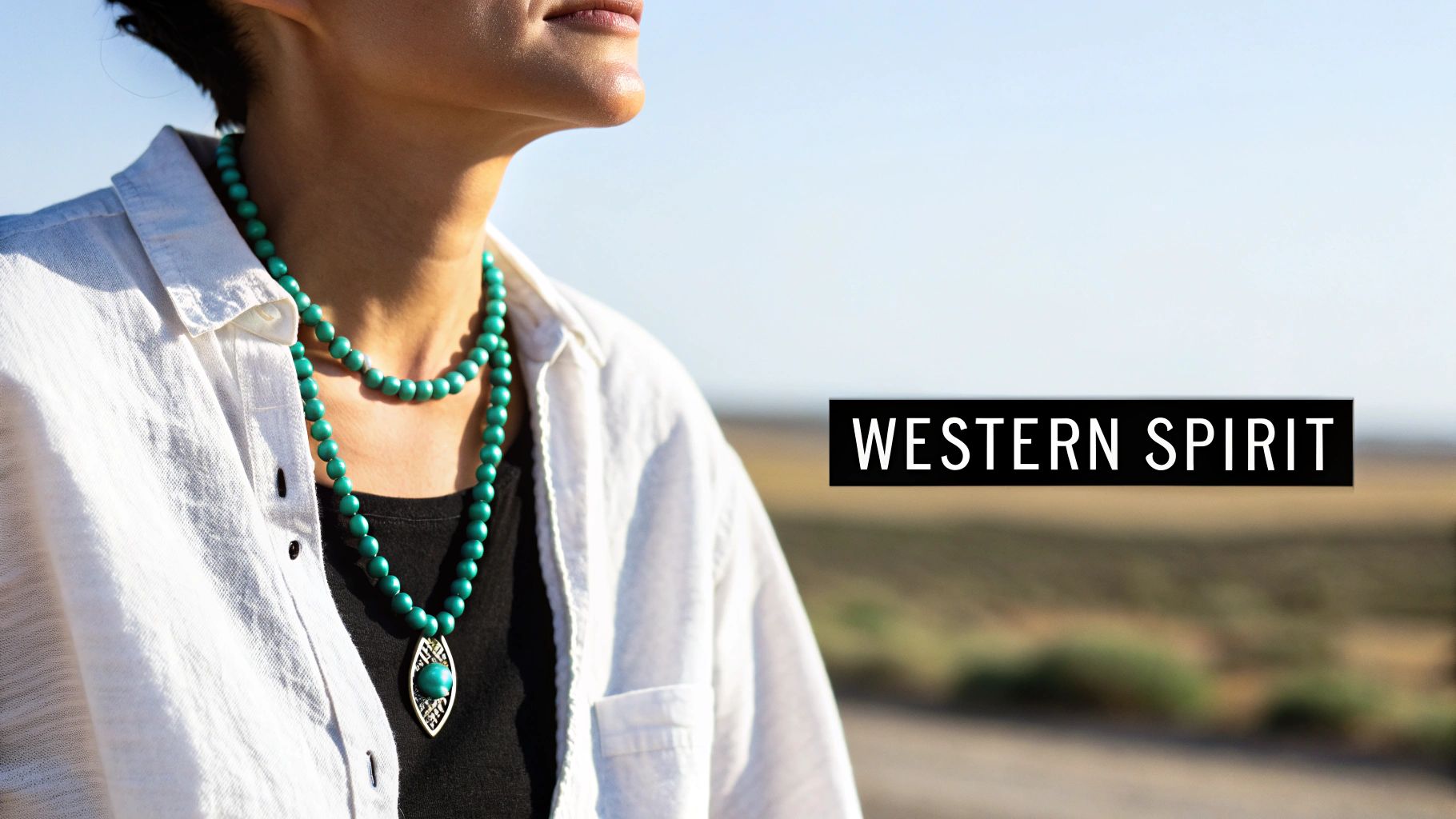
Unlike trends that come and go, this jewelry has a permanent spot in the fashion world because it represents something real. It’s a tangible link to the past, a nod to true craftsmanship, and a celebration of natural beauty. The variations in the turquoise itself—from the dark, web-like matrix patterns to the different shades of blue and green that echo both desert skies and coastal waters—guarantee that no two necklaces are ever truly the same.
A Symbol of Heritage and Style
You can't separate the story of turquoise from the Native American tribes who first revered the stone. For centuries, peoples like the Navajo, Zuni, and Pueblo saw turquoise as a sacred gem that offered protection, health, and spiritual clarity. This rich history gives the jewelry its soul. To really appreciate the piece you're wearing, it helps to understand the stories woven into it. You can explore more of the profound Native American jewelry meanings in our detailed guide.
It's this deep-rooted heritage that gives the jewelry its character. When you put on a western turquoise necklace, you're doing more than just accessorizing; you're connecting with a legacy of artistry that matters.
Think of it as a personal heirloom from the moment you put it on. Each piece carries the wild, artistic spirit of the Southwest, making it a powerful form of self-expression.
Today, that spirit is embraced by all kinds of styles, which just goes to show how versatile it really is.
- Estuarian Cowgirl: It’s the ultimate accessory for linen, denim, and weathered leather boots, perfect for a sun-drenched, coastal vibe.
- Bohemian Spirit: It layers perfectly with flowy dresses, kimonos, and other natural textures that feel at home from the desert to the shore.
- Modern Minimalism: Even a simple turquoise pendant can add a surprising pop of color to a clean, contemporary outfit.
Ultimately, choosing a western turquoise necklace is about finding a piece that speaks to you—one that feels both timeless and deeply personal. This guide will give you the confidence to find a necklace that not only looks incredible but also connects you to that enduring Southwestern spirit.
A Look Back: The History of Southwestern Turquoise Jewelry
To really get why a modern western turquoise necklace feels so special, you have to understand where it comes from. This isn't just an accessory; it's a story captured in silver and sky-blue stone, with roots running deep into the American Southwest. And that story began long before anyone ever uttered the words "estuarian cowgirl" or "boho chic."
It all starts with the Indigenous peoples of the region—the Navajo, Zuni, and Pueblo tribes. For them, turquoise was never just a pretty rock. It was considered a sacred piece of the heavens that had fallen to Earth, a powerful symbol of life-giving water, spiritual protection, and good fortune.
From Sacred Stone to Iconic Symbol
The very first turquoise adornments were beautifully simple. Think raw or hand-shaped stones strung on natural fibers, worn for spiritual strength and as a vital part of ceremonial life. That deep, cultural reverence is the soul of every turquoise piece you see today, connecting it back to an ancient legacy of artistry and belief.
The game-changer was the fusion of turquoise with silverwork. Around the mid-19th century, Navajo smiths learned the craft of silversmithing from Mexican artisans, known as plateros. This new skill unlocked a world of possibilities, allowing them to create intricate settings that framed the sacred stone and gave birth to the iconic Southwestern style we know and love.
This blend of ancient respect for the stone and newly acquired metalworking mastery is what makes the jewelry so powerful. You can see just how these traditions intertwined by exploring the evolution of Western jewelry from turquoise to stamped silver.
The Legendary Squash Blossom Necklace
If one piece embodies this entire heritage, it’s the legendary squash blossom necklace. Instantly recognizable, it’s a powerful symbol of Native American artistry and cultural identity. Its key features are unmistakable:
- Beads: Usually made of smooth, round silver beads, sometimes called "desert pearls."
- Squash Blossoms: These are the flared, flower-like silver pieces lining the sides. While they resemble a squash blossom—a crucial crop—their design is also thought to be influenced by pomegranate motifs seen on Spanish colonial clothing.
- The Naja: At the very center hangs the naja, a bold crescent-shaped pendant. This symbol is believed to offer protection and ward off evil. While its origins are ancient, it became a signature element of Navajo jewelry.
The squash blossom necklace was more than just something to wear. It was a statement of wealth, status, and cultural pride. Worn for ceremonies and major life events, it often represented a family’s history and prosperity.
The immense cultural weight of these pieces is still reflected in their value. An authentic, collector-grade squash blossom can be a serious investment, which highlights the vast difference between true craftsmanship and mass-produced knockoffs. Of course, more accessible styles exist, but it's the history that gives even the simplest turquoise necklace its undeniable gravitas.
From its sacred beginnings to its modern status as a fashion icon, the history of Southwestern jewelry gives every western turquoise necklace a depth that few other accessories can claim. It’s a connection to the earth, a tribute to incredible artistry, and a wearable piece of the free-spirited American West.
How to Spot an Authentic Turquoise Necklace
Figuring out if a turquoise necklace is the real deal can feel a bit like detective work, but it’s simpler than you might think. An authentic western turquoise necklace has a soul and character that mass-produced fakes just can't imitate. Knowing the key differences empowers you to invest in a quality, handcrafted piece you'll love for years.
The first thing to know is that not all genuine turquoise is created equal. In quality Southwestern jewelry, you’ll mostly find two types: natural and stabilized. Natural turquoise is just what it sounds like—dug from the earth, cut, and polished with nothing else added. It's the rarest form, more porous, and often more valuable.
Stabilized turquoise is far more common and is really the go-to for durable, everyday jewelry. This is genuine turquoise that’s been infused with a clear resin under pressure. The process deepens the color and strengthens the stone, making it way less likely to crack or absorb oils from your skin. It’s still 100% real turquoise, just toughened up for a long life.
Distinguishing Real from Imitation
The most common imitation out there is dyed howlite, a porous white mineral that drinks up blue dye to look like turquoise. It can be convincing at first glance, but a few simple clues can help you tell them apart. A real turquoise necklace usually has a nice heft to it and feels cool when you touch it.
Look closely at the color and the matrix—that's the web of host rock running through the stone. In genuine turquoise, these lines are often irregular, a little recessed, and can be anything from brown to black or even gold. On dyed howlite, the "matrix" is often just dye that has pooled in the stone’s cracks, creating a pattern that looks too uniform and perfect.
To help you on your shopping journey, here’s a quick-reference table that breaks down the key differences between genuine turquoise and its common lookalikes.
Genuine Turquoise vs Common Imitations
| Characteristic | Genuine Turquoise | Stabilized Turquoise | Dyed Howlite (Imitation) |
|---|---|---|---|
| Feel & Weight | Cool to the touch, has a noticeable density and weight. | Feels slightly warmer or more "plastic-like" due to resin, but still has good weight. | Feels lightweight, often warm or room temperature, and can feel like plastic. |
| Color | Natural, earthy blue/green tones. Color is often slightly uneven. | Rich, often uniform deep blue/green color. Can look "too perfect." | Very uniform, vibrant blue that can look unnatural. Dye may pool in cracks. |
| Matrix (Veins) | Irregular, recessed lines (brown, black, gold). Looks like part of the stone. | Matrix is natural, but resin can make it look darker or less defined. | "Matrix" is often just dark dye in cracks, creating a spiderweb-like surface pattern. |
| Scratch Test | Relatively soft (5-6 on Mohs scale), but won't scratch easily to reveal a different color. | Resin makes it more resistant to scratching. | Very soft (3.5 on Mohs scale). A pin can easily scratch it, revealing white underneath. |
Knowing these subtle tells is the first step in building a collection you can be proud of.
For a deeper dive into telling these stones apart, our guide offers more expert tips on how to identify real turquoise with confidence. Understanding these nuances is key to appreciating the craftsmanship of a true western turquoise necklace.
Are you buying a piece to wear every day or looking for a serious collector's item? Your answer changes everything. This flowchart can help you figure out which path is right for you.
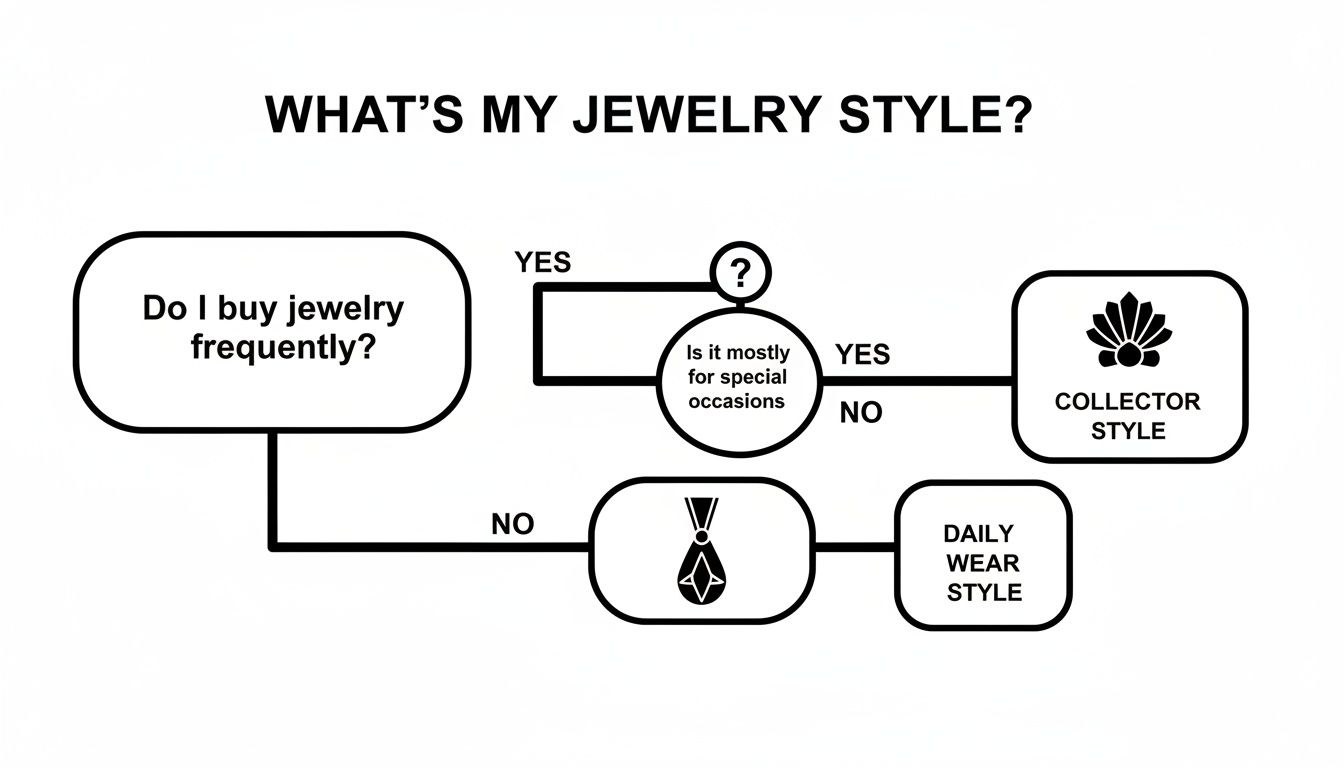
As you can see, your goal—whether it's building a collection of major pieces or just finding a great pendant for your daily outfits—really shapes how you should shop.
The Importance of Sterling Silver
Beyond the stone, the metal in the setting is a huge sign of quality in Southwestern jewelry. The standard for any authentic piece is sterling silver. It’s made of 92.5% pure silver mixed with 7.5% other metals (usually copper), striking the perfect balance between beauty and toughness.
Why does that matter? Pure silver is just too soft to hold up to daily wear and tear. Adding a little copper gives it the strength needed for those intricate bezels, stamped details, and iconic squash blossoms that define the Southwestern style.
Here are a few signs of quality silverwork to keep an eye out for:
- Weight and Feel: Real sterling silver feels substantial in your hand. It has a satisfying weight, unlike flimsy, plated costume jewelry.
- Artisan Marks: Many handcrafted pieces are stamped with "Sterling," "925," or the artist’s own hallmark. It’s a signature of pride in their work.
- Natural Patina: Over time, sterling silver develops a gorgeous patina—a slight darkening in the recessed areas that adds so much depth and character. This is a natural process that many collectors absolutely love.
When you learn to spot the unique qualities of both the stone and its setting, you can confidently choose a western turquoise necklace that isn’t just beautiful, but a true piece of wearable art with a story to tell.
Finding the Perfect Necklace for Your Personal Style
The right Southwestern turquoise necklace does more than just complete an outfit—it feels like it was made just for you. It’s a piece of your personality, something that tells your story without you having to say a word. It’s about looking past trends to find a timeless piece that truly reflects who you are and fits into your life.
This is where the details really matter. From the length that perfectly frames your face to the specific cut and setting of the stone, every little choice builds the character of the necklace. Think of it like curating a personal art collection—each decision helps create a look that is authentically, unapologetically you.
Choosing the Right Necklace Length
The length of your necklace can completely change your entire look, much like a frame can transform a painting. Different lengths draw the eye to different areas and set a totally different mood, making it one of your most powerful styling tools.
Think about how each of these classic lengths will play with your favorite necklines and outfits:
- Chokers (14-16 inches): These sit right at the base of the neck, adding a touch of boldness that’s still incredibly refined. A turquoise choker is stunning with open necklines like V-necks or scoop necks, drawing attention upward to beautifully frame your face.
- Princess Length (17-19 inches): This is easily the most popular and versatile length, designed to rest just below the collarbone. A princess-length Southwestern turquoise necklace is a true workhorse—it looks just as good with a casual tee as it does with a crisp button-down shirt.
- Matinee Length (20-24 inches): Falling somewhere between the collarbone and the bust, a matinee necklace is perfect for adding a bit of elegance to workwear or a simple dress. It creates a lovely vertical line that can subtly elongate your silhouette.
- Opera Length (28-36 inches): If you’re after a bit of drama and a free-spirited, bohemian estuarian vibe, nothing beats an opera-length necklace. You can wear it as one long, sweeping strand or double it up for a chic, layered look that’s absolutely perfect over high necklines.
It’s all about picturing how the necklace will live with the clothes you already own and love. The goal is to find that sweet spot where the jewelry and your outfit enhance each other.
Understanding Stone Cuts and Silver Settings
The true artistry of a Southwestern turquoise necklace is all in the details—specifically, how the stone is shaped and how the silver cradles it. These choices define the necklace’s entire personality, shifting its vibe from earthy and raw to polished and dramatic.
The setting is like the stone's home. It not only keeps the turquoise safe but also puts its unique beauty on full display. Three classic Southwestern settings each tell a different story:
- Bezel Setting: A timeless and secure style where a thin rim of sterling silver wraps completely around the turquoise. This creates a clean, modern look that puts all the focus on the stone's natural shape and color.
- Cluster Setting: For a bold, can't-miss statement, you can't beat a cluster. This technique brings together multiple smaller turquoise stones into a brilliant mosaic of color and texture. It’s a lavish, celebratory style that really catches the light.
- Inlay Setting: This is a masterful technique where artisans fit precisely cut pieces of turquoise into channels carved into the silver, creating a perfectly smooth surface. Inlay work allows for intricate, often geometric patterns with a sleek, contemporary feel.
The right setting can completely transform the personality of the turquoise. A bezel setting might whisper quiet confidence, while a cluster setting shouts with joyful exuberance.
Practical Comfort for Everyday Wear
Beyond just looks, a few practical things will make sure you’ll actually want to wear your necklace day in and day out. The first is weight. A heavy, dramatic statement piece is fantastic for a special night out, but for daily wear, you’ll be much happier with a lighter pendant or a delicate beaded strand.
Another crucial factor is the metal. Authentic Southwestern jewelry is crafted from sterling silver, which is great news for anyone with sensitive skin. Because it’s naturally hypoallergenic and nickel-free, sterling silver won’t cause the irritation that other metals can. This means you can wear your favorite western turquoise necklace all day long, knowing it's as kind to your skin as it is beautiful.
How to Style Your Turquoise Necklace for Any Occasion
A great western turquoise necklace is one of the most versatile pieces you can have in your jewelry box. It’s got this incredible ability to shift its personality to match whatever vibe you're going for. Think of it less like a single instrument and more like a whole band—it can play rugged country, free-spirited folk, or a breezy coastal tune.
Let's break down how to unlock its full potential with some real-world styling ideas.
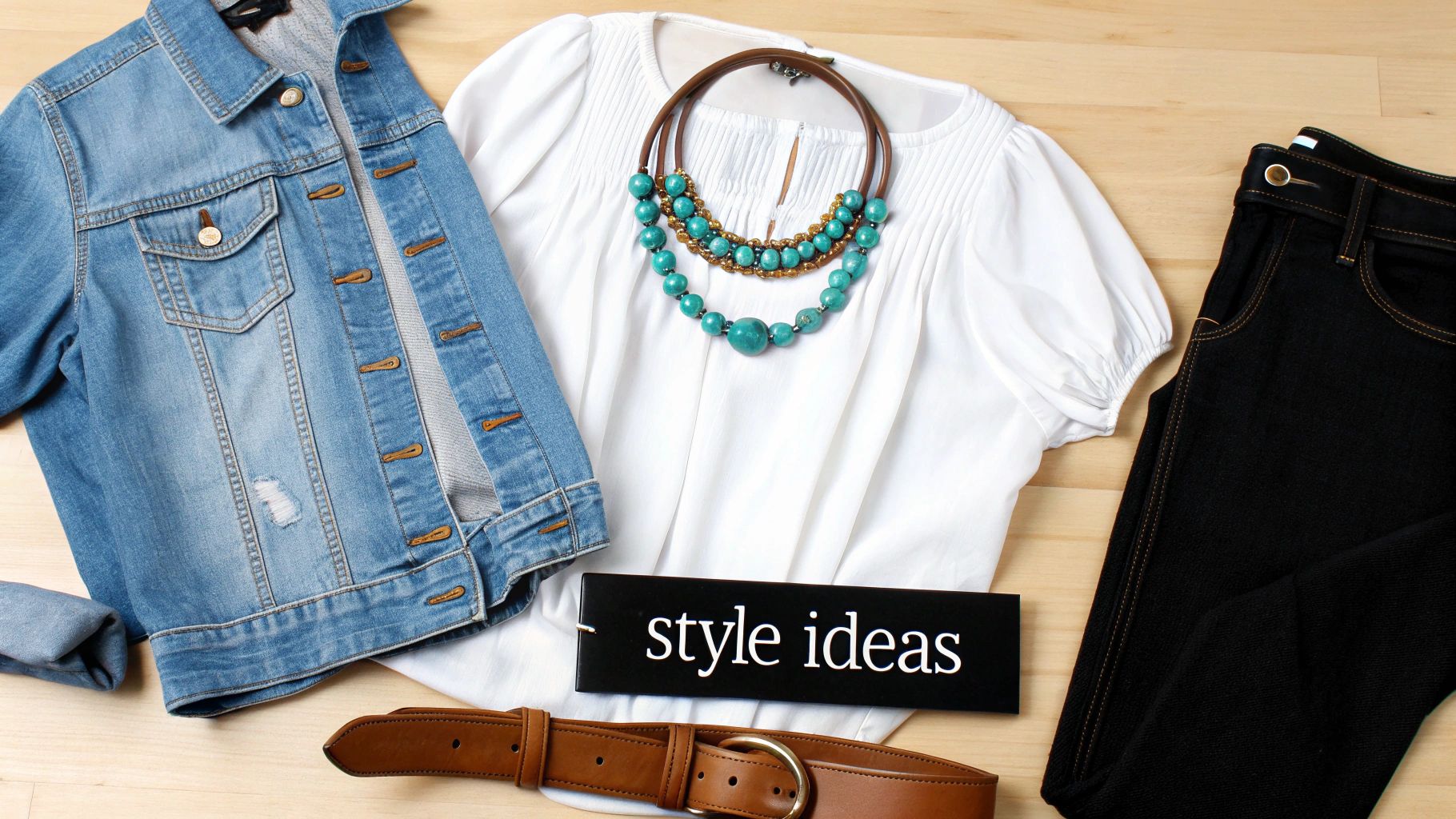
This adaptability is a huge reason the gemstone has stuck around for so long. The global turquoise jewelry market was valued at around USD 2.5 billion and is expected to hit USD 4.0 billion by 2033. People just love authentic, artisanal pieces that fit right into Southwestern and estuarian cowgirl styles.
Embrace the Estuarian Cowgirl Aesthetic
This is where a western turquoise necklace truly feels at home. The quintessential estuarian cowgirl look is all about that sun-bleached elegance, pairing the bright pop of turquoise with the timeless textures of linen, light-wash denim, and weathered leather. The trick is to let the bold jewelry stand out against soft, natural fabrics.
For that iconic coastal-meets-country look, try these combinations:
- Linen and Denim: A breezy white linen shirt tucked into light-wash jeans is the perfect canvas. Your sterling silver and turquoise necklace will pop against the neutral palette, adding a flash of color and artistry.
- Leather Accents: Throw on a worn-in leather jacket or cinch a flowy dress with a beautifully tooled leather belt. The warm, earthy tones of the leather make the cool blue of the turquoise really stand out.
Channel Your Inner Boho Spirit
If you're leaning into a more free-spirited, bohemian vibe, layering is your best friend. The goal here is a look that feels collected, personal, and effortlessly artistic. Think flowy fabrics, mixed textures, and a relaxed attitude—with your turquoise necklace as the anchor.
Start with a flowy maxi dress, a peasant blouse, or a fringed kimono. Then, start layering. Mix your turquoise piece with other chains of varying lengths—maybe some delicate silver pendants or a few beaded strands. It creates a rich, textured look that tells a story.
The art of boho layering is about creating harmony, not chaos. Start with your turquoise necklace as the focal point, then add two or three complementary pieces to build a look that feels uniquely yours.
Get Festival Ready with a Statement Piece
Music festivals are the perfect stage to let a bold turquoise statement necklace have its moment. This is your chance to go big and dramatic. A large, multi-stone piece or a classic squash blossom necklace can easily become the centerpiece of your entire festival outfit.
Pair it with something simple like a sundress, a crochet top, or a graphic tee and cutoff shorts. The necklace does all the talking, instantly turning a basic outfit into something unforgettable. Don't be shy about mixing it with other Southwestern accessories, like a concho belt or stacked silver cuffs, for a powerful, head-turning look.
Perfecting Effortless Everyday Style
You definitely don't need a special occasion to wear your turquoise. A simple pendant or a delicate beaded strand can add just the right touch of Southwestern charm to your most casual outfits, making every day feel a little more special.
The easiest way to wear it? Just throw it on with a classic white t-shirt and your favorite jeans. A small western turquoise necklace adds a perfect pop of color without feeling like you're trying too hard. It’s a simple, polished look that shows off your personal style in a subtle, confident way.
For a deeper dive into making bold pieces work for daily wear, check out our guide on how to style a turquoise statement necklace for everyday glam.
Caring for Your Turquoise and Sterling Silver
Think of your western turquoise necklace as more than just an accessory—it's a treasure, maybe even a future heirloom. To make sure it lasts for generations, it needs a little bit of mindful care. Turquoise is a living gem in a way; its porous nature means it can absorb oils, chemicals, and sunlight over time, which can slowly change its gorgeous color.
Keeping it pristine starts with a few simple habits. The golden rule? Your necklace should be the last thing you put on before leaving the house and the first thing you take off when you get home. This little ritual helps you sidestep the common culprits that can harm the stone.
- Perfumes and Hairspray: The chemicals and alcohol in these products can dry out the turquoise, leading to discoloration.
- Lotions and Oils: Since the stone is porous, it can soak up these substances, which can give it a darker, duller look over time.
- Harsh Sunlight: Just like a photograph left on a dashboard, prolonged exposure to direct sun can fade the stone's vibrant hue.
Gentle Cleaning for Lasting Luster
When it comes time to clean your necklace, always remember that gentle is better. Stay far away from harsh chemicals, ultrasonic cleaners, and anything abrasive. These can easily scratch the stone or strip it of the natural oils that give it character.
For the turquoise itself, a quick wipe-down with a soft, dry, or slightly damp cloth is all it needs. Never use soaps or cleaners directly on the stone. A gentle buff is enough to lift any surface dust and bring back its natural sheen without causing damage.
The sterling silver setting, on the other hand, can take a bit more attention. Silver naturally tarnishes when it's exposed to air, but it’s easy to fix. Use a specialized silver polishing cloth—it’s treated with just the right stuff to safely remove tarnish without scratching the metal. Gently rub the silver parts of your necklace, taking care to avoid the turquoise.
Preserving your necklace isn’t about intensive maintenance; it's about forming gentle habits. A little preventative care goes a long way in keeping both the stone and silver looking their best for years to come.
For a more detailed walkthrough, our guide offers more tips on how to clean sterling silver jewelry at home, making sure every piece in your collection stays brilliant.
Proper Storage to Prevent Damage
How you store your necklace is just as crucial as how you clean it. Tossing it into a crowded jewelry box is a recipe for tangled chains and scratches. Sterling silver is a relatively soft metal, and a harder gemstone can easily chip your turquoise.
To keep it safe, store your necklace by itself in a soft pouch or in its own compartment in a lined jewelry box. This stops it from rubbing up against other pieces. For an extra layer of protection, drop an anti-tarnish strip into the pouch or box. It will slow down the oxidation process, meaning you’ll have to polish the silver far less often. These simple steps ensure your cherished piece remains as beautiful as the day you got it.
Common Questions About Southwestern Turquoise Necklaces
As our journey into the world of Southwestern jewelry wraps up, you might still have a few questions rattling around. It's totally normal. Think of this last section as your go-to guide for clearing up any final curiosities about the iconic western turquoise necklace.
We'll tackle some of the most common questions that pop up for both new collectors and seasoned fans. From the mysteries behind pricing to the stories etched into the stones themselves, these answers are here to make you a more confident and informed buyer.
Why Do Prices for Turquoise Necklaces Vary So Much?
This is one of the biggest head-scratchers for newcomers. You can see two necklaces that look almost identical, yet one costs a whole lot more. The price difference isn't random; it boils down to a few critical factors that determine a piece's real value.
- Mine Origin: Not all turquoise is created equal. Stones from legendary mines, like the Sleeping Beauty or Kingman mines in Arizona, are famous for their unique, high-quality color. That rarity comes with a higher price tag.
- Stone Quality: Natural, untreated turquoise is the holy grail—it's the rarest and most valuable. Stabilized turquoise (which is treated for durability) is more common and affordable, while imitation stones are at the bottom of the price scale.
- Artisan Craftsmanship: The skill of the silversmith is a huge part of the equation. A handcrafted piece with intricate details, like hand-stamped silver or complex inlay work, is always going to be valued higher than a mass-produced item. If the piece is signed by a well-known artist, that adds a premium, too.
- Silver Content: The weight and quality of the sterling silver setting matter a lot. A heavier, more substantial necklace with more silver work will naturally cost more.
You're not just paying for a stone; you're investing in rarity, artistry, and quality materials. A higher price often signals you're getting a piece of wearable art with a real history.
Can Turquoise Change Color Over Time?
Yes, it absolutely can, and it's one of the stone's most enchanting qualities. Turquoise is a porous gem, meaning it can absorb things from its environment—like the natural oils from your skin, lotions, or even just the air around it.
Over many years of being worn and loved, a natural turquoise necklace might slowly deepen in color, shifting from a bright, sky blue to a richer, deeper blue or even a soft green.
This natural aging process is called developing a patina, and many collectors actually seek it out. They see it as the stone becoming part of the wearer's personal story, absorbing a piece of their life and journey right into its core.
This is exactly why proper care is so important. Keeping your necklace away from harsh chemicals and lotions allows it to age gracefully, preserving its integrity while letting its unique character shine through.
How Can I Tell Which Mine My Turquoise Is From?
This is the tricky part. Identifying a stone’s mine just by looking at it is incredibly difficult, even for the experts.
While certain mines are known for specific looks—like the pure, robin's egg blue of Sleeping Beauty turquoise or the dramatic black matrix of Kingman—every mine produces a wide variety of stones. There's a ton of overlap.
The most reliable way to know your stone's origin is through documentation from a reputable seller or the artisan who sourced it directly. Without that provenance, it’s usually just an educated guess based on the color and matrix patterns. This mystery is part of what makes every western turquoise necklace so special. Each stone holds its own secret history, written in its veins and hues.
At Silver Elegant, we believe every piece of jewelry should tell a story. Our curated collections of Southwestern and estuarian cowgirl designs are crafted with care, blending timeless tradition with modern style. Discover your next heirloom piece and explore our full range of sterling silver and turquoise treasures at https://silverelegant.com.