

When you choose a piece of jewelry, you're not just picking an accessory. You're choosing a story. For a growing number of us, it's crucial that this story is one of integrity and respect—for the planet and its people. This is where sustainable Southwestern jewelry brands come in, offering beautiful pieces with a clear conscience. This shift is especially meaningful in the world of Southwestern, estuarian cowgirl jewelry, where timeless traditions are now meeting a modern demand for responsibility.
What Makes Southwestern Jewelry Sustainable?
"Sustainable" is a word that gets thrown around a lot, but what does it really mean when it comes to Southwestern jewelry? It's so much more than just a buzzword. It's a deep-seated commitment to making a positive impact at every single step, from the moment a stone is pulled from the earth to the final polish by an artisan's hands.
In the world of estuarian cowgirl jewelry, this means honoring the very land and cultural heritage that breathe life into each design. It’s about moving away from the old "take-make-waste" model and embracing a circular approach. This mindset values resources, respects the craftspeople, and creates heirloom-quality pieces meant to be loved for a lifetime, not tossed aside. It ensures the striking beauty of a turquoise cuff or a silver concho necklace isn't tainted by a harmful backstory.
The Core Pillars of Sustainability
True sustainability isn't a vague concept; it's built on three solid pillars: ethical sourcing, the use of recycled materials, and fair artisan practices. Think of them as the legs of a stool—if one is missing, the whole thing topples. Understanding these principles is the key to spotting brands that are genuinely walking the walk.
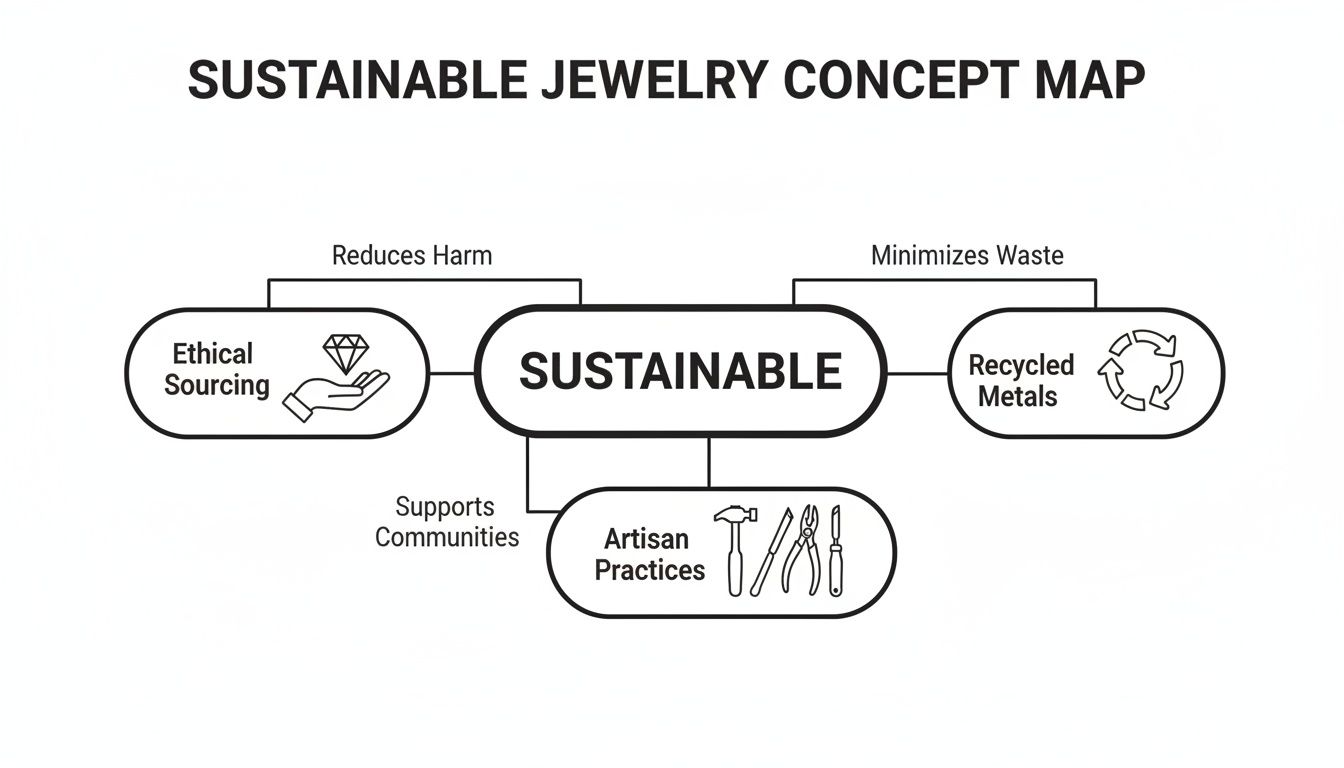
As this map shows, these three pillars are completely interconnected. Ethical sourcing means no conflict minerals. Using recycled metals reduces the need for destructive mining. And fair artisan practices ensure that the human element—the skill, creativity, and labor—is honored and rewarded.
This shift toward conscious consumerism is making waves. The sustainable jewelry market hit a value of about $58.5 billion in 2023 and is expected to climb to nearly $97.8 billion by 2032. What's driving this? Largely, it's shoppers like you demanding to know where their jewelry comes from and how it was made.
To really nail down what makes a brand tick, it helps to see these pillars in action. Here's a quick reference guide to what you should be looking for.
The Pillars of Sustainable Southwestern Jewelry
| Pillar | What It Means | Example in Estuarian Cowgirl Jewelry |
|---|---|---|
| Ethical Sourcing | Gemstones and metals are mined and processed without funding conflict, exploiting workers, or causing severe environmental damage. | A brand sources its turquoise from specific, reputable American mines known for their responsible practices, rather than from unknown overseas suppliers. |
| Recycled Materials | The brand predominantly uses reclaimed metals, like sterling silver from old jewelry or industrial scrap, to reduce the demand for new mining. | A silversmith melts down old, unwanted silver pieces to cast a new buckle or pendant, giving the precious metal a second life. |
| Fair Artisan Practices | Craftspeople are paid a living wage, work in safe conditions, and their traditional skills and cultural designs are credited and respected. | A company partners directly with a Zuni artist, ensuring they set their own prices and receive the full profit from their intricate inlay work. |
By keeping these three pillars in mind, you can quickly sort the truly sustainable brands from those that are just using eco-friendly language for marketing.
Honoring Tradition Through Ethical Practices
For Southwestern jewelry, sustainability goes a step further—it's about preserving culture. Many iconic designs are deeply rooted in traditions passed down through generations. An ethical brand doesn't just borrow these motifs; it ensures the artisans behind them are celebrated and compensated fairly for their incredible talent. You can dive deeper into this powerful connection by exploring the rich history of Native American jewelry.
A truly sustainable piece of jewelry tells a story not just of beauty, but of respect—respect for the planet, for the materials, and for the people who brought it to life. It transforms an accessory into a statement of values.
When you choose a brand that lives by these standards, you’re doing more than just buying a beautiful accessory. You’re casting a vote for a better system—one that supports artists, protects our planet, and keeps vibrant cultural traditions alive for everyone to appreciate.
Choosing Ethical Metals and Stones for Southwestern Styles
The real soul of Southwestern and estuarian cowgirl jewelry is found in its materials—that unmistakable gleam of sterling silver and the deep, earthy tones of turquoise. Traditionally, getting your hands on these materials meant mining, an industry known for leaving a heavy environmental footprint. But that's changing. Today, sustainable Southwestern jewelry brands are flipping the script by paying close attention to where their metals and stones actually come from.
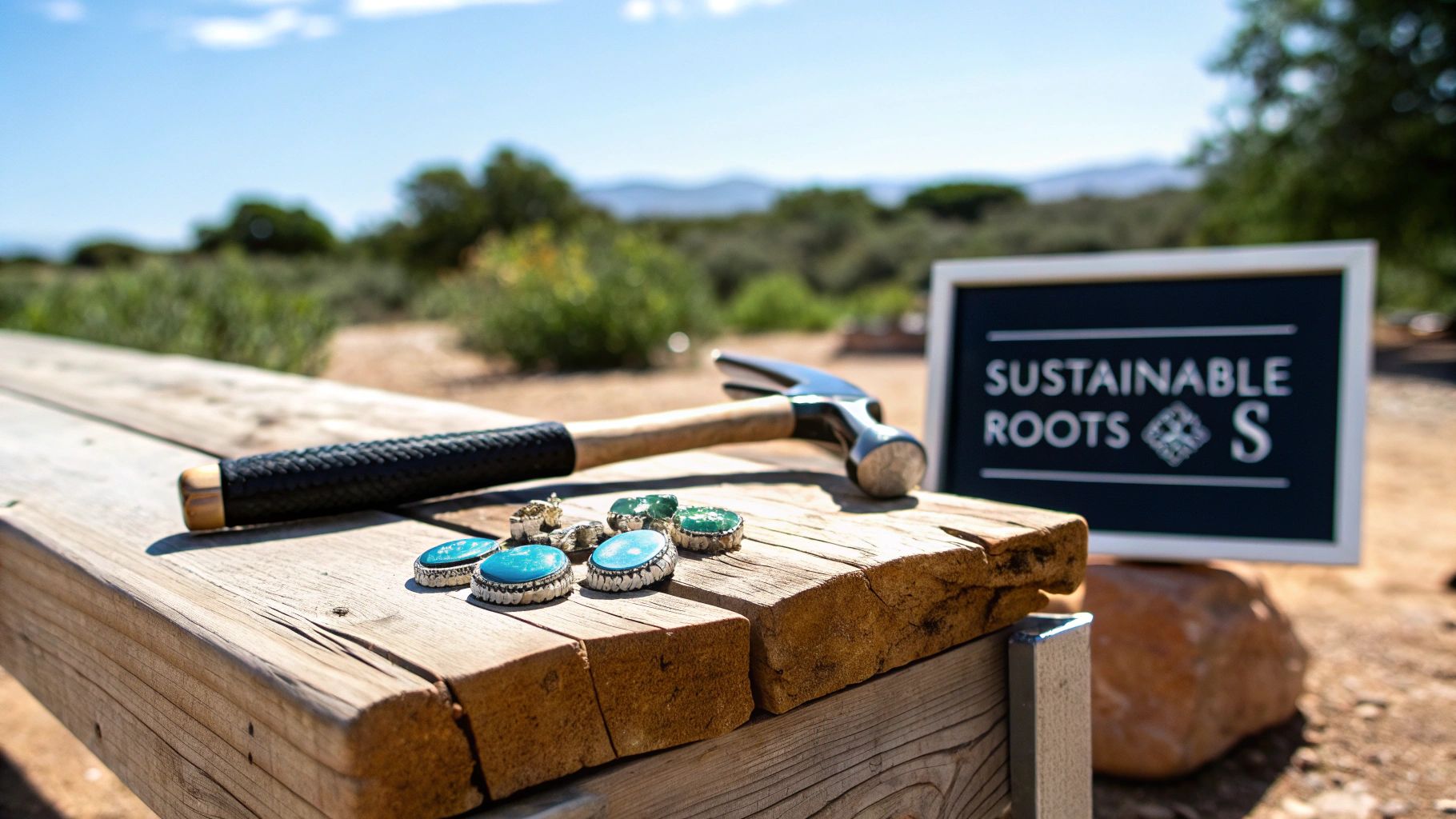
This shift starts with the metals. Instead of digging up new ores, a process that can lead to soil erosion and contaminated water, conscious brands are embracing recycled precious metals. You can think of it as a kind of urban mining—pulling valuable, beautiful materials from sources that are already in circulation.
The Power of Recycled Metals
Opting for recycled sterling silver or gold is one of the most impactful choices you can make to reduce your environmental footprint. It completely sidesteps the destructive side of traditional mining, dramatically cutting carbon emissions, water usage, and waste. For estuarian cowgirl jewelry lovers, this means a classic silver cuff or concho belt can be made from reclaimed materials, delivering the same beauty and quality without the ecological baggage.
This approach honors the timeless feel of Southwestern design while bringing it squarely into the modern era of responsibility. It’s all about giving precious resources a second, third, or even fourth life.
Demystifying Ethically Sourced Stones
When you think of iconic Southwestern styles, turquoise is the star of the show. But what does "ethically sourced" really mean when it comes to this beloved stone? In short, it means the turquoise was obtained with genuine respect for both the land and the people involved in bringing it to you.
Ethical sourcing ensures that the journey of a gemstone from the earth to your jewelry box is transparent, fair, and responsible. It’s about knowing the story behind the stone and feeling proud of it.
This boils down to a few key factors:
- Traceability: The brand can trace the stone back to a specific, reputable mine—often in the American Southwest—known for its responsible labor and environmental practices.
- Fair Labor: The people who mine and cut the stones are paid fair wages and work in safe, humane conditions.
- Land Respect: The mining process is designed to minimize damage to the local ecosystem and respects indigenous land rights.
When you're looking at a piece, don't be shy about asking where it came from. Learning to know your turquoise, from its origin to its quality markers, is a huge step for any conscious collector.
Brilliant, Conflict-Free Alternatives
While turquoise often steals the spotlight, many Southwestern designs feature smaller accent stones. This is where modern, eco-conscious alternatives are really starting to shine. Lab-grown diamonds and other gems offer a brilliant, completely conflict-free option that pairs beautifully with classic estuarian cowgirl designs.
These stones are physically and chemically identical to their mined counterparts, but they're created in a controlled environment, which eliminates the ethical and environmental baggage. Their rising popularity shows a major shift in what buyers value. The lab-grown diamond market, for instance, is projected to hit $12.8 billion globally in 2025. Even more telling, these stones now make up 31% of U.S. engagement ring sales—a massive leap from just 8% in 2020.
This trend really highlights how modern science can support and elevate traditional Southwestern artistry. By thoughtfully selecting pieces made with recycled metals, ethically sourced turquoise, and innovative lab-grown accents, you’re supporting a system that values beauty and responsibility in equal measure.
How to Spot a Genuinely Sustainable Southwestern Brand
Trying to navigate the world of sustainable Southwestern jewelry can feel a bit like searching for a specific shell on a vast shoreline—so many look good from a distance, but which ones are the real deal? To find a brand that’s genuinely ethical, you need to know how to look past the clever marketing and spot a true commitment. It’s all about becoming a savvy shopper who can tell the difference between authentic pieces and clever imitations.
It really starts with understanding the difference between real transparency and greenwashing. Greenwashing is just a fancy term for when brands use vague, feel-good phrases like "mindfully made" or "earth-conscious" without offering any proof. A truly sustainable Southwestern brand, on the other hand, will be proud to pull back the curtain and show you how they operate, offering solid evidence of their ethical practices.
Look for Meaningful Certifications
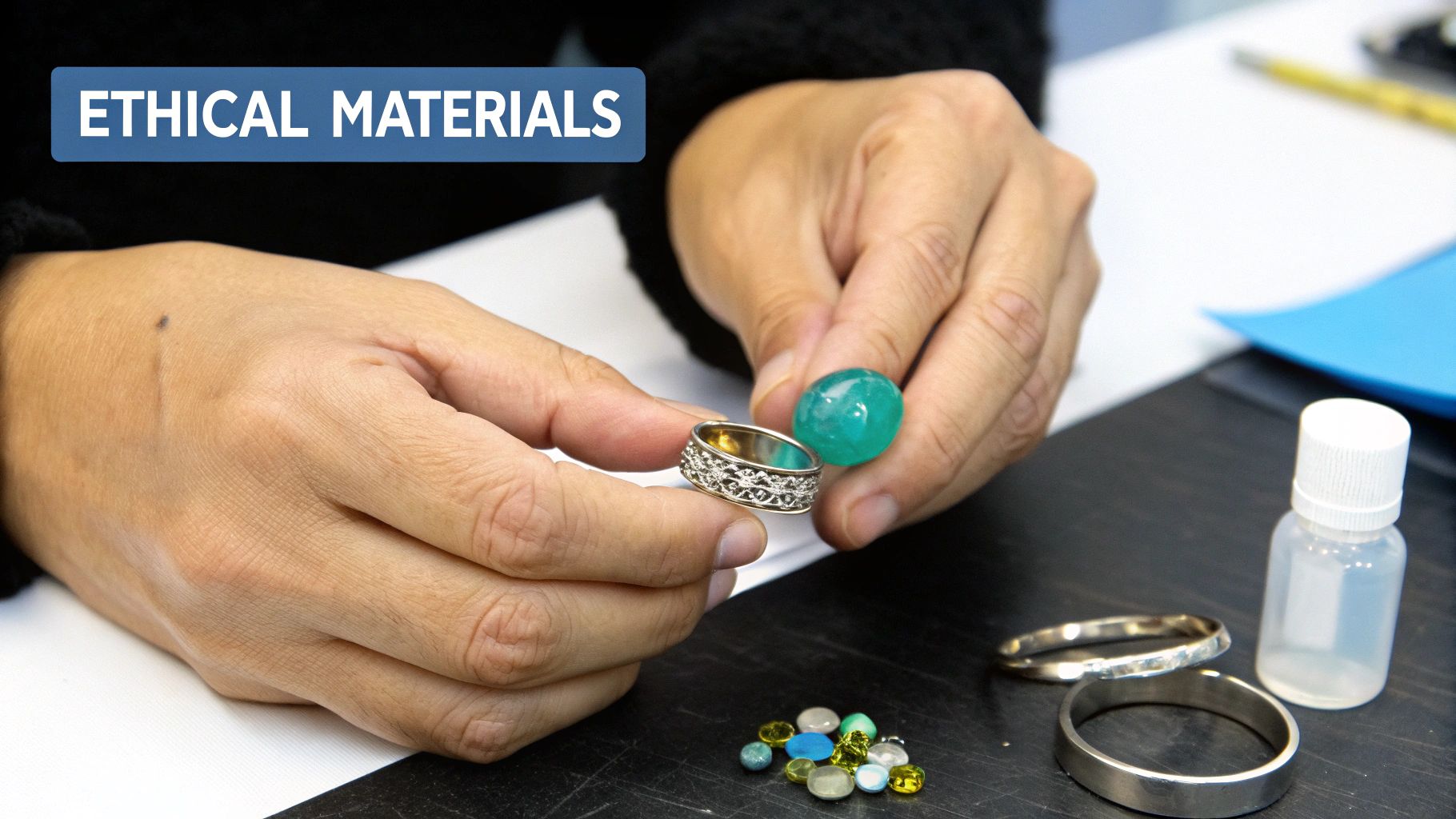
One of the simplest ways to check a brand's claims is to look for third-party certifications. Think of these as a stamp of approval from reputable organizations that have actually audited the brand’s supply chain and practices. They’re proof that a brand is meeting strict environmental and social standards.
A few key certifications to keep an eye out for include:
- Responsible Jewellery Council (RJC): This is a big one. It’s a comprehensive certification covering the entire journey of a piece, from the mine all the way to the store. It ensures members are held to high standards for human rights, labor practices, and environmental impact.
- Fairmined: This label is your guarantee that the gold or silver comes from small-scale artisanal mining groups that are meeting world-class standards for responsible practices. It ensures miners get a fair price and, just as importantly, work in safe conditions.
- Forest Stewardship Council (FSC): While this one isn't about the jewelry itself, seeing an FSC certification on a brand's packaging is a fantastic sign. It means the paper and cardboard are sourced from responsibly managed forests, showing their commitment extends to every last detail.
Dig Into Website Transparency
A sustainable brand's website should be more than just a pretty storefront; it should be a window into its soul. Instead of only seeing beautiful product photos, you should find clear, detailed information about their values and how they do business. Look for specific pages dedicated to their supply chain, where they source their materials, and any partnerships with artisans.
For example, a brand should be able to tell you exactly where its metals and stones come from. A transparent brand specializing in Southwestern styles might proudly share details about the specific American mines they partner with. Exploring the best places to buy turquoise jewelry often starts with brands that are completely open about their sources.
True transparency isn't a marketing tactic; it's a core value. A brand that is genuinely sustainable will welcome your questions and provide clear, honest answers about how their jewelry is made.
So, when you're browsing, don't ever feel shy about asking questions. Shoot an email to customer service and ask about their labor practices or what percentage of recycled materials are in their pieces. A brand with nothing to hide will be happy to share this info, helping you invest in pieces with total confidence.
Shopping Tips for the Conscious Estuarian Cowgirl
Ready to start building a collection of ethical Southwestern jewelry you can truly feel good about? Once you know what to look for, you can shop with real intention. It's about looking past the beautiful turquoise and silver to see the full story behind a piece, making sure your choices line up with your values.
The modern estuarian cowgirl doesn't just follow the herd; she leads with her conscience. That means seeking out brands that are open about their supply chain and truly champion the artisans behind the work. It’s about choosing a company that puts as much thought into its packaging as it does its jewelry, because every little detail counts.
Prioritize Transparency and Fair Labor
How a brand treats its people says everything about its ethics. Look for companies that are proud to share the stories of their silversmiths and artisans, giving them full credit for their incredible craft. A living wage, safe working conditions, and deep respect for cultural heritage—these are the non-negotiables of a truly ethical business.
Thankfully, shoppers are demanding this kind of integrity, and it's starting to reshape the industry. In fact, 78% of U.S. consumers are expected to factor ethical sourcing into their purchases by 2025. That's a huge leap from just 52% in 2020. This shift is all thanks to people like you, who want to know that their stunning turquoise ring didn't come at a human cost.
Knowing where your materials come from is just as important. For some, this also means choosing materials that are gentle on the skin. If that’s a priority for you, it's worth checking out curated lists of nickel-free jewelry brands that prioritize skin safety.
Consider the Full Lifecycle
Sustainability isn’t just about how a piece is made. It’s also about what happens before it gets to you and after it leaves. A holistic approach means looking at everything from a brand's packaging to its overall carbon footprint.
The most sustainable choice is often the one that creates the least waste. From minimalist, recyclable packaging to giving a vintage piece a new home, every conscious decision contributes to a healthier planet.
A responsible brand will use thoughtful materials like:
- Recycled Cardboard Boxes: Look for packaging made from post-consumer waste.
- Organic Cotton Pouches: These are perfect for storing your treasures and are both reusable and biodegradable.
- Soy-Based Inks: These eco-friendly inks avoid the harsh, petroleum-based chemicals found in traditional printing.
Beyond buying new, embracing the circular economy is a powerful move. Choosing vintage Southwestern pieces gives a handcrafted item a second life without using any new resources. In the same way, upcycling old or broken jewelry—maybe melting down an old silver piece to create something new—honors the materials and cuts down on waste. That's the true spirit of a conscious estuarian cowgirl.
Caring for Southwestern Jewelry to Make It Last
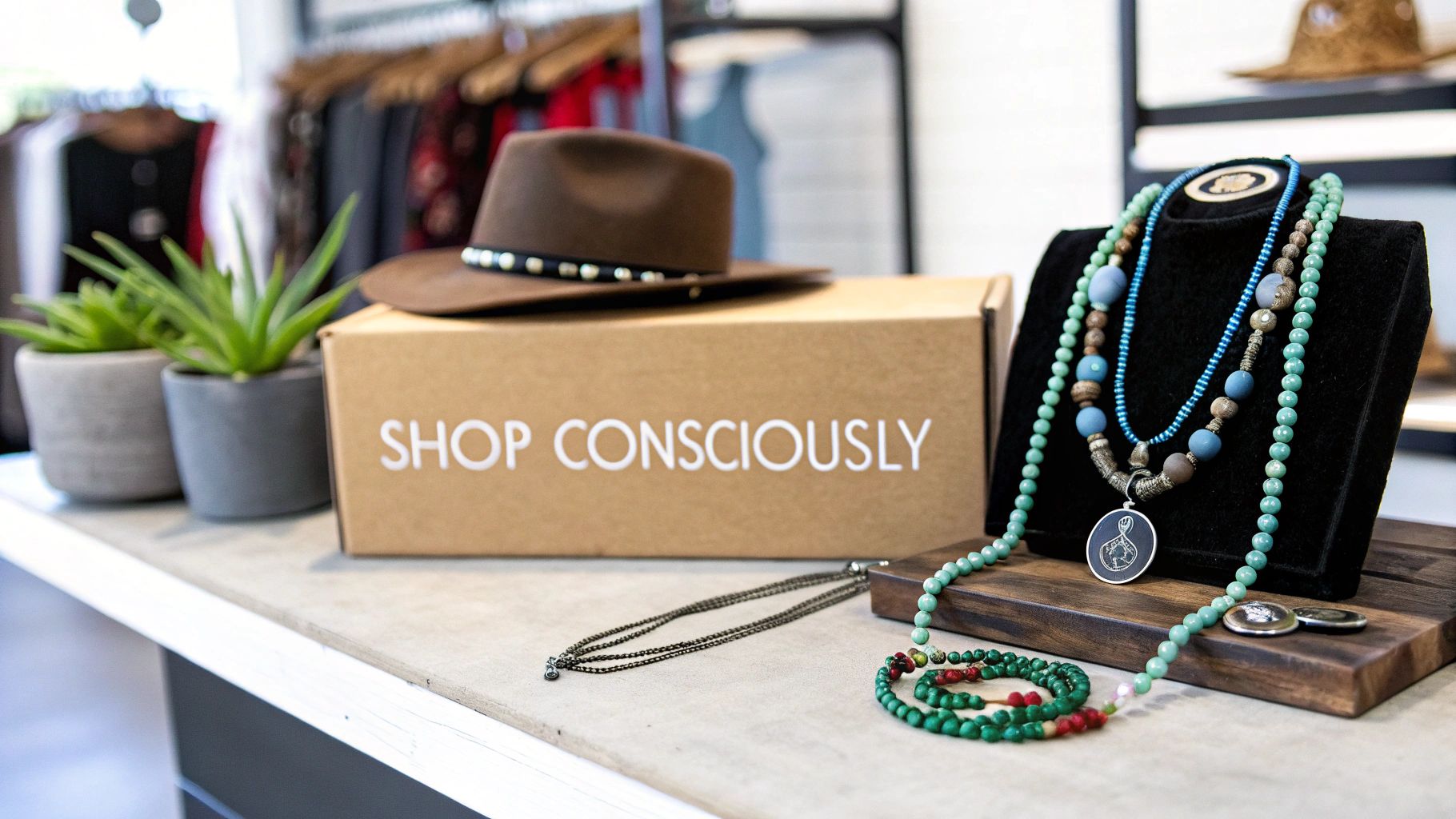
True sustainability doesn’t stop the moment you bring a new piece home. In fact, one of the most powerful eco-conscious moves you can make is simply cherishing what you already own. When you properly care for your Southwestern jewelry, you’re not just maintaining an accessory; you’re ensuring it can be passed down for generations, becoming a treasured heirloom.
This simple act honors the immense skill of the artisan who made it and cuts down on waste, which is the heart of a circular economy. A well-loved, well-maintained piece is proof that longevity is the ultimate form of sustainability. It all starts with knowing what your materials, like sterling silver and turquoise, really need.
Proper Cleaning and Storage Techniques
Southwestern jewelry often showcases sterling silver, a beautiful metal that naturally tarnishes when it meets air and moisture. At the same time, turquoise is a porous stone, meaning it needs a gentle touch to keep its signature vibrant color. The wrong care can cause damage that you just can't undo.
A simple, consistent routine is all it takes to keep your pieces looking their best. If you want to dive deeper, you can explore more essential jewelry care habits that keep pieces shining and build a maintenance plan that works for you.
Here are a few tips specifically for these classic Southwestern materials:
- Sterling Silver Care: Use a soft, non-abrasive cloth to gently polish away tarnish. Steer clear of harsh chemical dips—they can strip the metal of its beautiful patina and are especially damaging to inlaid stones like turquoise.
- Turquoise Protection: Never, ever use an ultrasonic cleaner or ammonia-based products on turquoise. A simple wipe with a soft, dry cloth is all it needs. Be sure to keep it away from lotions, oils, and perfumes, as they can cause discoloration over time.
- Smart Storage: Store each piece of jewelry by itself in a soft cloth pouch or a lined box. This prevents scratching. For silver items, tucking an anti-tarnish strip into the box can make a huge difference in slowing down oxidation.
Knowing When to Seek Professional Help
While your daily care routine is vital, some issues are best left to an expert. A huge part of preserving the value and integrity of your jewelry is knowing the limits of DIY care. You might be able to buff out minor scratches at home, but deeper problems need a professional eye.
A conscious lifestyle involves not just mindful purchasing but also mindful maintenance. Knowing when to care for a piece yourself and when to trust an expert ensures your cherished Southwestern jewelry tells a story for generations to come.
It's time to find a qualified jeweler for tasks like these:
- Loose Stones: If a turquoise cabochon or any other stone feels a bit wobbly in its setting, resist the urge to fix it yourself. A jeweler has the right tools to secure it without cracking the stone or damaging the silverwork.
- Broken Clasps or Chains: Fixing clasps and links requires specialized tools and a steady hand to guarantee a secure, seamless repair.
- Deep Scratches or Dents: A professional can carefully remove significant blemishes from silver without altering the piece's original design and character.
Frequently Asked Questions About Sustainable Southwestern Jewelry
Stepping into the world of sustainable jewelry can feel a little overwhelming, especially when you’re trying to find pieces that resonate with that unique Southwestern and estuarian cowgirl spirit. But getting clear, honest answers is the best way to shop with confidence and build a collection you can feel really good about. Let's tackle some of the most common questions people have.
What Is the Most Important Factor in Sustainable Jewelry?
While the materials get most of the attention, the single most crucial factor is transparency. A brand that is truly committed to sustainability will be an open book about its entire supply chain—from where it sources metals and stones to the working conditions of its artisans. It’s the foundation for everything else.
Think of it like this: transparency is like a clear stream. You can see straight to the bottom and know nothing is hiding in the mud. A brand that offers up detailed information and gladly answers your questions is showing you it has nothing to hide. Without it, any claims about recycled materials or fair labor are just words without proof.
Is Buying Vintage Southwestern Jewelry a Sustainable Choice?
Absolutely. In fact, choosing vintage or pre-owned Southwestern jewelry is one of the most sustainable moves you can make. It’s the ultimate form of a circular economy, giving a gorgeous, handcrafted piece a new chapter in its life while honoring its unique history.
This approach comes with some major perks:
- No New Mining: It completely sidesteps the environmental impact of mining because it requires zero new resource extraction.
- Reduces Waste: It keeps stunning, high-quality pieces in the world and out of landfills.
- Preserves Craftsmanship: You're celebrating the artistry of a past era and often discovering one-of-a-kind treasures with incredible stories.
How Can I Spot Greenwashing in Jewelry Brands?
Greenwashing is a sneaky marketing tactic where a brand uses vague language to appear more eco-friendly than it really is. To catch it, you have to look for substance over style. Be skeptical of fuzzy terms like "eco-conscious" or "mindfully made" if they aren't backed up with hard evidence.
A genuinely sustainable Southwestern brand offers concrete proof, like official certifications (think Fairmined), data on recycled material content, or detailed information about their supply chain partners. If the claims feel like marketing fluff with no real substance, that's a big red flag.
Ask yourself if the brand is giving you the facts. Do they tell you the exact percentage of recycled silver they use? Do they name the specific American mines their turquoise comes from? If a brand's sustainability story is all sizzle and no steak, it's best to keep searching.
Are Lab-Grown Stones Authentic to the Estuarian Cowgirl Aesthetic?
While natural turquoise is without a doubt the heart of traditional Southwestern style, lab-grown accent stones are a fantastic, modern, and sustainable choice. They represent an evolution of the estuarian cowgirl aesthetic, blending that time-honored design with a forward-thinking respect for the planet. For smaller accent gems like diamonds or sapphires, they offer the exact same sparkle and durability as mined stones, just with a much smaller environmental and social footprint.
Using lab-grown stones is an innovative way for designers and wearers to honor tradition while embracing a more responsible future. It proves that the estuarian cowgirl spirit isn’t just about heritage—it’s also about adapting and making smart choices for the world we love.
At Silver Elegant, we believe the heart of Southwestern style is rooted in respect—for the land, the culture, and the craft. Explore our collections of sterling silver and turquoise pieces designed for the modern, conscious estuarian cowgirl who values both beauty and integrity. Find your next heirloom at https://silverelegant.com.