

Silver southwestern jewelry is so much more than an accessory—it's a piece of heritage, a symbol of freedom, and a bold expression of who you are. When you slip on a classic turquoise ring or a heavy concho cuff, you're not just wearing jewelry; you're wearing art that tells a story, connecting the soul of the American Southwest to modern style.
The Enduring Allure of Silver Southwestern Jewelry
There's a certain spirit captured in every piece of silver southwestern jewelry, something that speaks of wide-open spaces, rugged independence, and a deep connection to the land. Whether it's the intricate stamp work on a sterling silver cuff or the brilliant blue of a turquoise stone, each element carries a story that has been passed down through generations.
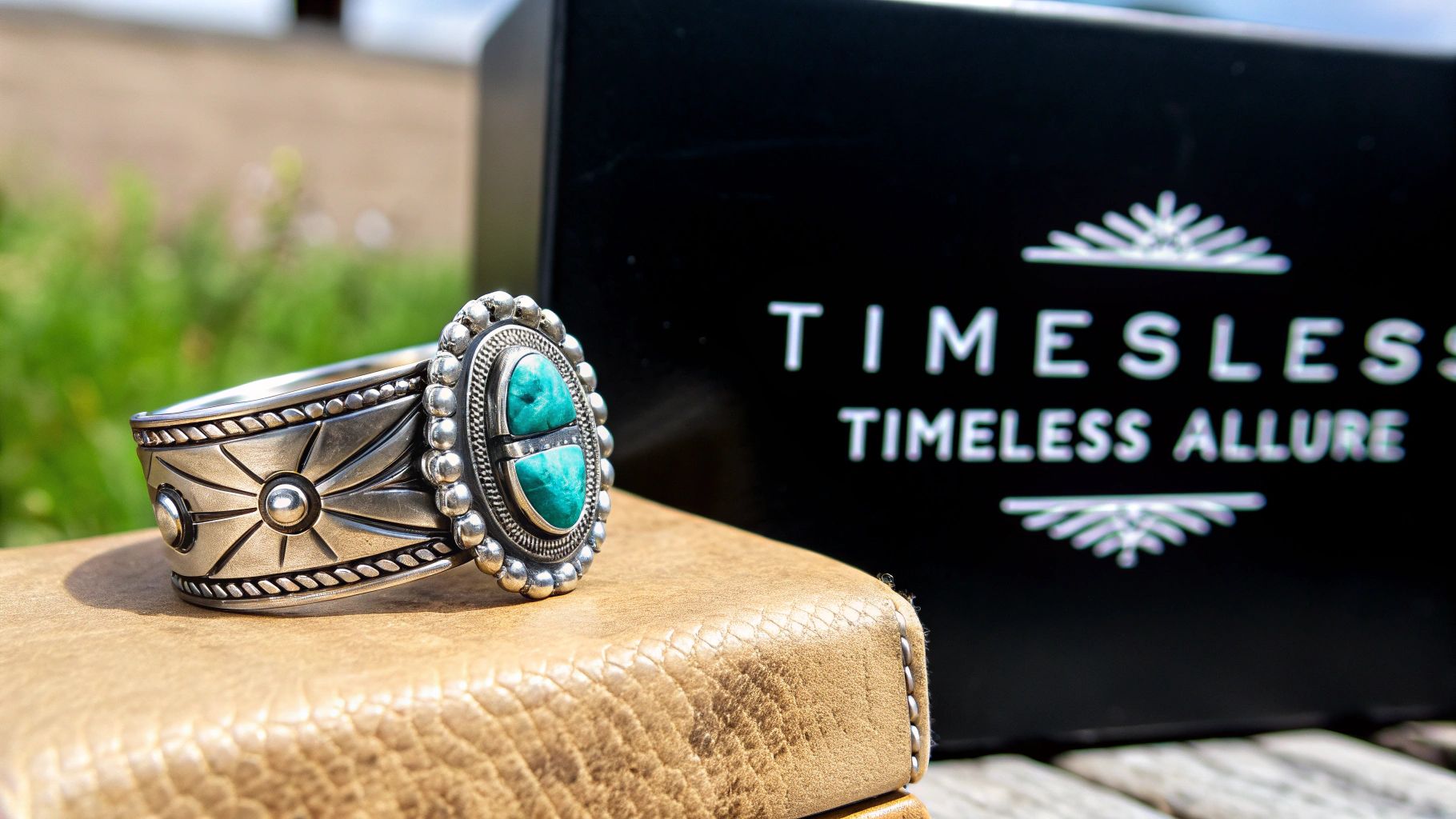
This incredible legacy, deeply rooted in the masterful craftsmanship of Navajo, Zuni, and Hopi artists, has found new life in today's fashion trends. The style's bold yet rustic feel is no longer confined to its Southwestern origins; it has truly become a global phenomenon. You can learn more about the deep cultural roots and artistry by exploring the history of Native American jewelry.
From Southwestern Roots to Global Trend
The journey of silver southwestern jewelry from a regional craft to a worldwide fashion staple is nothing short of remarkable. What started as a form of personal and ceremonial expression has been embraced by countless subcultures, creating a beautiful blend of old and new. The style's adaptability is really its greatest strength.
The core elements that give this aesthetic its soul include:
- Bold Sterling Silver: Often heavily stamped or oxidized to create depth, silver is the foundational canvas for the intricate designs.
- Iconic Gemstones: Turquoise is the quintessential stone, but others like spiny oyster, coral, and white buffalo are just as celebrated.
- Symbolic Motifs: Elements like squash blossoms, conchos, and feathers carry deep cultural significance and a powerful visual punch.
- Handcrafted Artistry: The real value lies in the unique touch of the artist, which makes every single piece a one-of-a-kind treasure.
This blend of heritage and style is also making waves in the market. Silver southwestern jewelry is part of a global silver jewelry market valued at an estimated USD 51.6 billion in 2025. Projections show it could grow to over USD 81.7 billion by 2035, with a steady compound annual growth rate of around 4.7%. North America and Western Europe are key markets where people are increasingly mixing boho, cowgirl, and Southwestern pieces into their daily wardrobes.
Why This Style Resonates Today
The appeal of this jewelry really comes down to its authenticity. In a world saturated with fast fashion, these pieces offer a sense of permanence and meaning. They connect us to a story of resilience, artistry, and the untamed spirit of the American Southwest.
The beauty of silver southwestern jewelry is its ability to be both a nod to the past and a modern expression of personal style. It’s a timeless look that feels both grounded and free-spirited.
Whether you're drawn to the classic 'equestrian cowgirl' vibe, the free-flowing 'boho chic' look, or the trendy 'estuarian cowgirl' aesthetic, silver southwestern jewelry provides the perfect finishing touch. It allows you to express your unique personality while honoring a powerful and enduring artistic legacy.
Decoding Southwestern and Cowgirl Jewelry Styles
Diving into the world of silver southwestern jewelry is like exploring a rich landscape, full of distinct cultures, traditions, and artistic signatures. While many pieces share that unmistakable Southwestern spirit, their origins often tell very different stories. Getting to know the nuances between Navajo, Zuni, and Hopi styles is the key to truly appreciating the incredible artistry and finding the pieces that just feel right for you.
Think of these traditions as unique dialects of the same visual language. Each has its own grammar and vocabulary, spoken through silver and stone. Once you learn to spot these signatures, you’ll go from simply admiring a piece to deeply understanding the skill and heritage poured into it.
The Bold Silverwork of the Navajo
When you see a piece of jewelry that feels substantial, powerful, and built around a show-stopping stone, chances are you’re looking at a Navajo design. Navajo (or Diné) silversmiths are true masters of metalwork, treating silver not just as a setting, but as the main event. Their style is defined by bold, hand-stamped silver that often serves as a dramatic frame for a single, large turquoise cabochon.
You'll recognize Navajo jewelry by these hallmarks:
- Heavy Silver: The focus is on creating a weighty, significant piece. The silverwork is just as important as the stone it holds.
- Intricate Stamp Work: Artists use handmade stamps to create repeating patterns, sunbursts, and geometric designs, giving the metal incredible texture and depth.
- Oxidized Backgrounds: Darkened, or oxidized, grooves and backgrounds are a classic move to make the polished silver designs and bright turquoise pop right off the piece.
This style is all about strength and presence. The silver acts as a powerful canvas, showcasing the natural beauty of a Kingman turquoise or a White Buffalo stone. It makes every ring, cuff, or necklace an undeniable statement.
The Masterful Stonework of the Zuni
In beautiful contrast to the Navajo focus on silver, Zuni artisans are famous for their unmatched lapidary skills. Here, the stones themselves create the art. Zuni jewelry is a vibrant mosaic of color and precision, often feeling more delicate and intricate. Their work is a stunning testament to patience and an incredible eye for detail.
The most famous Zuni techniques involve breathtaking inlays. Imagine an artist painting not with pigments, but with perfectly cut, hand-shaped gemstones.
Zuni inlay is a meticulous art form where tiny pieces of turquoise, coral, jet, and mother-of-pearl are fitted together seamlessly. They create stunning images like hummingbirds, sun faces, or intricate geometric patterns.
Their other signature styles are petit point and needlepoint, where tiny, teardrop-shaped or needle-like stones are set in intricate clusters. This creates a texture and brilliance that is uniquely Zuni. The silver in these pieces plays a graceful supporting role, forming a delicate framework for the dazzling display of stonework.
The Storytelling of Hopi Overlay
Hopi jewelry offers a completely different, yet equally captivating, look built on a technique called overlay. This method is a fascinating process involving two separate sheets of sterling silver. The artist starts by drawing a design—often representing water, clouds, clan symbols, or animals—onto the top sheet and meticulously cuts it out with a tiny jeweler's saw.
This top sheet is then perfectly soldered onto a solid bottom sheet of silver that has been heavily oxidized to a deep, matte black. After polishing the top layer to a high shine, you get a striking, graphic contrast between the gleaming silver design and the dark, textured background. The result is clean and contemporary, yet rich with cultural symbolism and storytelling. For a deeper dive into these techniques and motifs, you can explore more about how Western jewelry is explained, from turquoise to stamped silver.
From Traditional Motifs to Modern Cowgirl Chic
These foundational styles are the bedrock of so much modern fashion. Classic motifs like the squash blossom necklace and the concho belt remain iconic staples, but they also inspire a new wave of contemporary designs.
We're now seeing trends like "estuarian cowgirl," which blends these traditional elements with a lighter, more relaxed, by-the-water vibe. Think delicate silver feather charms or minimalist turquoise studs paired with breezy linen and denim. This beautiful fusion ensures that whether you prefer bold, traditional art or subtle, boho-inspired accents, there is a piece of silver southwestern jewelry just waiting to tell your story.
2. Understanding Your Jewelry's Materials and Craftsmanship
To really feel confident when you're buying silver southwestern jewelry, it helps to know what you're looking at. The heart and soul of any piece lie in its materials and the hands that crafted it—these details determine its beauty, how long it will last, and its overall value. Learning to "read" the metal and stones empowers you to pick out pieces you'll truly love for a lifetime.
When you're browsing for that perfect cowgirl piece, you'll come across a few different types of silver. It's really important to know the difference because it affects everything from the price tag to how well it holds up over time. Getting this right means you can choose something that fits both your budget and your lifestyle.
Decoding the Different Types of Silver
Let’s be clear: not all silver is created equal. The gold standard for high-quality southwestern jewelry is sterling silver, which you'll often see marked as 925 silver. This stamp means the metal is an alloy of 92.5% pure silver mixed with 7.5% other metals, usually copper. That little bit of copper is the secret ingredient that gives silver the strength it needs for daily wear without dimming its gorgeous shine.
On the other side of the coin, you have silver-plated jewelry. This is where a thin layer of silver is coated over a less expensive base metal, like brass or copper. While it's a much more budget-friendly option, that thin silver layer can eventually wear off, revealing the metal underneath. If you're looking for a forever piece—something you can pass down one day—sterling silver is absolutely the way to go. You can get more tips on spotting the real deal in our guide on how to tell if jewelry is sterling silver.
To help you tell the difference between the iconic Southwestern styles, this chart breaks down the artistic traditions of Navajo, Zuni, and Hopi artisans.
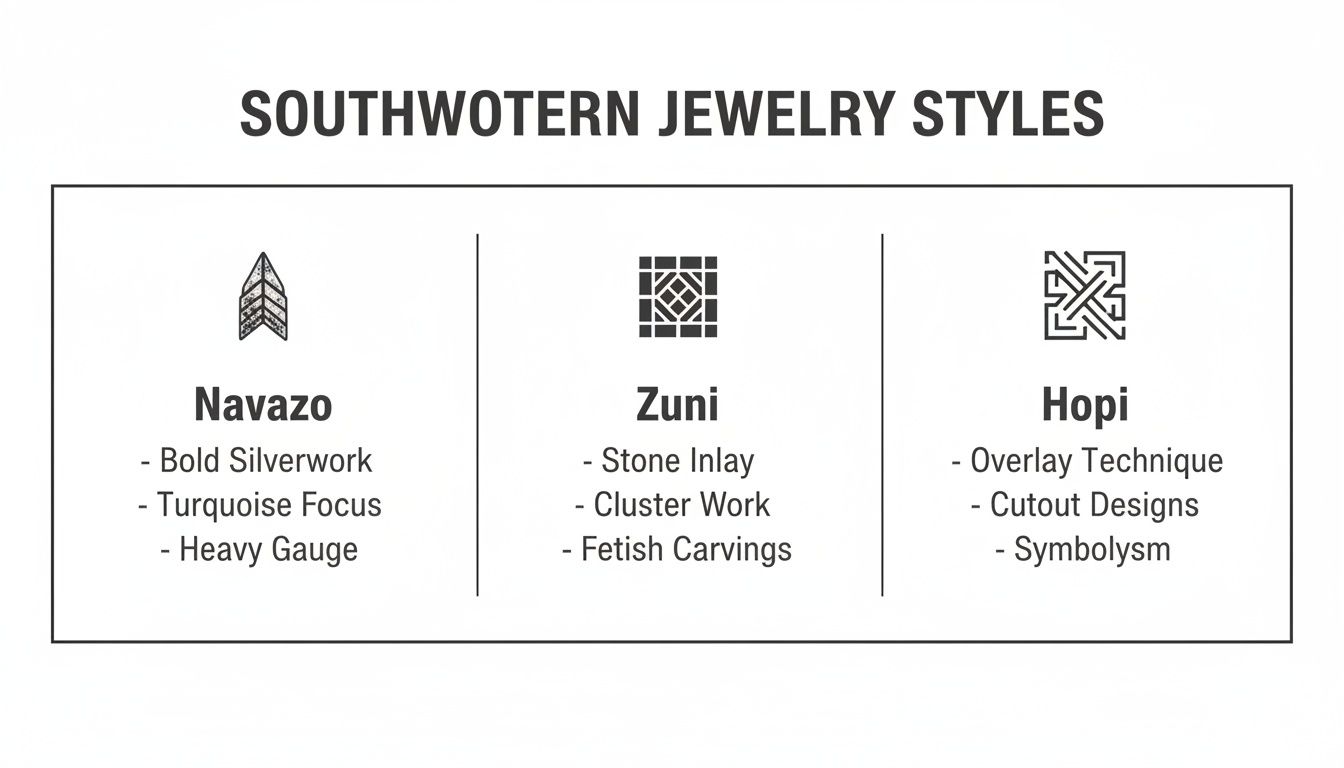
This quick visual guide makes it easy to see whether a piece is all about bold silverwork (Navajo), detailed stone inlay (Zuni), or striking overlay designs (Hopi). Knowing these signatures will make you a much more savvy collector.
Hallmarks, Gemstones, and Why They Matter
A hallmark is a tiny but mighty stamp on a piece of jewelry that tells you about its origins and what it's made of. For sterling silver, the magic numbers are "925" or the word "Sterling." Think of these marks as a guarantee of quality, confirming the piece is the real deal.
When it comes to gemstones, especially turquoise, authenticity is everything. Real turquoise has natural, beautiful imperfections—subtle shifts in color and a "matrix," which are those dark, web-like lines running through the stone. It should also feel cool and a bit heavy in your hand. Fake turquoise, on the other hand, is often made from plastic or dyed howlite and tends to look a little too perfect and uniform. It can also feel suspiciously lightweight or warm to the touch.
Trust your gut and the seller's transparency. A good artisan or shop will be happy to tell you where their stones come from, giving you the confidence to make a great choice.
Of course, silver is just one piece of the puzzle. Southwestern jewelry often features mixed metals, plated options, and other materials. This table breaks down the most common ones to help you decide what's best for you.
Silver Jewelry Materials at a Glance
| Material Type | Composition | Best For | Care Level |
|---|---|---|---|
| Sterling Silver | 92.5% pure silver, 7.5% other metals (usually copper). | Everyday wear, heirloom pieces, and sensitive skin. | Medium (Requires regular polishing to prevent tarnish). |
| Silver-Plated | A thin layer of silver over a base metal (brass, copper). | Affordable fashion jewelry and trying out new styles. | High (Plating can wear off; avoid water and chemicals). |
| Mixed Metals | Often combines sterling silver with brass, copper, or gold accents. | Creating a unique, rustic, or modern look. | Varies (Clean each metal according to its specific needs). |
| Stainless Steel | An iron-based alloy with chromium. | Durability, hypoallergenic needs, and a modern aesthetic. | Low (Resistant to tarnish and scratches). |
Knowing these differences helps you shop smarter, ensuring the piece you choose not only looks great but also fits your lifestyle and how much upkeep you're willing to do.
The Importance of Hypoallergenic Materials
There's nothing worse than falling in love with a piece of jewelry only to have it cause an itchy, red rash. Allergic reactions are a real buzzkill, and they're often caused by nickel, a metal commonly used in cheap alloys and plated jewelry.
This is where high-quality silver southwestern jewelry really shines. Sterling silver is a fantastic hypoallergenic option because it uses copper—not nickel—as its primary alloy. That simple switch makes it a safe and comfortable choice for most people with sensitive skin. When you opt for well-made, nickel-free pieces, you can wear your favorite cuffs, rings, and necklaces day in and day out without a second thought.
How to Style Your Silver Southwestern Jewelry
One of the best things about silver southwestern jewelry is just how versatile it is. These aren't pieces you save for a special occasion; they're meant to be lived in, loved, and woven right into your everyday life. Let’s move past the generic advice and get into the real ways to make your silver shine, whether you're just grabbing coffee or heading out to a festival.
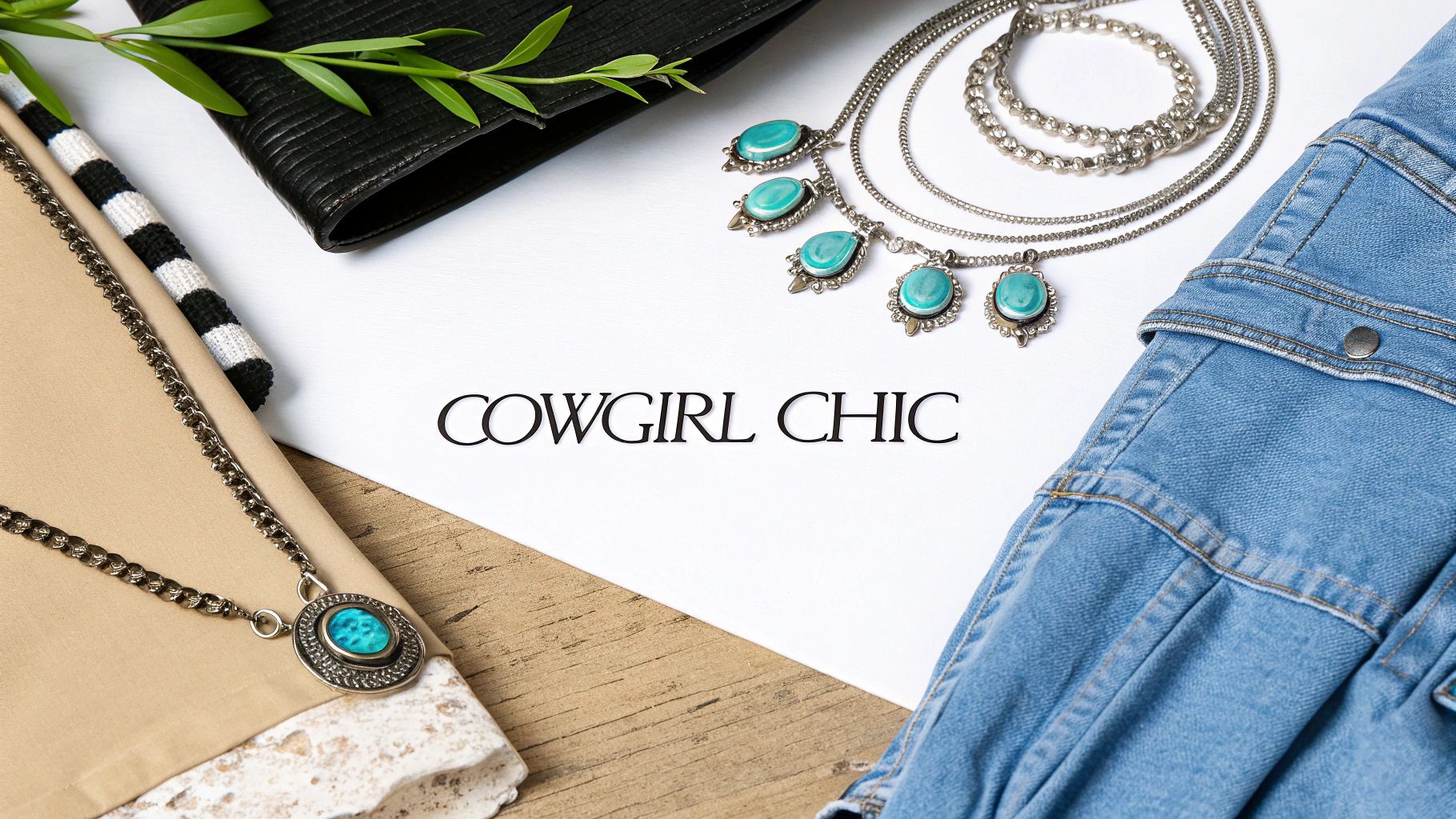
Honestly, the real secret to styling is just confidence. It’s about learning to balance those bold, eye-catching pieces with more delicate accents and getting a feel for how texture, color, and size work together to create a look that is 100% you.
Creating Effortless Everyday Looks
Bringing a little Southwestern flair into your daily wardrobe is way easier than it sounds. The key is to start with a few well-chosen, more subtle pieces that add personality without shouting. Think of it like adding a pinch of a favorite spice to a meal—just enough to make things interesting.
For a simple but polished look, try layering a couple of delicate silver necklaces of different lengths. A simple sterling chain paired with a small turquoise pendant looks incredible over a plain t-shirt or a cozy sweater. It adds just the right hint of estuarian cowgirl charm that feels both intentional and completely effortless.
Stacking rings is another easy win. Instead of one huge statement ring, try wearing several thinner, stamped silver bands across a few fingers. This adds a great texture and visual interest that perfectly complements a casual jeans-and-boots kind of day.
Here are a few combinations to get you started:
- The Casual Stack: Try two simple silver bands with one ring that has a small, bezel-set stone.
- The Layered Necklace: A 16-inch silver chain with an 18-inch pendant creates that classic, can't-go-wrong layered effect.
- The Subtle Cuff: A thin, minimalist silver cuff bracelet is perfect on its own or worn next to a watch for a clean, modern vibe.
Mastering the Bold Cowgirl Chic Statement
When you’re ready to make a bigger impact, it’s time to embrace the bold, free spirit of Southwestern style. This is your moment to let those magnificent, eye-catching pieces shine and show off the incredible artistry of Southwestern design. Making a statement isn't about piling on everything you own; it's about picking one or two focal points and building your outfit around them.
A classic concho belt, for example, can instantly turn a simple dress or a pair of high-waisted jeans into a head-turning look. Whether you wear it over a flowy maxi dress or cinch it at the waist of a blazer, it adds an immediate dose of authentic cowgirl cool.
The power of a statement piece lies in its ability to tell a story. A bold turquoise cuff or an oversized squash blossom necklace isn't just an accessory; it’s the centerpiece of your entire look.
A large turquoise ring or a substantial silver cuff can also be your main statement piece. If you go for a bold bracelet, maybe keep your necklaces simple or let the cuff stand on its own. This creates a nice balance and lets the craftsmanship of your chosen piece really take center stage. Pair a chunky bracelet with a leather jacket for a bit of an edge, or wear an intricate floral necklace with a sundress for a more romantic feel. Don't be afraid to let your silver western jewelry be the hero of your outfit.
Essential Care to Keep Your Jewelry Brilliant
Your silver southwestern jewelry is more than just an accessory—it's an investment in artistry and your personal story, meant to be cherished for a lifetime. To keep each piece looking as stunning as the day you got it, a little mindful care goes a long way. Protecting your collection is just as crucial as knowing how to clean it, preserving both the brilliant silver and the delicate gemstones it showcases.
The main enemy of silver's shine is tarnish. But don't worry, it isn't rust or decay. Tarnish is just a simple chemical reaction. When sterling silver meets sulfur compounds in the air, a dark layer of silver sulfide forms on the surface, dimming its natural glow. Things like humidity, cosmetics, and even certain foods can speed up this process, which is why proper care is so important.
Gentle Cleaning for Sterling Silver
When your jewelry starts looking a bit dull, you might be tempted to grab a heavy-duty cleaner, but a gentle touch is always the best way to go. A surprisingly effective method uses just a few things you probably already have at home. Start by lining a bowl with aluminum foil, making sure the shiny side is up. Add a tablespoon of baking soda, then place your silver pieces inside so they're touching the foil.
Next, carefully pour in enough hot water (not boiling!) to cover the jewelry completely. You'll see a little fizzing—that’s a mild chemical reaction pulling the tarnish right off your silver and onto the foil. After a few minutes, use tongs to take the pieces out, give them a good rinse under cool water, and pat them completely dry with a soft, lint-free cloth.
Pro Tip: Whatever you do, never use abrasive materials like paper towels or toothpaste to clean your silver. They can create tons of tiny scratches on the surface, which will permanently dull the finish and make it even more prone to future tarnish.
Special Considerations for Gemstones
That baking soda trick is a lifesaver for solid silver, but pieces with turquoise or other porous gemstones need a little extra TLC. Stones like turquoise, spiny oyster, and coral are really sensitive to chemicals and moisture. Submerging them can cause them to discolor or even get damaged.
For these treasured items, you need a more targeted approach. Use a professional silver polishing cloth to gently buff the metal, working carefully around the stones. If the stone itself needs a little cleaning, a soft, dry cloth is usually all you need to wipe away any oils or dust. Steer clear of all commercial jewelry dips, ultrasonic cleaners, and harsh chemicals—they can strip the stone of its natural oils and ruin its beautiful color.
For a deeper dive, check out our complete guide on how to clean sterling silver jewelry at home. It's packed with more tips for all sorts of situations.
Preventing Tarnish Before It Starts
Honestly, the best way to deal with tarnish is to stop it from forming in the first place. Proper storage is your number one defense against the environmental factors that cause your jewelry to lose its luster.
Just follow these simple storage rules:
- Store It Dry: Always keep your jewelry in a cool, dry place. Humidity is tarnish's best friend, so the bathroom is not the spot for your silver.
- Use Anti-Tarnish Solutions: Tuck each piece into an individual airtight bag with an anti-tarnish strip. A jewelry box lined with anti-tarnish cloth is another great option.
- Wear It Last, Remove It First: Think of your jewelry as the finishing touch. Put it on after you've applied lotions, perfumes, and hairspray. And take it off before you swim, shower, or work out to keep it away from chemicals and moisture.
By making these simple habits part of your routine, you’ll protect the incredible craftsmanship of your pieces and ensure they stay brilliant for years to come.
Your Guide to Choosing the Perfect Piece
Finding the right piece of silver southwestern jewelry is a feeling, not just a transaction. Whether you're treating yourself or searching for a gift, it's about connecting with something that feels just right. The perfect piece isn't only about how it looks, but how it feels to wear—making sure the fit is perfect and the style reflects a unique personality is what turns a pretty accessory into a treasured keepsake.
This should be a fun hunt, not a stressful one. With a few easy tricks for getting measurements right and a little insight into matching style with personality, you can find your next piece with complete confidence. Let's make sure it's a perfect match in every way.
Getting the Fit Just Right
A beautiful piece of jewelry that pinches, slides off, or just feels awkward will inevitably end up collecting dust in a drawer. Taking a quick moment to measure for bracelets and rings is the secret to ensuring all-day comfort and a look that feels completely natural.
-
For Bracelets and Cuffs: Grab a flexible measuring tape and wrap it snugly around your wrist, right where the bracelet will sit. Jot down that number, then add about a half-inch to give it a little breathing room. For open cuffs, that initial wrist measurement is your guide to finding a size that slips on securely without needing a lot of bending and reshaping.
-
For Rings: The absolute easiest way is to borrow a ring that already fits perfectly. You can place it over a printable ring sizer chart or simply measure the inside diameter and match it to a sizing guide. No ring to borrow? No problem. Just wrap a thin strip of paper around the base of the finger, mark where it overlaps, and then measure that length.
These simple steps take all the guesswork out of shopping online. If you want to dive a little deeper, our guide to choosing sterling silver turquoise rings has even more tips for finding that flawless fit.
Matching the Jewelry to the Personality
Beyond the perfect size, the real magic happens when a piece connects with the wearer's personal style. Southwestern and estuarian cowgirl jewelry has a huge vocabulary, speaking in everything from quiet, understated whispers to bold, free-spirited shouts.
Think about the person's wardrobe and their general vibe. Are they drawn to classic, timeless pieces, or do they light up a room and love being the center of attention?
-
For the Bold and Expressive: Look for pieces that make a statement. Think big—a substantial turquoise cuff, a multi-stone cluster ring, or a chunky necklace. These eye-catching designs are perfect for someone with a vibrant, outgoing personality who isn't afraid to let their style do the talking.
-
For the Elegant and Understated: Sometimes less is more. Consider delicate designs like a simple stamped silver band, a thin chain with a single feather charm, or a pair of small, sweet turquoise studs. These pieces add just the right touch of Southwestern grace without ever feeling over the top.
A Checklist for Shopping with Confidence
When you're ready to make a purchase, especially online, it pays to know what to look for in a seller. A great shop makes the entire experience feel transparent and supportive, giving you total peace of mind.
A great seller doesn't just offer beautiful jewelry; they provide the information and support you need to feel completely confident in your choice. This transparency is a hallmark of quality and respect for the customer.
Use this quick checklist to size up any online seller:
-
Detailed Product Descriptions: They should be upfront about everything. Look for clear language specifying materials (sterling silver vs. silver-plated), the exact dimensions of the piece, and the type of gemstones used.
-
High-Quality Photos: You need to see what you're buying. Look for multiple, crisp images from different angles that honestly show the piece's details, texture, and scale.
-
Transparent Policies: No secrets here. Check for easy-to-find information on shipping, returns, and exchanges. Responsive and helpful customer service is another huge green flag.
-
Customer Reviews: See what other people are saying. Real-world feedback from other buyers is invaluable for judging the quality of both the jewelry and the shopping experience.
Common Questions About Silver Southwestern Jewelry
Diving into the world of silver southwestern jewelry often brings up a few questions, especially around quality, authenticity, and the traditions behind each piece. Getting those answers not only helps you appreciate the incredible artistry but also gives you confidence in the jewelry you choose to wear and treasure.
Let’s walk through some of the most common things people ask, so you can get a deeper understanding of this timeless style.
Is Sterling Silver Good for Sensitive Skin?
It sure is. High-quality sterling silver, which you'll recognize by its "925" stamp, is actually one of the best metals for sensitive skin. It's made of 92.5% pure silver, and the other 7.5% is typically copper—not nickel, which is the usual culprit behind skin irritation.
This mix makes it a beautiful, strong, and hypoallergenic choice that’s comfortable enough to wear all day, every day. Just be sure to look for that hallmark to know you're getting the real deal.
How Can I Tell if Turquoise Is Real?
Real, authentic turquoise has character. You’ll want to look for natural, irregular matrix patterns—those dark, web-like lines running through the stone—and subtle variations in color that give each stone a unique fingerprint. A genuine stone will also feel cool and a bit dense when you touch it.
Imitations, on the other hand, often look a little too perfect and uniform. They can feel lightweight, almost like plastic, and might feel warm to the touch. A simple (but careful!) trick is to touch a hot pin to an inconspicuous spot; plastic will melt or burn, but a real stone won't be harmed. Above all, the best way to ensure authenticity is to buy from a reputable seller who is transparent about their gemstones.
The natural imperfections in a genuine turquoise stone aren't flaws. They're the marks of its journey from the earth to you, telling a story no imitation ever could.
What Is the Difference Between Navajo and Zuni Jewelry?
Both are iconic Southwestern styles, but they highlight different artistic talents and philosophies. Knowing the difference really helps you appreciate the incredible skill that goes into making authentic silver southwestern jewelry.
-
Navajo Jewelry: This style is known for its substantial, bold silverwork that really puts the metal front and center. Artists often use heavy, hand-stamped silver to create a powerful frame for large, striking stones. The overall feel is weighty and strong.
-
Zuni Jewelry: In contrast, Zuni jewelry is all about masterful stone cutting. Zuni artists are famous for their intricate inlay work, where they fit tiny, perfectly cut stones together to create colorful, detailed mosaic patterns like sun faces, birds, or flowers. The focus is on the incredible precision of the stonework itself.
Ready to find a piece that tells your story? At Silver Elegant, we celebrate the artistry of Southwestern and cowgirl jewelry with handcrafted designs in sterling silver and genuine gemstones. Explore our collections and discover the perfect piece to express your unique style at https://silverelegant.com.