

When you’re drawn to the sun-drenched, free-spirited style of Southwestern jewelry, the last thing you want is for an allergy to get in the way. For earrings, the best choices are typically metals like titanium, platinum, niobium, and surgical-grade stainless steel. These are fantastic for sensitive skin because they contain little to no nickel—the usual culprit behind irritation. Picking the right metal is the secret to wearing your favorite turquoise dangles comfortably, free from the annoying redness and itching that can ruin a great look.
Wear Your Southwestern Style Without the Itch
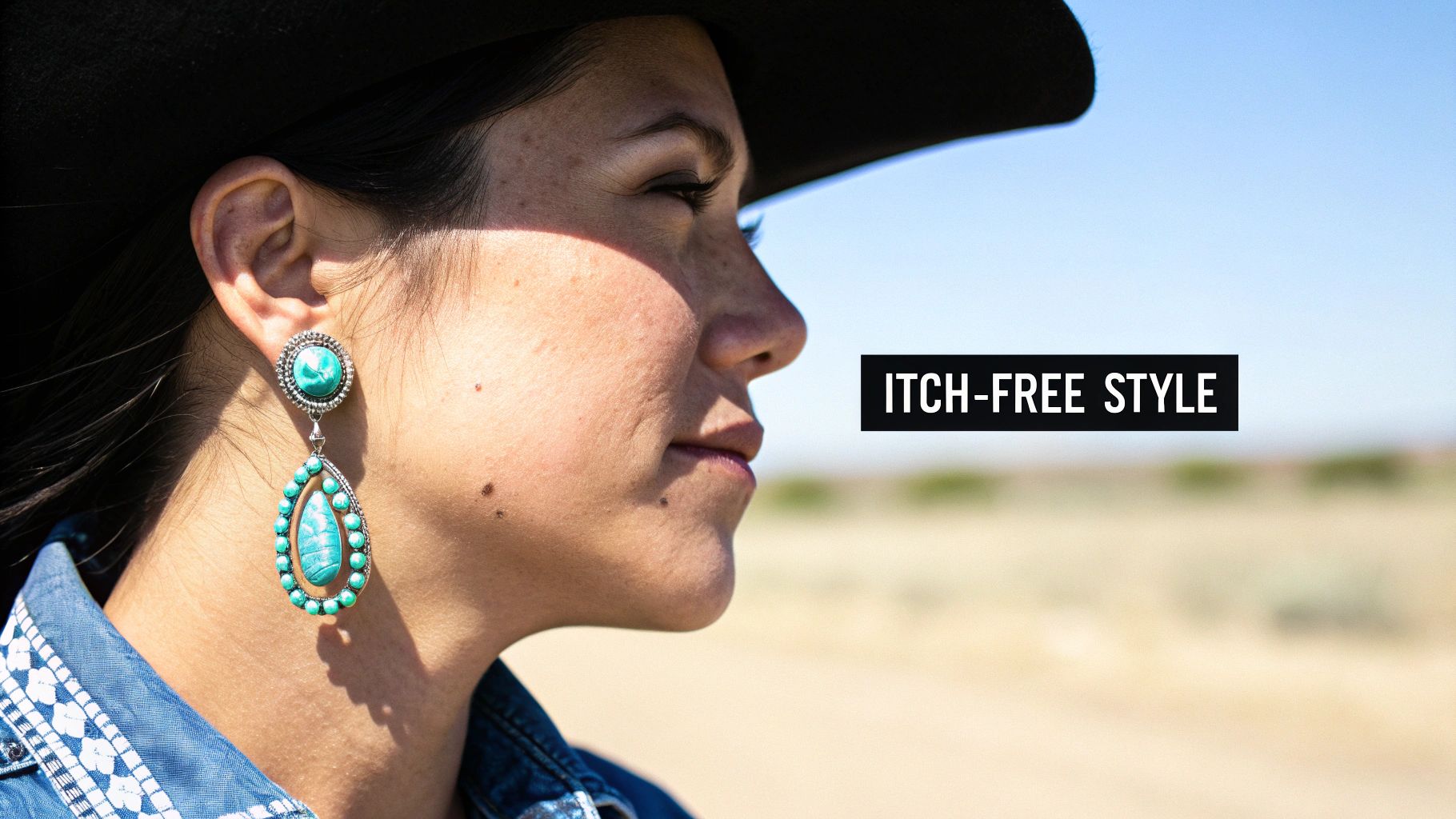
There’s something special about the earthy, bold look of Southwestern cowgirl jewelry. But what happens when you find that perfect pair of turquoise drops, only to be met with painful redness and itching an hour later? It’s a frustratingly common story that makes you feel like you have to choose between your signature style and your comfort.
But you don’t have to. This guide is your way back to wearing the jewelry you love. We’re going to walk through the world of hypoallergenic metals for earrings, breaking down exactly what to look for so you can confidently build a collection of beautiful, irritation-free pieces that let your estuarian cowgirl spirit shine.
Why Hypoallergenic Metals Matter
Metal allergies are far more widespread than you might think. Did you know that nearly 17% of women and 3% of men are sensitive to metals in jewelry, with nickel being the most common trigger? It’s a huge issue, and it's pushed the jewelry industry to embrace safer, skin-friendly materials. As a result, hypoallergenic options like surgical-grade stainless steel now make up 40-45% of the global body jewelry market. If you want to dive deeper, you can discover more insights about hypoallergenic materials and market trends from jewelry artisans.
Understanding your options is the first real step toward wearing jewelry that feels just as good as it looks. Let's get into what makes a metal safe and how you can spot the right pieces for your collection.
The core idea behind hypoallergenic jewelry is simple: minimize risk. By choosing metals known for their purity and biocompatibility, you’re not just buying an accessory; you’re investing in comfort and peace of mind.
We'll cover everything from rugged, medical-grade titanium to the nuances of classic sterling silver. By the end, you’ll know exactly how to pick out stunning Southwestern pieces that capture your personal style, no compromise necessary.
Understanding What Hypoallergenic Really Means
You’ve probably seen the word 'hypoallergenic' on everything from skincare to jewelry tags, but what does it really mean for your favorite pair of Southwestern earrings? Think of it like a "fragrance-free" lotion—it's not a bulletproof guarantee you won't have a reaction, but it’s a strong signal that the product was made with materials far less likely to cause trouble. It’s a promise of a much gentler experience for your skin.
When it comes to jewelry, especially earrings that have direct, prolonged contact with your skin, the conversation almost always circles back to one primary offender: nickel. A shocking number of earring allergies, affecting an estimated 10-15% of the population, are a direct response to this incredibly common metal. It's often mixed into alloys to make softer metals stronger and to keep costs down, but for a lot of people, it triggers a seriously uncomfortable immune response.
The Science Behind the Itch
So, how can a simple piece of metal cause such a fuss? It’s a bit of basic chemistry. When you wear an earring that contains nickel, your sweat and the natural oils on your skin create a slightly corrosive environment. This process can cause tiny metal ions to leach out of the earring and get absorbed right into your skin.
Your immune system, always on high alert, can mistake these nickel ions for a genuine threat. This kicks off a defensive chain reaction known as contact dermatitis, which brings on all the familiar signs—redness, swelling, itching, and sometimes even blistering—that can completely ruin the joy of wearing a new accessory. It’s important to remember you're not actually allergic to the earring itself, but to the specific metal it's releasing.
The key takeaway is that an allergic reaction isn't about the style of the jewelry but its material composition. Your body is simply reacting to a specific element it perceives as harmful, making the choice of hypoallergenic metals for earrings a matter of chemistry, not just aesthetics.
Grasping this core concept is the first real step toward building a jewelry collection that you can wear without worry. Once you know that nickel is the usual suspect, you can start to identify which metals are safe havens and which are potential minefields. This knowledge empowers you to pick out pieces that truly align with both your estuarian cowgirl style and your skin's well-being.
The Best Hypoallergenic Metals for Cowgirl Jewelry
Now that we’ve untangled the why behind those annoying skin reactions, let’s get to the good part: the solutions. Choosing the right hypoallergenic metals for earrings is your ticket to embracing that authentic cowgirl aesthetic without a hint of irritation. Each metal has its own personality, and there's a perfect fit for every style.
Think of these metals as the trusted workhorses of your jewelry box—strong, reliable, and always comfortable. Whether you love rugged and lightweight or timelessly elegant, there's a safe option out there that perfectly complements the rustic charm of Southwestern design. Let’s find yours.
This chart shows exactly how a common irritant like nickel can set off a skin reaction, which is why picking the right base metal from the get-go is so important.
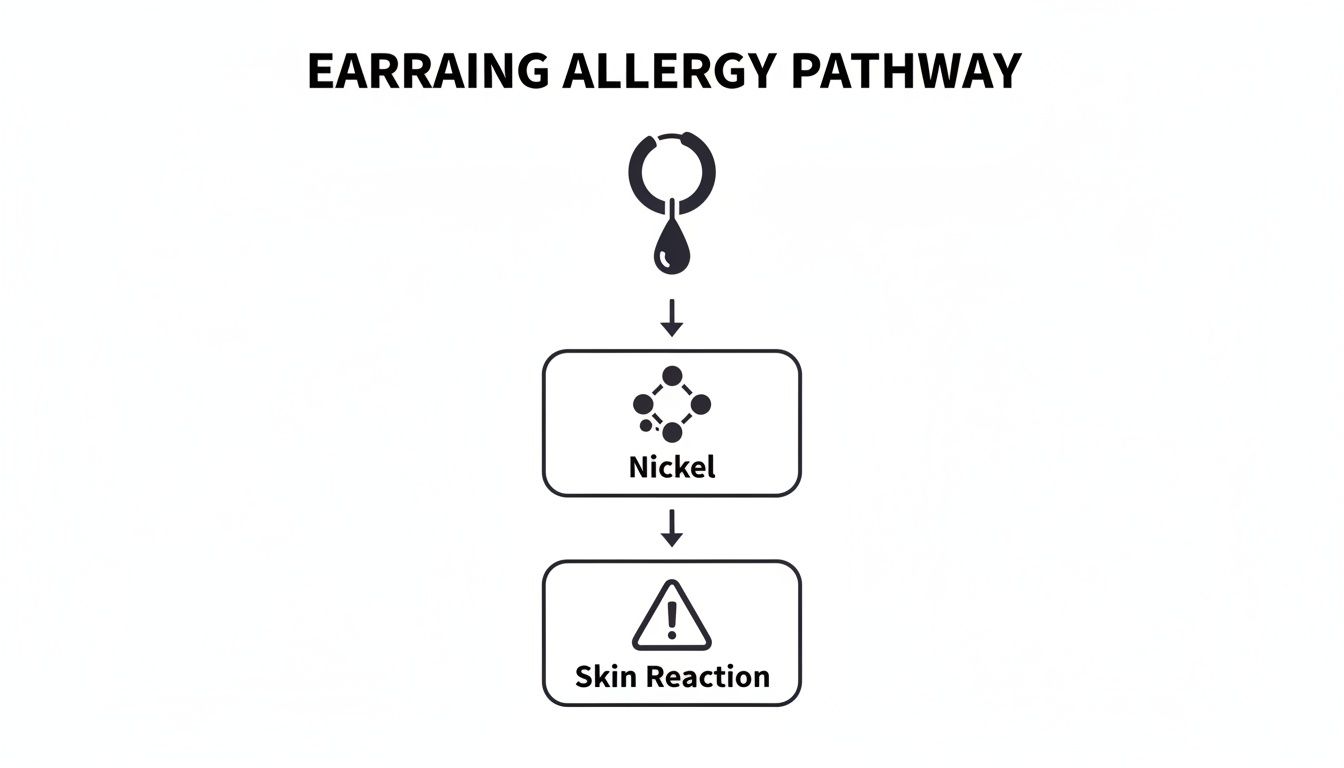
It’s a simple chain of events, and seeing it laid out makes it clear why starting with a nickel-free metal is the best way to keep your ears happy.
Titanium: The Rugged Champion
When it comes to pure safety and comfort, titanium is the undisputed champion. It’s a medical-grade metal, which means it's biocompatible and 100% nickel-free. This makes it the go-to choice for anyone with severe sensitivities or brand-new piercings.
Its feather-light feel is a huge bonus, especially for larger, intricate Southwestern designs. You can rock those statement turquoise dangles all day long without any pull or strain. It's no wonder that globally, around 20% of jewelry allergy sufferers find relief when they make the switch to titanium.
Platinum: The Timeless Heirloom
If you’re after a touch of luxury and absolute purity, platinum is your answer. It's naturally hypoallergenic and incredibly dense, giving it a satisfying weight and a brilliant white sheen that makes gemstones like turquoise and opal truly pop.
While it does come with a higher price tag, think of platinum as an investment in a forever piece. Its unmatched durability means it will hold precious stones securely for a lifetime, making it the perfect choice for those special, heirloom-quality pieces in your cowgirl collection.
Niobium and Surgical Steel: Practical Choices
Beyond the top two, a couple of other metals offer fantastic benefits for sensitive skin, especially for a Western aesthetic.
- Niobium: This is the artist's metal. It's highly biocompatible and can be anodized to create a stunning rainbow of iridescent colors—perfect for adding a unique, modern twist to traditional floral or concho motifs.
- Implant-Grade Surgical Steel: Don’t just grab any "stainless steel." You need to look specifically for implant-grade (316L or 316LVM) for its durability and affordability. While it does contain a tiny amount of nickel, the alloy is so stable that it’s highly unlikely to cause a reaction. It’s a great, budget-friendly option for daily wear.
Each of these metals brings something unique to the table. Whether you prioritize budget, style, or ultimate biocompatibility, there’s a perfect material waiting to become part of your Southwestern jewelry collection.
Using Sterling Silver and Copper Safely
Sterling silver and copper are the heart and soul of Southwestern jewelry. They capture an earthy, authentic spirit that’s impossible to find anywhere else, defining the entire estuarian cowgirl aesthetic with their warm tones and intricate stamp work. But for those of us with sensitive skin, these beloved metals can sometimes feel a bit tricky.
The good news is that both pure silver and pure copper are naturally nickel-free, making them generally safe for most people. The real issue comes from the alloys—the other metals mixed in to make the jewelry more durable and easier to work with. Figuring out what’s in those mixtures is the secret to wearing these iconic styles without a hint of worry.
The Truth About 925 Sterling Silver
When you see a piece stamped with "925," that’s your sign that it’s made of 92.5% pure silver. The other 7.5% is a mix of different metals, traditionally copper, which gives the otherwise soft silver some much-needed strength. While this classic alloy is usually perfectly fine, some mass-produced sterling silver unfortunately includes nickel to keep costs down.
This is exactly why it’s so important to buy your jewelry from artisans you trust. Jewelers who are passionate about quality, like us at Silver Elegant, intentionally use nickel-free alloys to craft beautiful pieces that feel as good as they look. For a deeper dive, you can learn more about whether sterling silver is truly hypoallergenic in our detailed guide.
A "925" stamp is a mark of authenticity, but it isn't a guarantee that a piece is hypoallergenic. The real test is the quality of the alloy, which makes artisan-crafted jewelry a much safer bet for sensitive ears.
Understanding Copper's Harmless Patina
Copper is the other cornerstone of Southwestern design, celebrated for its rich, reddish glow. You might notice that after a long day on the ranch or out by the coast, your copper earrings leave a faint greenish tint on your skin. Don't panic—this isn't an allergic reaction!
That green mark is just a natural result of oxidation. It’s a completely harmless chemical process where the metal reacts with your skin's oils and the air. It’s actually the very same beautiful patina that gives aged copper its distinctive, vintage character.
A true allergic reaction involves redness, itching, swelling, or even blistering. That’s a world away from this simple surface discoloration that washes right off with a bit of soap and water.
By choosing high-quality, nickel-free sterling silver and recognizing copper's natural patina for what it is, you can confidently embrace the traditional metals that make Southwestern jewelry so special. It all comes down to making smart choices that honor both your style and your skin.
How to Choose and Care for Your Earrings
Alright, now you're armed with the knowledge to pick out Southwestern pieces that won't just look incredible but will feel great, too. Choosing the right hypoallergenic metals for earrings is a little like being a detective, but you only need to look for a few clues to make a safe and stylish choice.
When you’re shopping, keep an eye out for quality markings. A "925" stamp is a good sign for silver, but the real key is to ask the jeweler if their alloys are nickel-free. Similarly, if you see pieces marked "Titanium" or "Niobium," you're looking at surefire winners for sensitive ears.
It's also crucial to know the difference between solid metal and plated jewelry. Solid metal earrings are hypoallergenic all the way through. Plated pieces, on the other hand, can wear down over time, eventually exposing a base metal that might just be the nickel you’re trying to avoid.
Focus on the Point of Contact
Let's talk about the most important part of the whole earring: the post. It’s the piece that has the most direct and prolonged contact with your skin, so its material is everything.
Even if a big, decorative earring is made from something else, the post and backing should always be a premium hypoallergenic metal. Think titanium, surgical steel, or a truly nickel-free sterling silver.
This one tiny detail can be the difference between a favorite accessory you wear all day and an irritating reaction that ruins your night. If you have to prioritize one thing, always, always prioritize the quality of the post.
The most beautiful earring in the world is worthless if you can't wear it. By focusing on the material of the post, you ensure that the part touching your skin is safe, allowing you to enjoy the overall design without compromise.
Simple Care for Lasting Comfort
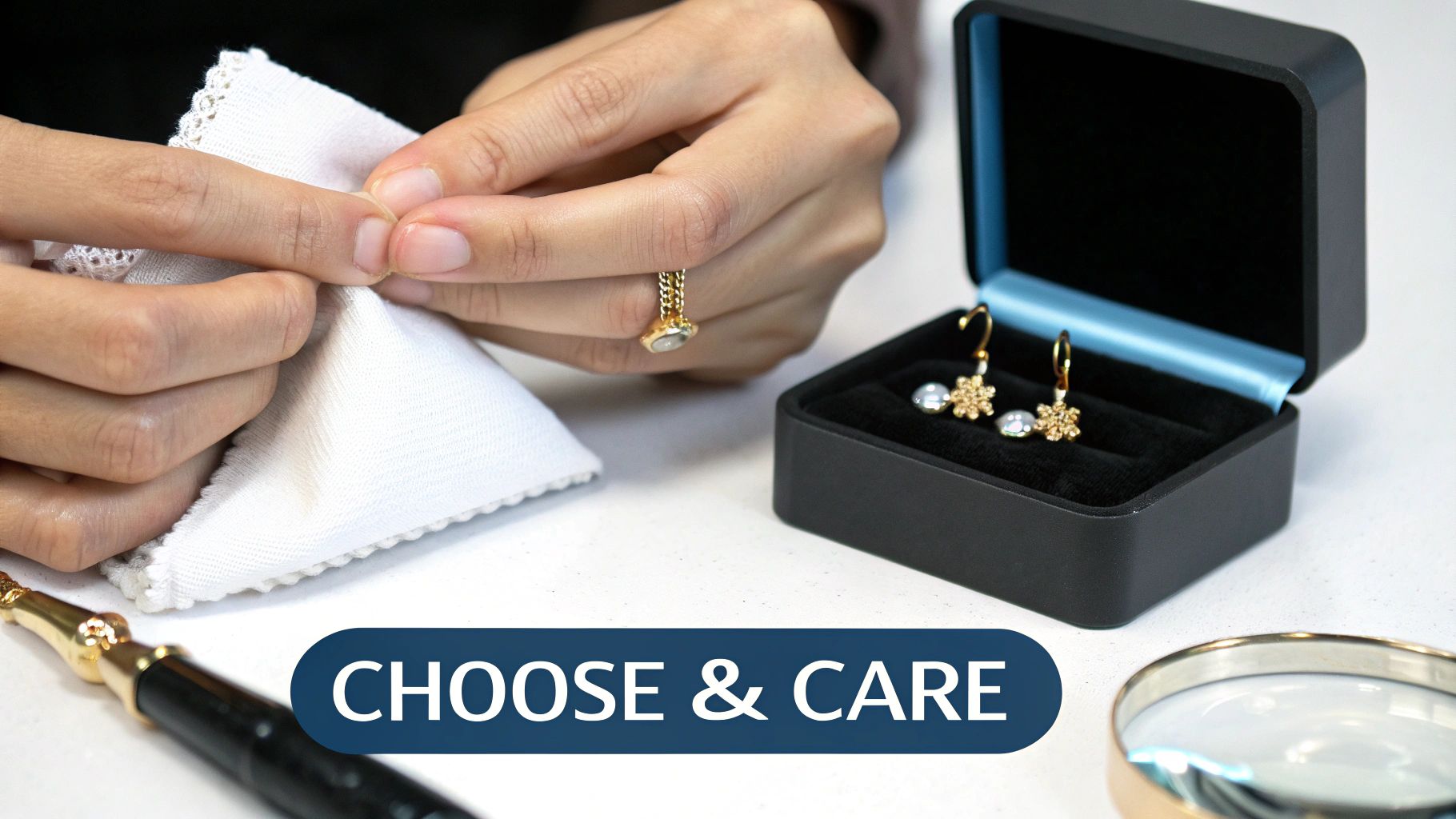
Taking good care of your jewelry does more than just keep it looking beautiful; it’s a huge step in preventing skin irritation. Keeping your earrings clean is non-negotiable, as it removes the daily buildup of skin oils, lotions, and grime that can cause problems.
A simple cleaning routine is all it takes. Here are a few quick tips to keep your pieces in perfect shape:
- Regular Wiping: After you take them off, give your earrings a gentle wipe with a soft, lint-free cloth. This removes surface oils and keeps them fresh.
- Gentle Washing: For a deeper clean, a little mild soap and warm water go a long way. Just be sure to rinse them well and let them dry completely before putting them away.
- Proper Storage: Store your earrings in a dry, safe place. A lined jewelry box or a soft pouch works perfectly to prevent scratches and tarnish.
For sterling silver pieces, which are the heart and soul of Southwestern style, proper care is key to keeping their shine. A few minutes of care will ensure your favorite earrings stay stunning and comfortable for years to come.
Now that you know what to look for, you can finally shop with confidence, ready to find those perfect pieces that speak to your inner estuarian cowgirl. Here at Silver Elegant, our passion is bringing authentic Southwestern designs to life using materials that are as kind to your skin as they are stunning. We firmly believe you should never have to choose between your style and your comfort.
That's exactly why we’re so selective about our metals. Our collections are built around nickel-free 925 sterling silver and responsibly sourced copper, making the timeless beauty of Western jewelry something everyone can enjoy. We craft every single piece so you can show off your personal style without ever worrying about a bad reaction.
Choosing artisan-crafted jewelry means you're choosing with intention. It's a commitment to quality materials that honor both the tradition of Southwestern design and your own well-being, ensuring your favorite pieces are made to be worn and loved for years to come.
Feel free to browse our collections, knowing that every single pair of earrings has been designed for both its looks and your comfort. If you want a little more guidance on picking the right pair, our article on the best jewelry for sensitive ears is the perfect next read to make your choice an easy one. Go on and find your perfect, irritation-free Southwestern piece today.
A Few More Questions About Hypoallergenic Earrings
Even with the best information, navigating the world of hypoallergenic jewelry can bring up a few final questions. From understanding plated pieces to testing new earrings before you wear them, here are some clear answers to help you feel completely confident in your choices.
Are Gold-Plated Earrings a Good Choice for Sensitive Ears?
Honestly, gold-plated earrings can be a bit of a gamble. While that thin outer layer is made of gold—a typically safe metal—it's designed to wear away over time. Once it does, your skin gets exposed to whatever base metal is hiding underneath, which is often a nickel alloy just waiting to trigger an allergy.
For a pair you'll wear day in and day out, like some favorite cowgirl-style hoops, you're much better off with solid gold or gold-filled earrings. If you do fall in love with a plated piece, make sure it’s built on a hypoallergenic foundation like titanium or surgical steel.
A beautiful plating can mask a problematic base metal. Think of it like a stunning paint job on a car with a rusty frame—what’s underneath is what truly determines its long-term reliability and comfort.
How Can I Test Earrings Before Wearing Them?
A simple patch test at home can save you a world of discomfort. Before you commit to wearing a new pair, just tape one of the earring posts to a sensitive patch of skin, like the inside of your arm, and leave it there for several hours. If you see any redness, itching, or irritation after you take it off, you're likely sensitive to the metal.
For a more definitive answer, a dermatologist can perform a formal patch test. This can pinpoint exactly which metal allergies you have, giving you a clear roadmap for what to look for when choosing your next pair of hypoallergenic metals for earrings.
Is Surgical Steel Always a Safe Bet?
Surgical-grade stainless steel is an excellent and affordable hypoallergenic option, perfect for durable, everyday Western-inspired studs. The secret is to look for implant-grade steel, specifically the kinds labeled 316L or 316LVM.
These superior grades do contain trace amounts of nickel, but it's locked so tightly within the metal's structure that it’s extremely unlikely to leach out and cause a reaction. You should always be a little cautious with generic "stainless steel," as lower-quality grades won't offer that same level of safety. Confirming it’s "surgical-grade" is what gives you real peace of mind.
At Silver Elegant, we believe your jewelry should be a source of joy, not irritation. We take great care in crafting our Southwestern and estuarian cowgirl pieces from nickel-free sterling silver and other skin-safe materials, so you can wear your style with absolute confidence. Explore our collection and find your next treasured piece today at https://silverelegant.com.