

Finding that perfect piece of Southwestern or estuarian cowgirl jewelry—a stunning turquoise cuff, a classic silver squash blossom necklace—should be a joy. But for those with sensitive skin, it can often lead to the dreaded itch and irritation. If you're after that authentic look, your best bets are high-quality, nickel-free sterling silver and higher-karat golds. These let you rock your favorite styles without the worry.
Wear Your Southwestern Style Without The Irritation
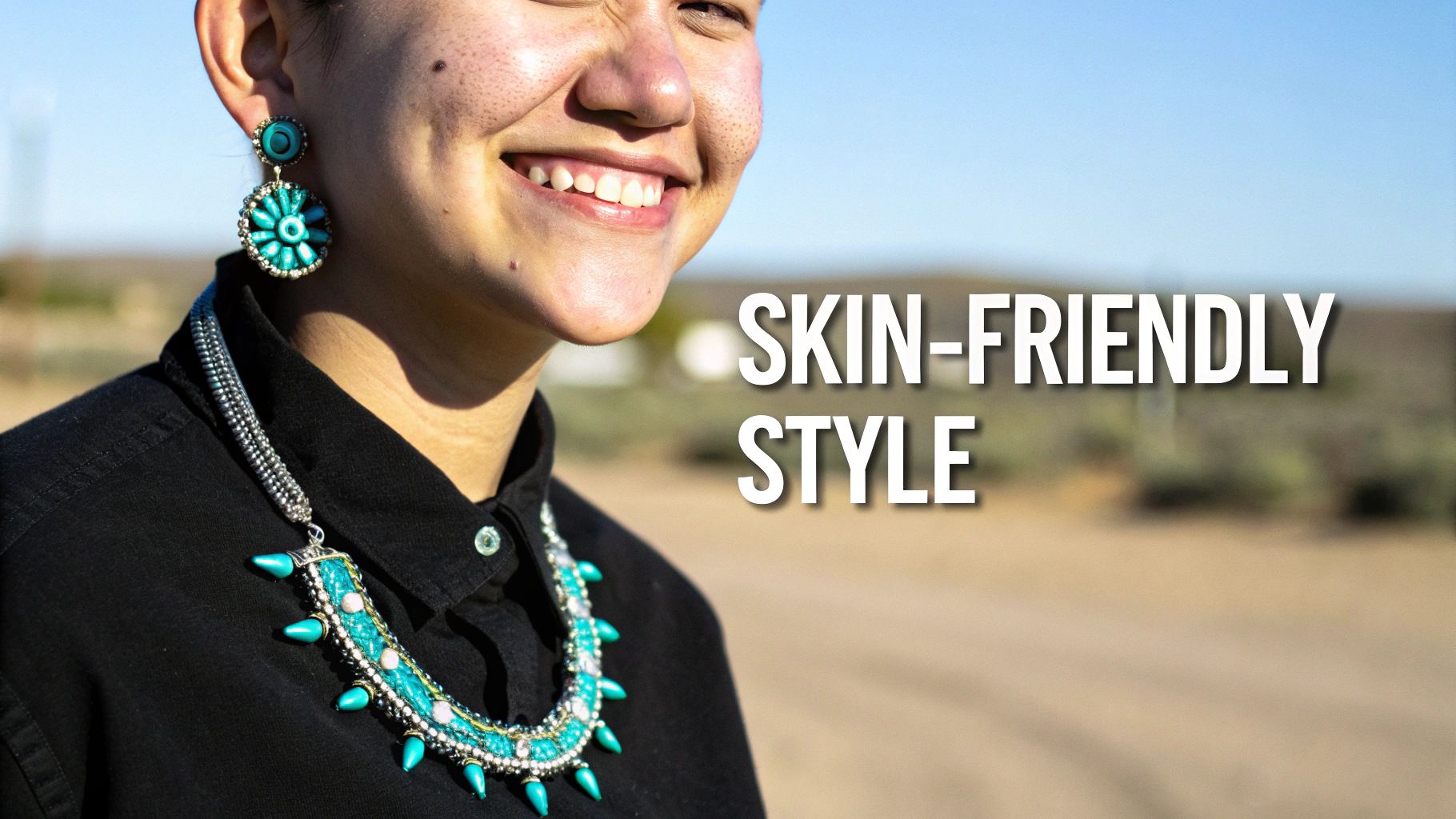
There's nothing quite like the bold allure of a turquoise cuff or the intricate detail of a silver concho necklace. They're the heart and soul of Southwestern and estuarian cowgirl fashion. But for too many of us, the joy of wearing these stunning pieces is ruined by the dreaded itch, redness, and irritation that follows.
If that sounds all too familiar, you’re definitely not alone.
This frustrating reaction usually comes down to the metals used in the jewelry. It helps to think of the word "hypoallergenic" not as some strict scientific label, but more like a "skin-friendly guest list" for your jewelry box. It's a signal that a piece is made from materials carefully chosen to minimize the risk of a reaction, letting you embrace your personal style in total comfort.
Understanding Your Skin's Reaction
This problem is way more common than you'd think. Did you know that nearly 17% of women and 3% of men have a jewelry allergy? The main culprit is often nickel, a metal that has a sneaky habit of hiding in all sorts of everyday pieces.
It's a widespread issue, and it’s exactly why understanding hypoallergenic jewelry materials is so important. For instance, 316L stainless steel is often considered a top hypoallergenic choice because it’s compatible with over 95% of people with sensitive skin, all thanks to its incredible biocompatibility.
Choosing hypoallergenic jewelry is about more than just avoiding a rash. It’s about having the freedom to wear the art you love with confidence and joy, whether you're out on the ranch or headed to a rodeo.
This guide is here to empower you. We'll walk through the metals that cause the most trouble and introduce you to beautiful, safe alternatives that align perfectly with the rustic elegance of Southwestern designs. For a deeper dive, check out our complete guide on what is hypoallergenic jewelry.
Once you understand your options, you can confidently build a collection that’s both a source of pride and a true pleasure to wear.
Identifying Nickel: The Main Culprit in Skin Reactions
If you’ve ever put on a beautiful new necklace only to find an itchy, red rash a few hours later, you've likely met the jewelry world's most notorious troublemaker. The culprit is almost always nickel, a common metal used to strengthen alloys and add a bright, silvery finish to less expensive pieces. It’s the primary trigger for a condition known as allergic contact dermatitis.
The reaction itself is like a delayed alarm system. Your body doesn't react instantly, but when your sweat comes into contact with the jewelry, tiny nickel ions are released. Your immune system mistakenly flags these ions as a threat and launches a defensive response that results in that uncomfortable rash, itching, and redness.
This sensitivity is incredibly common, affecting 10% to 15% of the population. Once you develop this allergy, it’s usually for life, which means even trace amounts of nickel can set off a reaction if you’re highly sensitive.
How Nickel Hides in Plain Sight
Finding nickel-free pieces can feel like a treasure hunt because this metal often appears where you least expect it. It’s frequently mixed into alloys for strength and shine, sometimes even in pieces labeled as "silver" or "gold" if they aren't from a reputable source. That's why simply avoiding cheap costume jewelry isn't always enough to protect your skin.
To keep your Southwestern collection comfortable and irritation-free, you have to become a savvy shopper and always look for clear labeling.
- "Nickel-Free" Labels: This is your best and most direct assurance. It means the piece is safe for sensitive skin.
- Material Composition: Look for jewelry explicitly described with high-quality, hypoallergenic materials like 925 Sterling Silver (without nickel), Titanium, or high-karat gold.
- Beware of "Hypoallergenic" Alone: This term isn't strictly regulated, so it’s always better to confirm the specific metals used rather than relying on that word by itself.
A piece of jewelry becomes a true part of your story, but that story shouldn't include skin irritation. Understanding what causes the reaction is the first step toward building a collection you can wear with confidence and comfort every single day.
Beyond nickel, other metals like lead and cadmium can also cause issues, though they are far less common irritants. The key is to prioritize pure, well-documented materials. If you suspect a favorite piece might be the source of your troubles, it's pretty easy to find out for sure. You can learn exactly how to check your accessories by reading our guide on how to test for nickel in jewelry.
Your Guide to The Best Skin-Friendly Metals
Picking the right metal is the single most important decision for keeping your skin happy, especially when you’re drawn to that iconic Southwestern aesthetic. This is where your journey to a comfortable, stylish collection really begins. Let's walk through the top hypoallergenic jewelry materials, breaking down which ones work best for everything from delicate earrings to bold, statement-making cuffs.
It can feel a little overwhelming trying to understand the subtle differences between these metals, but it's simpler than you might think. Each one has its own personality, offering a unique blend of safety, style, and durability that perfectly complements the estuarian cowgirl vibe.
To make things easier, this decision tree can help you quickly figure out what's causing a skin reaction after wearing a new piece.
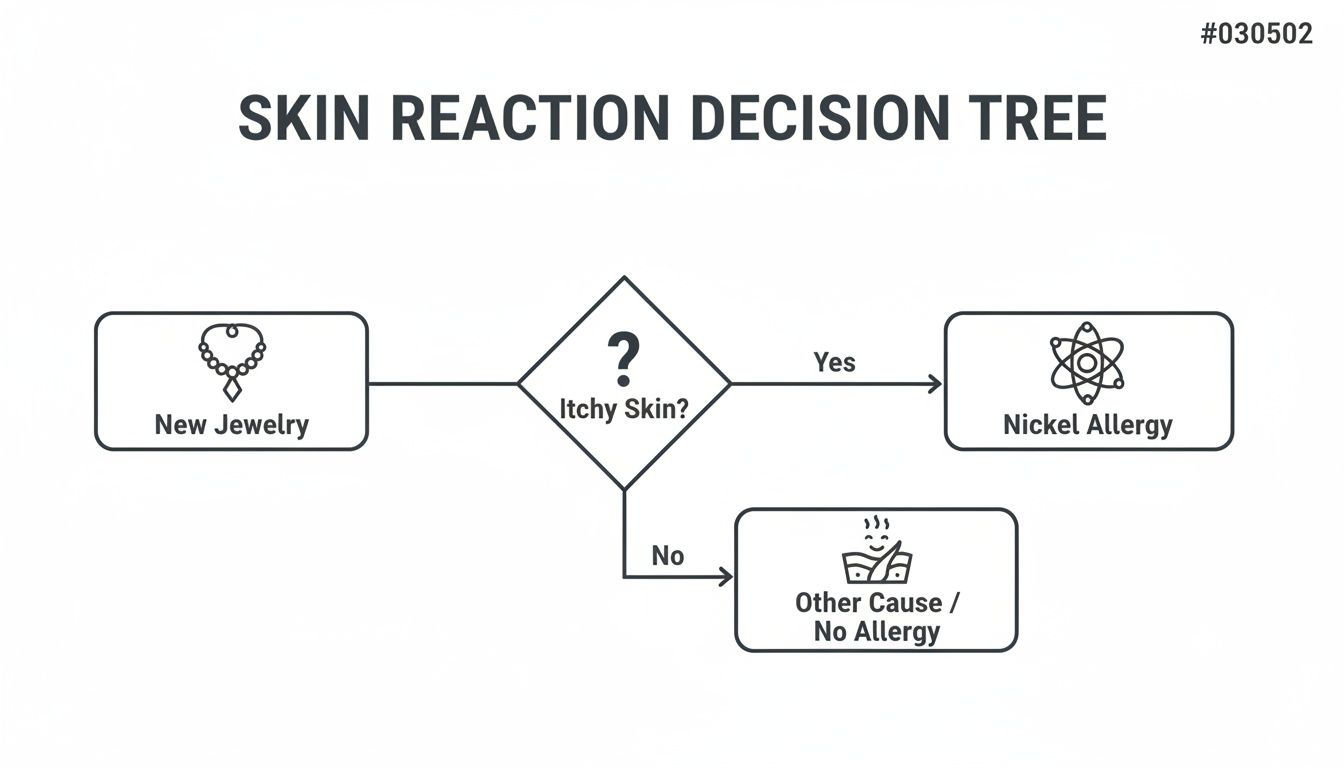
As you can see, the path often leads back to one common culprit. An itchy, red reaction almost always points directly to a nickel allergy.
Sterling Silver: The Southwestern Staple
Sterling silver is the heart and soul of Southwestern design. You'll know it by the "925" stamp, which means it’s made of 92.5% pure silver mixed with 7.5% of another metal—usually copper—to give it strength. As long as it's guaranteed nickel-free, 925 sterling silver is a fantastic hypoallergenic choice, giving you that classic, bright finish that makes turquoise settings and intricate stamp work pop.
For those with extremely sensitive skin, even the small amount of copper in traditional sterling silver can sometimes cause a minor issue. But for most people, it's a trusted and authentic option that delivers style without irritation.
To help you navigate your options, here's a quick comparison of the most popular skin-friendly metals. This table breaks down everything you need to know to choose the best material for your style, sensitivity, and budget.
Comparing Top Hypoallergenic Jewelry Materials
| Material | Hypoallergenic Rating | Best For | Care Level | Look & Feel |
|---|---|---|---|---|
| Titanium | Excellent (10/10) | Ultra-sensitive skin, everyday wear | Low | Lightweight, modern, silvery-grey |
| Niobium | Excellent (10/10) | Anyone with severe allergies, colorful designs | Low | Lightweight, can be anodized to rainbow colors |
| Platinum | Excellent (9.5/10) | Investment pieces, luxury jewelry | Low | Heavy, luxurious, bright white shine |
| Sterling Silver | Good (8/10) | Classic styles, most skin types (nickel-free) | Medium | Bright, classic shine, needs polishing |
| Stainless Steel | Good (7.5/10) | Durability, budget-friendly options | Low | Industrial-chic, silvery-grey, very strong |
This little cheat sheet makes it easy to see the trade-offs at a glance. While titanium and niobium are the undisputed champs for sensitivity, sterling silver remains a beloved classic for its timeless look.
Medical-Grade Metals: Titanium and Stainless Steel
When it comes to pure, unadulterated skin safety, medical-grade metals are the clear winners. They're designed to be biocompatible, which is a fancy way of saying your body is highly unlikely to have a bad reaction to them.
- Stainless Steel (316L): Often called surgical steel, this alloy is incredibly tough, affordable, and doesn't corrode. While it contains a tiny, tightly-bound amount of nickel, it’s generally considered safe for most people.
- Titanium: This is the absolute hero for ultra-sensitive skin. It’s 100% nickel-free, unbelievably lightweight, and exceptionally strong. Its sleek, modern feel can be a stunning counterpoint to more rustic Southwestern designs.
Titanium is absolutely exploding in popularity, projected to grow by 15% annually through 2025 as younger jewelry lovers seek out lightweight, durable pieces that won't cause a flare-up. It's the same biocompatible material used for medical implants, and its eco-friendly vibe aligns perfectly with the handcrafted feel of Silver Elegant’s copper and sterling silver collections.
Premium Hypoallergenic Alternatives
For anyone looking for the highest level of purity and complete peace of mind, a couple of premium metals stand out—though they often come with a higher price tag.
Niobium and platinum are like the VIPs of the hypoallergenic world—they are exceptionally pure, inert metals that are virtually guaranteed not to cause a reaction.
Niobium is a fantastic, lesser-known metal that is highly biocompatible. It can also be anodized to create a rainbow of vibrant colors, adding a unique artistic flair to any piece. Platinum, on the other hand, is a dense, luxurious precious metal that is naturally hypoallergenic and incredibly durable, making it a timeless choice for investment jewelry.
If you're especially concerned about earrings, you can learn more about metals that make hypoallergenic earrings truly comfortable in our dedicated guide.
Navigating Gold, Gold-Filled, and Plated Jewelry
Gold brings a warm, luxurious glow that beautifully complements any Southwestern style, but not all gold jewelry is created equal—especially when you have sensitive skin. The real secret to wearing it without irritation isn't just about the gold itself, but understanding its purity and how the piece is constructed. It’s all about knowing what lies beneath that golden surface.
The purity of gold is measured in karats. Think of 24-karat gold as the purest form, but it’s far too soft to craft into jewelry that can withstand daily wear. To give it strength, goldsmiths mix it with other metals, and that’s where potential allergens like nickel can sneak in.
Solid gold, especially 14k and 18k varieties, is a fantastic hypoallergenic choice. 14k gold boasts 58.3% pure gold content, which is usually enough to dilute any problematic alloys, making it a safe bet for most people as long as it's nickel-free. 18k gold ups the ante to 75% purity, offering an even higher level of skin compatibility for those who want that extra assurance.
Understanding The Layers
Once you move beyond solid gold, you step into the world of layered jewelry. Think of it like painting a wall: a thick, high-quality primer with multiple coats of paint will look great for years. On the other hand, a single, thin coat will chip away quickly, revealing whatever is underneath. Gold layering works much the same way.
- Gold-Filled: This is your durable, high-quality option. A thick, solid layer of gold is permanently heat-bonded to a core of jeweler's brass. That substantial layer is tough, won't wear off with normal use, and creates an excellent hypoallergenic barrier between your skin and the base metal.
- Gold Vermeil: A solid step up from standard plating, vermeil (pronounced ver-may) consists of a layer of gold plated over a sterling silver base. To earn the "vermeil" title, that gold layer must be at least 2.5 microns thick, offering good durability and a hypoallergenic foundation.
- Gold-Plated: This is the most common and affordable option, but it comes with a catch. A very thin layer of gold is electroplated onto a base metal, which is often a nickel-containing alloy. This delicate layer is prone to scratching and wearing away, eventually exposing your skin to the potential irritants underneath. Our guide on 14k gold-plated jewelry can help you learn more.
A Protective Shield With Rhodium
For those who love the bright, cool shine of white gold or platinum, there's another great protective option. Rhodium plating is often applied over sterling silver or white gold pieces to create a brilliant, tarnish-resistant finish.
Rhodium is part of the platinum family of metals, making it completely inert and hypoallergenic. This plating acts like a protective shield, sealing the metal underneath and preventing any direct contact with your skin. It’s a fantastic solution for adding both beauty and safety.
How to Safely Wear Copper and Brass Jewelry
The warm, earthy glow of copper and brass is the soul of rustic Southwestern style. It adds that authentic, handcrafted vibe to everything from stamped cuffs to concho belts. While these metals perfectly capture that free-spirited cowgirl look, they need a little know-how if you have sensitive skin.
First, let's clear something up: neither copper nor brass are typically allergens in the same way nickel is.
You've probably seen that harmless green tint on your skin after wearing a copper bracelet. That’s not an allergy—it’s just oxidation, a natural reaction between the metal, the air, and your skin's oils. It’s purely cosmetic and washes right off.
The Real Concern With Brass Alloys
The bigger issue, especially with brass, is what else might be mixed in. Brass is an alloy of copper and zinc, but sometimes, lower-quality blends contain trace amounts of lead or, more often, nickel to make them tougher. This is where a gorgeous piece can suddenly cause a nasty reaction.
But that doesn't mean you have to give up on these beautiful metals. The secret is to wear them strategically, minimizing direct, prolonged skin contact. It's a smart way to get the aesthetic you love without any of the worry.
Think of it as a styling choice. When you pick pieces where these rustic metals are just an accent instead of the main point of contact, you get the look you’re after with total peace of mind.
Here are a few practical ways to safely bring copper and brass into your collection:
- Look for Protective Coatings: Many artisans seal their copper and brass jewelry with a clear, skin-safe lacquer. This simple barrier stops the metal from touching your skin and prevents that green tint.
- Choose Inlay Designs: Go for pieces where copper or brass is set inside a hypoallergenic metal like sterling silver. A silver cuff with a copper inlay gives you that visual pop without the constant contact.
- Opt for Non-Contact Pieces: Think about hair accessories, brooches, or pendants that hang on a sterling silver chain. In these cases, the brass or copper element rarely even rests on your skin.
Good care also goes a long way. Keeping your pieces clean can make a huge difference. You can find out more in our guide on how to clean copper jewelry naturally.
Caring for Your Hypoallergenic Jewelry
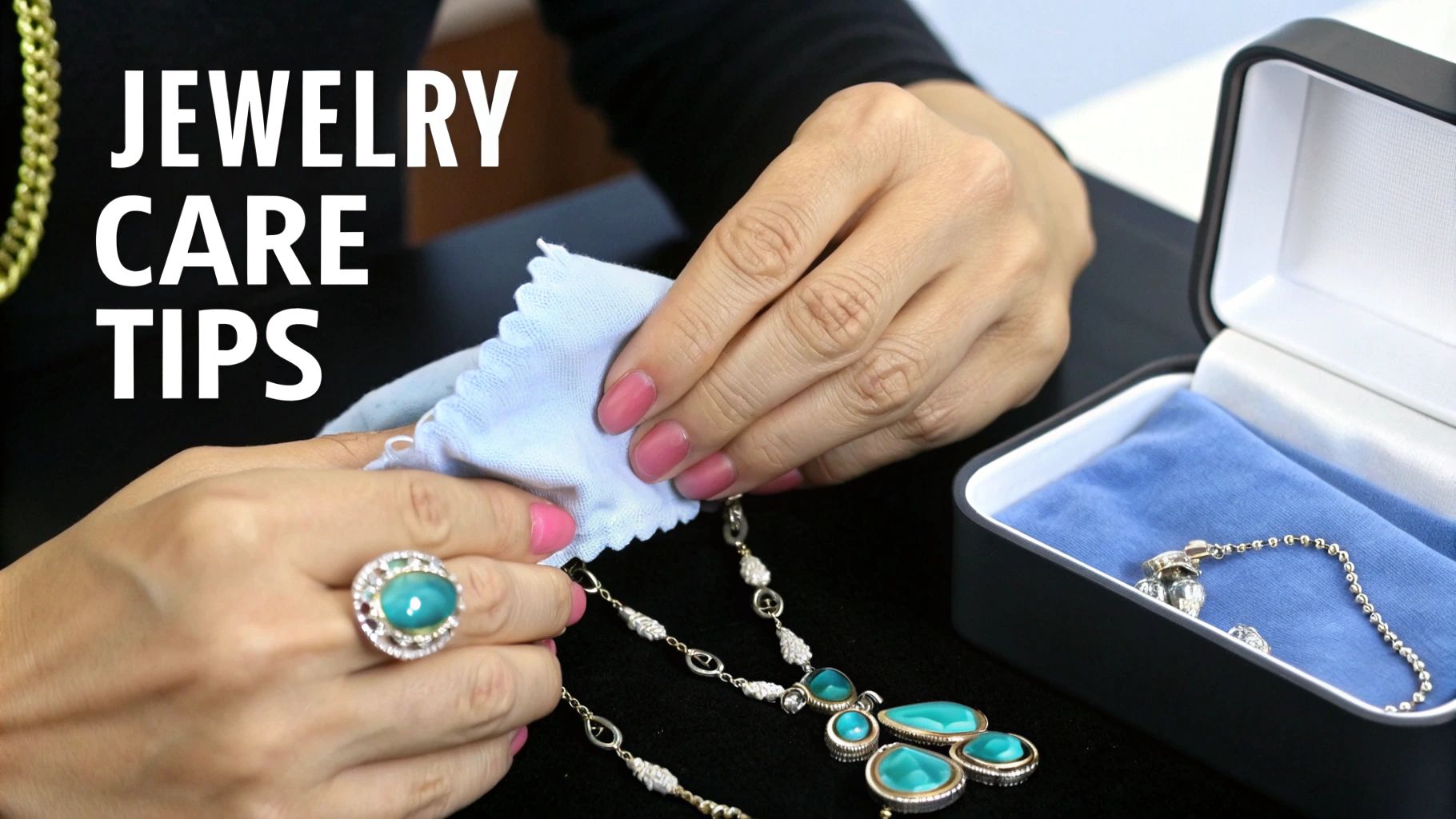
Picking out the right hypoallergenic jewelry is only half the battle. The real secret to keeping your pieces beautiful and, more importantly, skin-friendly for years to come is proper care. Think of it like a well-loved leather saddle; your Southwestern treasures need a little attention to stay in top shape.
Good care keeps them shining, but it also prevents the buildup of dust, lotions, and other gunk that can irritate sensitive skin.
Gentle, consistent cleaning is the name of the game. For sterling silver, this is a big deal because it helps keep tarnish at bay. Tarnish is just a natural process of oxidation that darkens the metal, and while it isn't an allergen itself, its rough surface is a perfect hiding spot for irritants.
Proper storage is just as important, especially for jewelry with protective layers like rhodium plating or a thick gold-filled finish.
Best Practices for Jewelry Care
Those protective layers act as a shield between the base metal and your skin. If you let them get scratched up or expose them to harsh chemicals, they can wear down over time, which might lead to a reaction.
- Last On, First Off: This is the golden rule. Always put your jewelry on after you’ve applied lotions, perfumes, and hairspray. And take it off first thing before you wash your hands or hop in the shower.
- Gentle Cleaning Only: Get in the habit of wiping your jewelry with a soft, lint-free cloth after you wear it. For a deeper clean now and then, a little mild soap and warm water will do the trick. Just be sure to dry it completely afterward.
- Store Separately: Keep your pieces in their own soft pouch or a lined jewelry box. This stops them from scratching each other and protects those delicate finishes from getting damaged.
A little care goes a long way. Protecting the surface of your jewelry isn't just about keeping it pretty—it's about preserving the hypoallergenic barrier that keeps your skin happy and reaction-free.
By following these simple steps, you can make sure your beautiful estuarian cowgirl jewelry remains a source of joy, not irritation.
Common Questions About Hypoallergenic Jewelry
Figuring out the world of hypoallergenic jewelry can feel a little tricky, especially when you're just trying to find pieces that fit your unique estuarian cowgirl style. To help you shop with total confidence, we've rounded up the questions we hear most often and laid out some clear, direct answers.
Think of this as your quick-reference guide, reinforcing the key takeaways so you can build a stunning Southwestern collection without a second thought about irritation.
Is All Sterling Silver Hypoallergenic?
Not always, and this is a really important detail for anyone who loves Southwestern jewelry. Pure silver is completely hypoallergenic, but it's way too soft to hold up on its own in a piece of jewelry. That’s why we have sterling silver, which is a mix of 92.5% pure silver and 7.5% other metals to give it strength.
Traditionally, that other metal is copper, which is fine for most people. The problem is, some lower-quality sterling silver can contain nickel to cut costs. To be safe, always look for pieces that are clearly labeled "nickel-free 925 sterling silver."
Can I Wear Turquoise Jewelry with Sensitive Skin?
Absolutely! That gorgeous turquoise gemstone is not an allergen. The only thing you need to pay attention to is the metal it’s set in.
The secret is to focus on the setting, chain, or band holding that beautiful stone. As long as your turquoise piece is set in a high-quality, skin-friendly material like nickel-free sterling silver, titanium, or platinum, you can wear it all day long without a problem. Just remember to check the metal, not the stone.
The vibrant spirit of turquoise is meant to be worn and enjoyed, not feared. Choosing the right metal setting is the simple secret to wearing these iconic Southwestern gems with comfort and confidence.
How Can I Test New Jewelry for a Reaction?
A simple at-home patch test is a great way to start. Before committing to wearing a new piece all day, try it out on a less sensitive spot, like your inner arm, for a couple of hours and see how your skin feels.
For earrings, a 30- to 60-minute trial is usually all it takes to know if you're going to have a reaction. If your skin is highly sensitive, you’ll probably notice some redness or itching pretty quickly. If you have a beloved piece you’re a bit unsure about, you can also apply a clear jewelry shield lacquer to any part that touches your skin for an extra layer of protection.
Why Does Some Jewelry Turn My Skin Green?
That faint green tint is almost always a harmless chemical reaction, not an allergic one. It’s caused by the oxidation of certain metals, especially copper, which is a key ingredient in both sterling silver and brass. When the metal reacts with things like your skin’s natural oils, lotion, or sweat, it can leave behind that little green mark.
It's totally harmless and washes right off. However, if you see a rash or start itching along with the green mark, that's a different story—you're likely having an allergic reaction to another metal in the alloy, probably nickel.
At Silver Elegant, we believe your jewelry should bring you nothing but joy. Explore our collection of handcrafted, hypoallergenic Southwestern pieces and wear your style with absolute confidence. Discover your next treasure at https://silverelegant.com.