

Cowgirl turquoise jewelry feels like a worn-in saddle meeting a clear desert sky and a shimmering estuarine inlet at dawn. With its sky-blue protection, these handcrafted pieces slip seamlessly from dusty trails to coastal marsh festivals.
These designs draw on Native American silversmith traditions and estuarine coastal motifs, pairing vibrant turquoise with sturdy metals that stand up to daily wear—whether you’re riding across sun-baked mesas or strolling mangrove-lined bayous.
Exploring Cowgirl Turquoise Jewelry Heritage
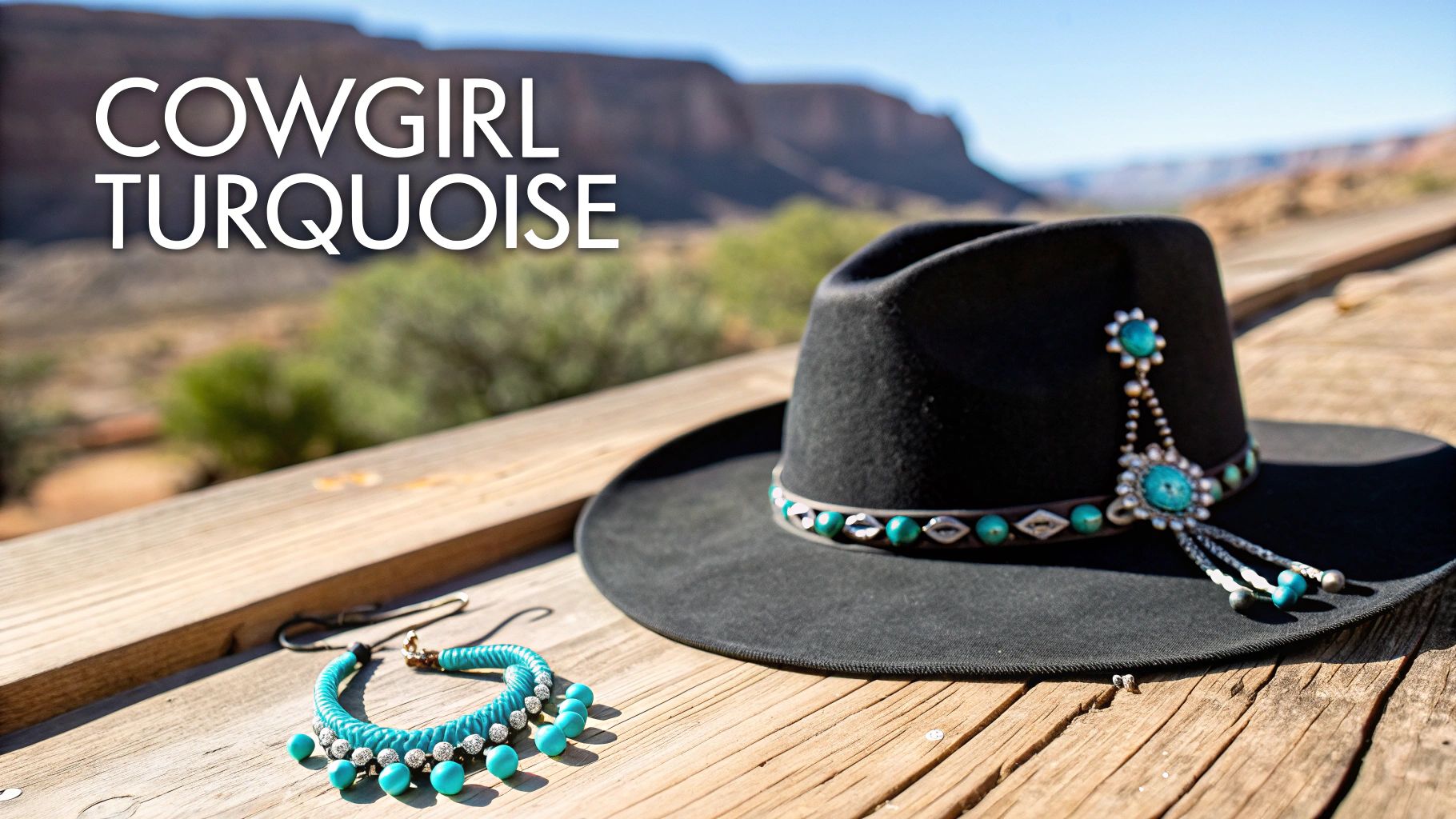
In frontier workshops and estuarine trading posts, ranch hands, indigenous artisans, and coastal fishermen exchanged techniques—stamping silver, inlaying stones, incorporating oyster shell and salt-crystal accents. Each piece captures the glow of desert sunsets, river delta mists, and the steady heartbeat of open-range life.
Born in the sun-bleached canyons of the Southwest and shaped by brackish waterways, cowgirl turquoise jewelry channels sun, sky, tides, and spirit. You’ll find bold squash blossom necklaces sitting beside minimalist stud earrings—drama and comfort in perfect balance.
Key Highlights Include:
- Durable settings forged in sterling silver or copper
- Sky-blue turquoise hues tied to protective folklore and lagoon legends
- Hand-stamped motifs inspired by desert flora, estuarine reeds, and tidal patterns
When To Wear Cowgirl Turquoise Jewelry
- Festival Attire – layer with flowing dresses or fringed vests at salt-marsh fairs
- Western Bridal Looks – offset lace and leather with natural color and coastal flair
- Everyday Outfits – dial up blue accents on jeans, tees, or boardwalk breezes
For generations, cowgirls trusted turquoise to guard them across rugged terrain and salt-kissed shores. That spirit of protection still guides designers who honor each piece’s heritage.
North America held 29% of the global turquoise jewelry market—1,176 million USD out of a 4.1 billion USD total. Discover deeper insights in the WiseGuy turquoise market report.
Key Styles And Iconic Pieces
From the petal-like beads of a squash blossom necklace to the subtle flash of a turquoise stud, these treasures wear Western and estuarian flair naturally. Concho belts and bolo ties bring the look full circle.
- Squash Blossom Necklace: your go-to statement focal piece, echoing sunflower dune and marsh flower forms
- Turquoise Stud Earrings: a minimalist pop of color, reminiscent of tide pools
- Bolo Tie With Turquoise Slide: a nod to old-school heritage and oyster shell inlay
Learn boho styling in our guide on boho jewelry for Southwestern-meets-estuarian inspiration.
Cowgirl turquoise jewelry tells stories of resilience, wide-open skies, and tidal rhythms.
Upcoming Sections Preview
- Spotting Authenticity: simple tests and telltale signs
- Styling Tips: looks for desert dunes and bayou boardwalks
- Care & Repair Rituals: keeping metal, salt-exposed patinas, and stone in top shape
- Ethical Sourcing: how to shop with a clear conscience
This snapshot lays out the cultural roots and signature details that set cowgirl turquoise jewelry apart. Next, we’ll walk you through authenticity checks, styling secrets, and care hacks to keep your pieces shining.
Perfect for gift-giving, these treasures arrive in branded boxes—ready to make any occasion unforgettable.
Stay tuned for expert tips and styling photos ahead.
History And Aesthetic Roots
Picture a sun-baked workshop in the 1800s, where cowgirl turquoise jewelry was born out of necessity and flair. Back then, ranch hands, rodeo riders, and estuarine traders wore handcrafted pieces to stand up to dusty trails, salt spray, and long days. Artisans blended Persian stamping techniques with desert-inspired and coastal motifs, forging jewelry that could take a beating and still dazzle under the open sky and tidal moonlight.
Early Frontier Workshops
In the 1880s Silver Rush, canyon walls and riverbanks echoed with the steady ring of hammers and the spirited banter of silversmiths swapping secrets. These pioneers experimented with:
- Stamped Conchos etched with floral flourishes drawn from prickly pear blooms and marsh reeds
- Spiderweb Matrix patterns mirroring natural stone veins and estuarine watercourses
- Squash Blossom Shapes celebrating desert flowers and oyster blossoms in gleaming sterling silver
- Functional Belts that married sturdy buckles with intricate decoration, perfect for ranchers and fishermen alike
Their bold ideas laid the groundwork for the silver overlay techniques and squash blossom designs that remain iconic today.
Hollywood Spotlight And Boho Revival
By the 1930s, cowgirl turquoise had sashayed onto cinema screens, rodeo arenas, and coastal boardwalk stages alike. A queen of the rodeo wasn’t complete without a turquoise-studded belt—proof that toughness, glamour, and coastal breeze can ride side by side. Decades later, festival-goers rediscovered those vintage treasures, mixing fringe, denim, turquoise, and driftwood charm in a defiant, free-spirited style.
Today, the global turquoise jewelry market – including the vibrant cowgirl turquoise niche – is valued at $245 million USD and is projected to grow to $378 million USD by 2031 at a 6.5% CAGR. Learn more in the Valuates report.
“From canyon workshops to estuarine festivals, turquoise carries a legacy of adventure and artistry.”
For a deeper look at Southwestern influences, explore our guide on the history of Native American jewelry.
Evolution Of Silver Techniques
As cowgirl turquoise matured, craftsmen refined their silverwork. Silver overlay—layering thin sheets of silver—became a signature method for making turquoise pop against both copper and salt-brushed finishes. Stampwork evolved into:
- Floral Stamp Work: hand-punched petals and winding vines echoing both desert blooms and marsh grasses
- Spiderweb Matrix: dramatic veining that adds texture and depth reminiscent of braided waterways
- Squash Blossom Beads: stylized buds encircling a vibrant centerpiece stone
Each motif whispers stories of harvest celebrations, ancient waterways, and coastal tides, turning every piece into a wearable narrative of the Southwest and estuaries.
Looking Ahead
Next, you’ll learn simple tests to spot genuine turquoise from simulants. Understanding these roots ties every hammered stamp and stone hue back to generations of artisans and coastal foragers. Your jewelry then becomes more than an accessory—it’s a living chronicle of Western and estuarian spirit.
Next you’ll master authenticity checks
Whether you layer a squash blossom over denim or pick petite studs for everyday wear, these origins guide your styling choices. Embrace each turquoise chip, silver stamp, and oyster shell inlay as part of your own Western-estuarian legacy.
Wear history proudly
Identifying Authentic Turquoise Materials
Shopping for cowgirl turquoise jewelry can feel as elusive as spotting an oasis—or a hidden estuary lagoon—in a sandstorm.
Knowing how to tell genuine stones and quality metals apart is essential if you want pieces that last, even in salty air.
Beyond the stones themselves, metals like sterling silver, copper, and eco-friendly alloys deserve the same careful eye.
We’ll walk you through the tools and telltale signs that professionals use.
Tools For Testing Stone Hardness
Start with a simple scratch test: turquoise ranks around Mohs 5–6, while plastic or resin sits near Mohs 3.
A gentle scratch on an inconspicuous edge tells you a lot—real turquoise resists more than simulants.
Next, grab a loupe to examine matrix veins up close.
Under magnification, real stones reveal irregular, natural patterns; fakes often look too perfect.
- Use a loupe to inspect surface texture and networked veins.
- Perform a light scratch test on an unseen corner.
- Compare weight: genuine turquoise feels noticeably heavier.
- Watch how light plays across the stone—real depth versus a flat, plastic sheen.
Recognizing Color And Matrix Patterns
True turquoise behaves like a desert sunset or estuarine tide—color shifts from pale robin’s egg to deeper blue-green.
Flat or uniform hues are red flags.
The network of veins should mimic river tributaries or meandering creeks, never perfect grids.
When you spot mechanical or overly regular patterns, pause.
Key Insight Authentic matrix veins rarely form perfect geometric webs.
This visual check sets you up for the next step: verifying your metal settings.
Checking Metal Authenticity
Sterling silver usually carries hallmarks like 925, STG, or “.925.”
Copper and many eco-alloys might lack universal stamps but often display maker’s marks or a natural patina—especially distinct after exposure to coastal salt air.
Feel the weight again—silver will feel denser than an eco brass blend.
Sharp, clean edges on stamps mean a professional finish, while blurred marks can hint at shortcuts.
Below is a side-by-side comparison of turquoise materials and metals to help you quickly weigh authenticity signs, features, and price brackets.
Comparing Turquoise Materials And Metals
| Material Type | Key Authenticity Indicator | Average Price Range |
|---|---|---|
| Genuine Turquoise | Variable matrix veins and depth | $50–$300 per piece |
| Simulated Turquoise | Uniform color and plastic-like feel | $15–$60 per piece |
| Sterling Silver | Hallmarks such as 925, STG, or .925 | $30–$200 per item |
| Copper and Eco Alloys | Maker’s stamps and unique patina | $20–$150 per piece |
Use these benchmarks to set realistic expectations for durability, appearance, and cost.
Identifying Treated And Stabilized Stones
Many turquoise pieces undergo stabilization or dye treatments to improve color and toughness.
Treated stones often come at a 40–60% lower price point than untreated gems.
- Look for uneven dye saturation around the edges. Heavy color at the base signals treatment.
- Seek out subtle surface flaws if you prefer untreated rarity.
- Ask for certification or seller notes on stabilization methods.
- Compare two similar items side by side to spot any unnatural brilliance.
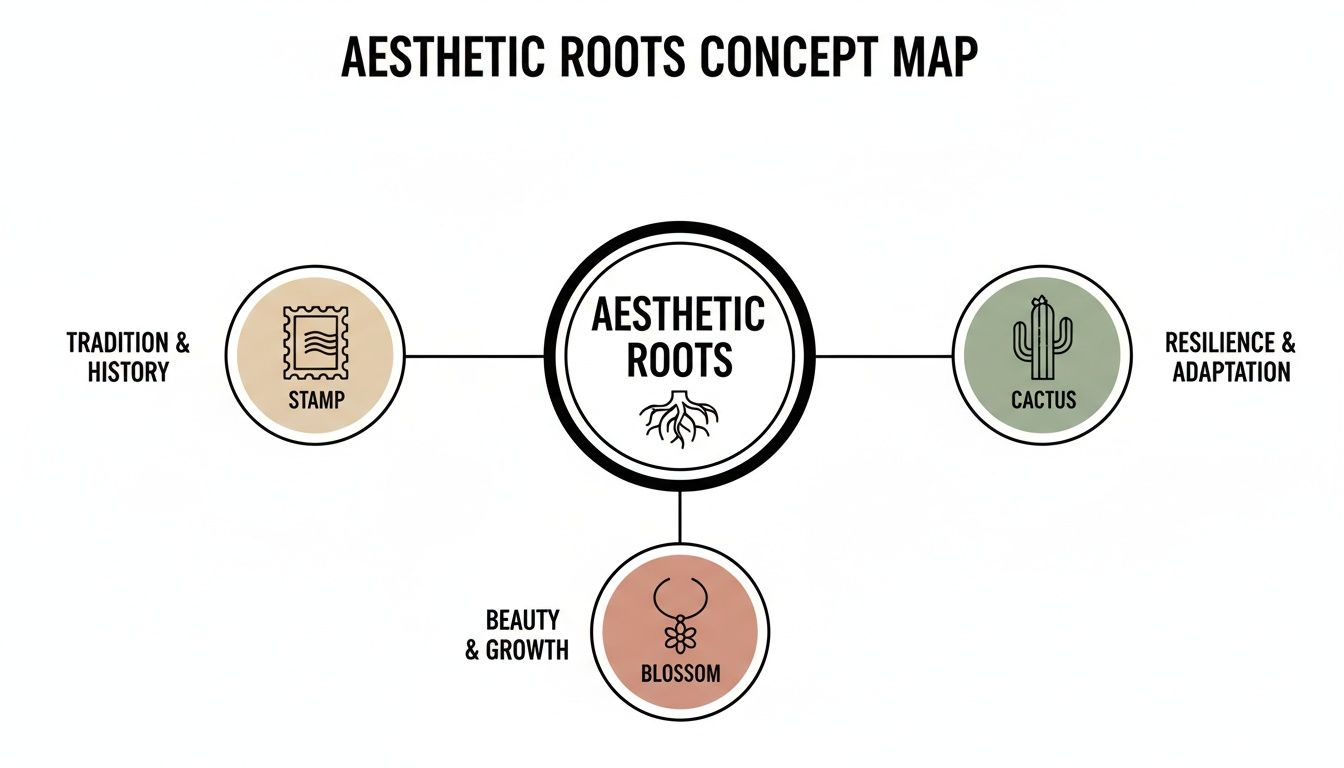
The infographic above ties hallmark stamps, desert motifs, lagoon-inspired curves, and blossom icons together, showing how each element reinforces authenticity in cowgirl turquoise jewelry.
For a deeper dive into stone verification, check out our guide on how to identify real turquoise.
Final Authenticity Checklist
Before you complete your purchase, run through this checklist like a seasoned jeweler:
- Use a loupe to inspect matrix detail.
- Perform a scratch test on an out-of-sight spot.
- Verify hallmark stamps on all metal surfaces.
- Compare weight against known genuine pieces.
- Ask for or review any stabilization certifications.
With these steps in hand, you’ll sidestep counterfeits and shop with confidence.
Next up, learn how to style your authentic turquoise for every occasion.
Styling Cowgirl Turquoise Jewelry For Every Occasion
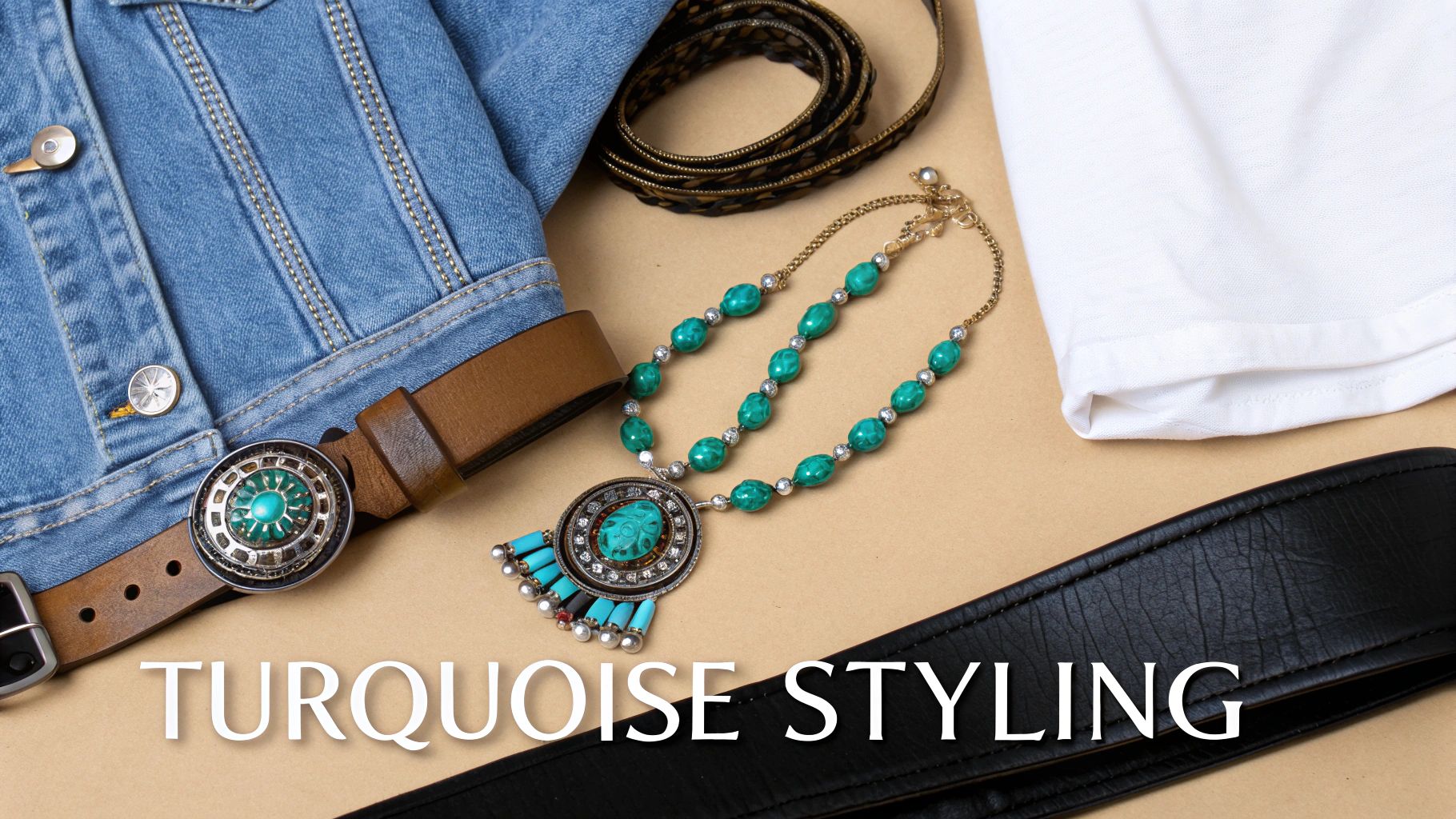
Styling cowgirl turquoise jewelry is like choreographing a two-step dance between bold color, Western grit, and coastal cool. You want the turquoise to steal the show, so start with simple, neutral textures that let the stones glow.
Pair vibrant blue-green hues with rugged materials such as suede, denim, weathered leather, or linen—perfect for seaside bonfires. A chunky turquoise squash blossom necklace over a crisp white peasant dress, for instance, creates an irresistible focal point.
Then layer finer chains or delicate pendants to add dimension for everyday wear. Just watch out—too many clashing metals can turn a harmonious look into a noisy ensemble.
Treat each combination like a track on your personal styling playlist. Before stepping out, do a quick harmony check to make sure every piece sings in tune.
Next, we’ll dive into festival and everyday styling with hands-on examples.
Festival And Everyday Looks
Festivals—and estuarine fairgrounds—are the perfect stage for cowgirl turquoise’s maximalist vibe. Flowy boho dresses, playful fringe, and coastal wind set the mood.
Follow these three steps to nail the look:
- Statement Necklace as your show-stealer.
- Two slender turquoise bracelets to keep the beat.
- Distressed denim shorts or a breezy maxi skirt to ground the set.
For extra flair, try these riffs:
- Fringe vests or jackets add depth, texture, and driftwood charm.
- Stack turquoise rings on multiple fingers for visual rhythm.
- Combine sterling silver cuffs with copper details to balance cool and warm tones.
Balance is key: if your necklace is bold, keep earrings minimal. Learn more about layering everyday pieces in our article on How to Style Western Boho Jewelry for Everyday Layers.
Bridal And Special Event Styling
Weddings and formal events call for a refined take on cowgirl turquoise. Swap festival fringe for sleek leather belts, polished bolo ties, and oyster-shell hair combs.
Against lace or tulle, a turquoise slide transforms into an elegant accent. Consider these styling ideas:
- A delicate turquoise choker beneath a sweetheart neckline.
- A polished bolo tie as a statement for grooms or bridesmaids.
- Tiny turquoise hairpins woven through loose, romantic braids with salt-spray waves.
Match turquoise belt buckles with leather details on shoes or clutches to tie the look together. Finish with a coordinating ribbon or scarf to draw the eye from head to toe.
Key Insight
A turquoise focal point is like the lead singer on stage—everything else should play a supportive role.
Scale And Proportion Tips
Getting the right scale is crucial when mixing turquoise pieces. Small studs pair seamlessly with bold statement necklaces for everyday elegance. On the flip side, large cuff bracelets work beautifully alongside chunky boot or bag accents.
Keep these best practices in mind:
- Match necklace length to your neckline: longer pendants with V-collars, shorter collars with off-shoulder tops.
- Stick to odd-numbered groupings—three rings or five bangles feel more natural.
- Balance large stones with slim metalwork to maintain visual harmony.
Pay attention to metal tones: gold warms up green-leaning turquoise, while sterling silver enhances sky-blue hues. With these proportion and metal-mixing tips, you’ll gain confidence and create balanced, eye-catching outfits—whether on the prairie or the tidal flats.
Final Styling Takeaways
When styling cowgirl turquoise jewelry, remember contrast is your secret weapon. Bright stones pop best against muted fabrics, ensuring your accessories lead without overwhelming.
Follow these final rules:
- Pick one focal piece to avoid visual clutter.
- Keep metal finishes consistent across all accessories.
- Pair bold stones with simple silhouettes for timeless versatility.
Stick to these guidelines, and you’ll showcase cowgirl turquoise’s vibrant charm in every setting, from rodeos to road trips and estuarine escapes.
Caring For And Repairing Turquoise Pieces
Caring for cowgirl turquoise jewelry is like tending a desert bloom or mangrove sapling: small, thoughtful gestures help it flourish. Over time, dust, skin oils, salt spray, and humidity can settle into crevices, dulling both sterling silver and the stone’s bright hues.
Just as a gardener checks moisture levels and prunes dead growth, you’ll want to inspect your pieces regularly. That way, you preserve their shine—and the stories they carry—day after day.
Cleaning Sterling Silver Safely
Start with a gentle approach. Mix a few drops of pH neutral dish soap into warm water.
Use a soft cotton cloth or a baby toothbrush to lightly scrub only the silver—steering clear of the turquoise and salt deposits. Then:
- Rinse under lukewarm water until all soap residue washes away
- Pat dry with a lint-free towel to avoid water spots
- Finish by buffing metal edges with a sterling silver polishing cloth
For a detailed walkthrough, take a look at our guide How to Clean Sterling Silver Jewelry at Home.
Gentle Polishing For Copper
Copper accents bring warmth, but a heavy abrasive will flatten patinas and erase natural salt-weathered highlights. Try this simple paste:
- Combine 1 teaspoon of baking soda with enough lemon juice to form a toothpaste-like consistency
- Apply softly over copper surfaces, steering clear of stone inlays
- Rinse within one minute to prevent acid damage
- Buff with a microfiber cloth to reveal a gentle glow
Avoid bleach or ammonia—they’ll strip away color and age the metal prematurely. Once polished, let your pieces air dry completely before tucking them away—especially if you live near estuarine humidity.
Repairing Simple Jewelry Issues
Loose bezels or wiggly prongs? A jeweler’s screwdriver and a pair of needle-nose pliers can work wonders. Try these quick fixes:
- Gently bend prongs inward if a stone shifts
- Swap out broken clasps for spring-ring or lobster styles from a basic jewelry kit
- Tighten screw-back earring posts with a small screwdriver to avoid surprises
For anything more complex—soldering cracks or resetting stones—it’s wise to consult a professional. A 73% rise in at-home jewelry repairs shows that many enthusiasts are getting hands-on, but know when to pass the torch.
"Simple fixes can save heirlooms and keep cowgirl turquoise jewelry in your family for generations," says expert silversmith Jane Doe.
Optimizing Storage And Hypoallergenic Options
Turquoise can shift color after months of exposure to humidity, salt air, or direct sunlight. Store each piece in an airtight bag with anti-tarnish strips. You might also:
- Use individual pouches to prevent metal-on-metal scratches
- Tuck silica gel packets into your jewelry box for extra moisture control
- Organize earrings on a corkboard or lined tray to keep posts straight
If you have sensitive skin, swap nickel-based posts for titanium or gold-plated options. That small switch keeps your cowgirl turquoise collection both stunning and skin-friendly.
Nurturing your jewelry with these rituals turns routine into celebration. Over the years, well-cared-for turquoise pieces become the kind of family heirlooms you pass down—with every chip and polish telling a story.
Global Trends And Ethical Sourcing In Turquoise Jewelry
Interest in cowgirl turquoise jewelry is surging well beyond the American Southwest and its estuarine coasts. In regions across Asia-Pacific, artisans are blending cowboy charm with Eastern flair, creating pieces that feel both familiar and entirely new.
Today, Asia-Pacific designers account for over 60% of the global turquoise market, driving innovations in China, India, and beyond. The sector is forecast to expand from 260 million USD to 460 million USD by 2034 at a 6.5% CAGR. For deeper insights, check out the latest figures from Proficient Market Insights.
Eastern Fusion And Cowgirl Aesthetics
In these fusion designs, you might spot dragons arching over a squash blossom or lotus petals nestled into a bolo tie—paired with oyster shell inlays inspired by estuarine clam beds. One necklace can spin tales of dusty highways, tidal flats, and temple courtyards all at once.
You’ll find hybrid twists on everything from stud earrings to belt buckles—each item telling a cross-cultural, coastal-ranch story.
- Intricate Filigree surrounding turquoise cabochons, creating a lacy, almost ethereal finish reminiscent of mangrove roots
- Layered Pendants stamped with lotus or reed motifs perched atop classic silver conchos
- Slim Earrings that pair tiny jade accents with sky-blue stones for a two-heritage look
Ethical Sourcing Models
Today’s conscientious jeweler expects transparency from mine to market. Brands document extraction methods, labor conditions, and environmental impact at every turn—especially crucial for protecting fragile estuarine ecosystems.
- Mine-to-Market Transparency: Detailed reports on mining practices and worker welfare.
- Fair-Trade Cooperatives: Guaranteed fair pay and community benefits for miners.
- Traceability Tools: Blockchain or QR codes that reveal a stone’s journey from quarry to shop.
Ethical sourcing is no longer a buzzword—it’s a measurable commitment that protects communities, waterways, and landscapes.
Knowing these models gives you the confidence to shop with a clear conscience.
Case Studies On Certified Ethical Lines
Several brands have forged partnerships with indigenous collectives in Mexico and Peru, certifying sustainable practices at every stage. Some even reinvest a portion of profits directly into local health and education projects.
| Brand Name | Certification Type | Community Benefit |
|---|---|---|
| Desert Guardians | Fair-Trade Certified | School building and vocational training |
| SkyStone Collective | Mine-to-Market Verified | Microloans for women miners |
| Earth Echo Designs | Traceability Assured | Tree planting and soil restoration |
These real-world examples prove that certified ethical lines can safeguard natural resources while uplifting local communities.
Market Projections And Buying Tips
As demand swells, supply chains become more transparent—and more exciting. When you browse online or in boutiques, these pointers will steer you toward trustworthy sellers.
- Look for a clear origin story on product pages.
- Seek items with third-party certification logos.
- Opt for brands that publish annual sustainability reports.
- Favor retailers offering repair services and recycling programs.
- Verify that listed prices align with average market rates to avoid overpaying.
- Choose shops with transparent return policies and repair warranties.
A few savvy checks ensure you snag authentic pieces built to last.
Future Outlook And Best Practices
The next decade will usher in smarter traceability tools and greener mining methods, benefiting both high desert and estuarine landscapes. You can support that progress by choosing brands that reinvest in mining communities and publish detailed origin documentation.
- Champion designers who put profits back into local health, education, or reforestation projects.
- Favor stones accompanied by verifiable origin certificates.
- Blend ethical labels with personal style for a look that’s all your own.
By weaving ethics into your cowgirl turquoise collection, you’re not just accessorizing—you’re helping to protect landscapes, waterways, and traditions for generations to come. Embrace transparency as your guiding star and watch your collection dazzle with purpose.
Common Questions About Cowgirl Turquoise Jewelry
Tracking down true cowgirl turquoise pieces can feel like chasing rain in the desert—or tide in an estuary. This FAQ tackles four hurdles to help you shop and style with confidence.
Let’s dive in: how do you spot genuine turquoise? Real turquoise stands up to a gentle scratch and reveals uneven, natural matrix veins under magnification.
- Perform a light scratch test in an inconspicuous spot.
- Inspect the matrix with a loupe for irregular, authentic patterns.
- Weigh the stone to compare its density against known samples.
- Look for subtle color shifts—from robin’s egg blue to richer blue-green.
You’ll feel more confident when multiple checks point to authenticity.
Next, metal allergies often pop up for sensitive skin. While nickel alloys can cause itching, you’ve got plenty of safe alternatives.
- Titanium Posts for truly hypoallergenic earrings.
- 14k Gold Plating over sterling silver to seal out reactions.
- Surgical Stainless Steel clasps and findings rated skin-friendly.
On top of that, mixing and matching turquoise jewelry is like arranging chords in a song. Each piece must harmonize without clashing.
- Choose one statement piece as your lead note.
- Add two or three smaller accents to build the melody.
- Keep metal tones consistent—silver or copper—to hold everything together.
Finding Ethically Sourced Turquoise
Finding ethically mined turquoise comes down to brands that share their story with clarity. You want quality stones and a positive impact on mining communities—and healthy waterways.
Look for mine-to-market traceability and fair-trade cooperative labels.
- Check for third-party certification logos on product pages.
- Read brand impact reports on community benefits and environmental care.
Armed with these insights, each turquoise purchase and styling decision will feel effortless. Enjoy the peace of mind that comes from a well-informed choice.
Ready to explore handcrafted Southwestern and estuarian-inspired designs? Shop now at Silver Elegant.