

The best places to buy authentic turquoise jewelry really come down to what you're looking for. You can go directly to Native American artisans for unparalleled authenticity, browse curated online boutiques for convenience, explore vibrant artisan markets for unique finds, or hunt through trusted vintage dealers for historical pieces.
Your ideal source depends entirely on what you value most. Are you passionate about supporting artists directly? Are you searching for a specific modern style, or do you want a piece with a rich past? This guide will help you navigate these options to find authentic Southwestern, estuarian cowgirl jewelry you'll fall in love with.
Your Guide to Finding Authentic Turquoise Jewelry
Finding that perfect piece of turquoise is a personal journey, one that takes you into a world filled with culture, artistry, and stunning natural beauty. For those of us who love the Southwestern and estuarian cowgirl aesthetic, this gemstone is so much more than an accessory—it’s a statement of personal style and a connection to a storied heritage.
The demand for these unique pieces is growing, with the global turquoise jewelry market valued at an estimated USD 211-245 million in 2024 and expected to keep climbing. This surge in popularity means you have more options than ever, but it also makes it critical to know where to look. Each source offers a completely different experience and level of assurance.
- Direct from Artisans: This route offers the highest level of authenticity and gives you a chance to support the creator directly.
- Online Boutiques: Here, you'll find a curated selection that often blends traditional styles with modern trends, all with the ease of online shopping.
- Artisan Markets: These create a vibrant, hands-on shopping experience where you can meet emerging artists and see their work up close.
- Vintage Sellers: This is where you can uncover one-of-a-kind historical pieces, each with its own unique provenance and character.
Choosing Your Ideal Source
Let your personal priorities guide you. Are you hoping to find a piece with a documented tribal affiliation? Or maybe you're dreaming of a vintage cuff that tells a story from decades past. Understanding the symbolism behind different designs can also enrich your search; you can learn more about Native American jewelry meanings in our detailed guide.
The "best" place isn't a single store or website. It's the source that aligns with your values, whether that's supporting indigenous artists, cherishing history, or simply finding a beautifully crafted piece that speaks to your personal style.
To help you get started on your search, here’s a quick overview of what each primary source has to offer.
Quick Guide to Turquoise Jewelry Sources
This table gives you a snapshot of the main places to buy turquoise, highlighting their key features to help you decide which path is right for you.
| Source Type | Best For | Price Point | Authenticity Guarantee |
|---|---|---|---|
| Native American Artisans | Guaranteed authenticity, direct artist support, and cultural connection. | Mid to High | Highest, often with certificates and artist hallmarks. |
| Online Boutiques | Curated styles, modern and classic designs, and convenient shopping. | Low to High | Varies; reputable stores offer guarantees and sourcing details. |
| Artisan Markets | Unique finds, meeting emerging artists, and a hands-on experience. | Low to Mid | High, direct interaction with makers builds trust. |
| Vintage & Estate Sellers | Historical significance, one-of-a-kind pieces, and unique patinas. | Mid to High | Relies on seller expertise and provenance documentation. |
Ultimately, whether you're buying from a fourth-generation Diné silversmith or a carefully curated online shop, knowing the strengths of each source puts you in the best position to find a piece you'll treasure for years to come.
Comparing the Top Sources for Turquoise Jewelry
When you’re on the hunt for turquoise jewelry, you’ll quickly find that every seller offers a totally different experience. The goal isn’t to find a single “best” place to buy, but to find the one that fits your values. Are you looking for a direct connection to the artist? Do you love the thrill of discovering a historical piece? Or is the convenience of a perfectly curated collection more your style?
To help you decide, we need to compare these sources side-by-side. We’ll dive into the big things that matter: authenticity, price, selection, and the overall buying experience. This breakdown will help you navigate the market with confidence and find a piece that speaks to your inner Southwestern cowgirl.
This decision tree helps you visualize your priorities when buying turquoise jewelry, guiding you toward the source that best fits what you value most, whether it's authenticity, history, or direct artist support.
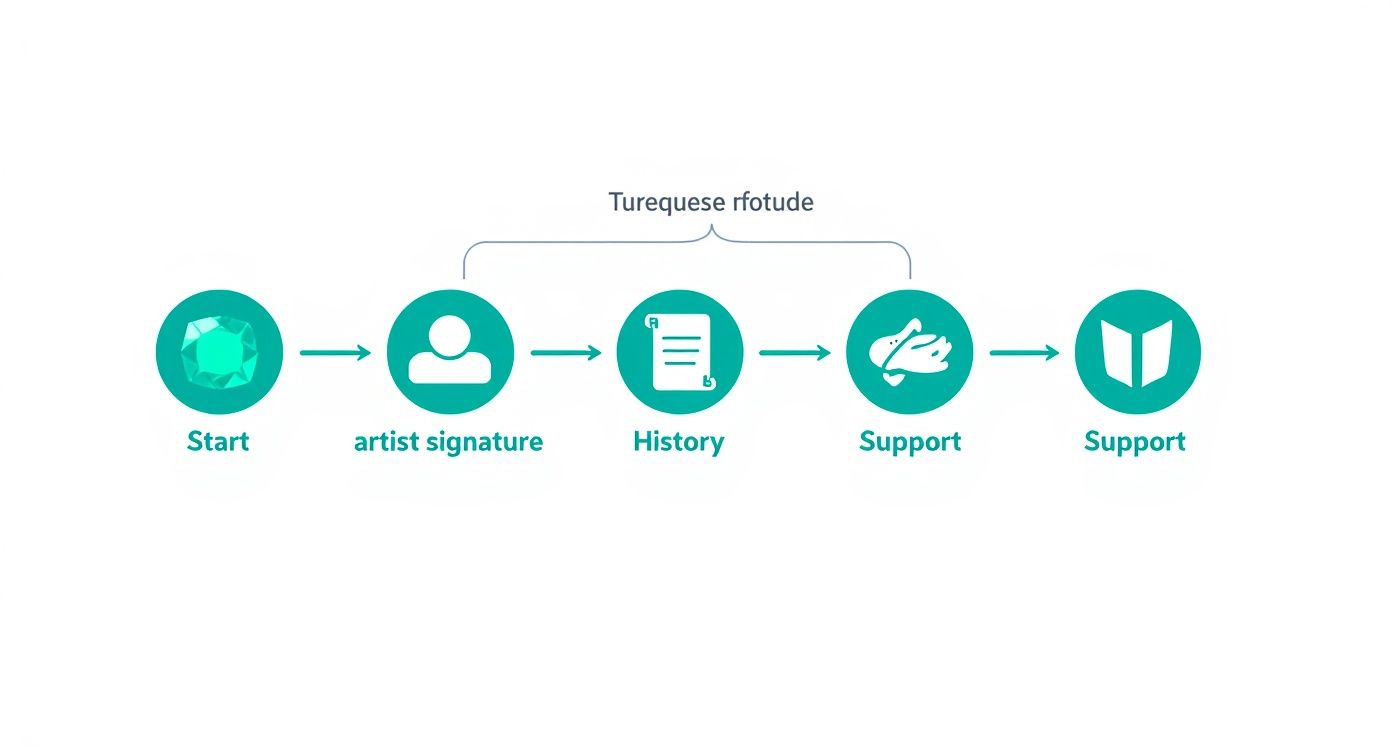
As you can see, what you value most—supporting an artist’s legacy, owning a piece of history, or finding a specific modern style—will point you straight to the right vendor.
Direct From Native American Artisans
Going directly to a Native American artist is the purest way to buy. It’s a path that guarantees authenticity and directly supports the hands that crafted the piece. This journey might take you to galleries in places like Gallup, New Mexico, or face-to-face with artists at cultural fairs and markets.
The biggest plus here is the absolute guarantee of authenticity. You can often chat with the creator, learn about their tribal affiliation (like Diné, Zuni, or Hopi), and hear the story behind the design. The jewelry will almost always have an artist's hallmark—a special stamp that acts as their signature.
Of course, this approach takes a bit more effort. You might need to travel to specific regions or time your visit with an event, and your selection is limited to what that one artist has on hand. The price fairly reflects the incredible skill and cultural weight of the work, putting these pieces in the mid-to-high end of the market.
Curated Online Boutiques
If you’re someone who values convenience and loves having a wide range of styles to choose from, online boutiques are a fantastic option. These shops are like expert curators, gathering beautiful pieces from different artists and workshops that all fit a particular vibe, like the western boho or estuarian cowgirl look.
Online stores give you detailed descriptions, high-quality photos, and usually share plenty of information about the materials and sometimes even the artist. This makes it so much easier to find exactly what you’re dreaming of, from tiny, delicate earrings to a bold statement cuff. For example, exploring a well-organized Western Boho Turquoise Collection lets you browse and compare dozens of styles right from your couch.
The main trade-off is that you don't have that direct, personal connection with the artist. You’re putting your trust in the boutique’s vetting process. Good sellers will be transparent about their sourcing and offer clear return policies, but it’s just a different feel than meeting the maker yourself.
What really sets online boutiques apart is their knack for blending traditional craftsmanship with current trends. They make the iconic Southwestern aesthetic accessible to everyone, everywhere, offering pieces that feel both timeless and totally fresh.
Vibrant Artisan and Flea Markets
Artisan markets, like the legendary Gallup Flea Market, offer a lively, hands-on buying experience that’s hard to beat. These places are buzzing with creative energy, giving you the chance to discover unique work from both emerging and well-known artists all in one spot.
The whole experience is incredibly personal. You can hold the jewelry, see how the silver catches the sunlight, and feel the cool weight of the stone in your hand. This direct interaction builds a natural sense of trust and lets you ask questions right then and there. Prices can also be a bit more wallet-friendly than in formal galleries since you’re often buying from the maker without a middleman.
The only real challenge with markets is that they can be unpredictable. The selection changes from week to week, so you might have to visit a few times to find your perfect piece. And while you can meet lots of artists, you still need a sharp eye to verify the authenticity of every single item from every vendor.
Vintage and Estate Sellers
For the collector who gets a thrill from history, vintage and estate sellers are true treasure troves. These are the places to find jewelry with a soul—pieces that have been worn, loved, and carry the beautiful patina of age. You can uncover everything from classic mid-century Zuni inlay work to powerful, old pawn Navajo cuffs.
Every single piece is one-of-a-kind, with a character that new jewelry just can't replicate. The hunt is a huge part of the fun, whether you’re digging through antique shops or browsing listings from trusted online estate dealers. Authenticity here is all about the seller's expertise and the piece's history, or provenance.
However, buying vintage does require a bit of knowledge. You need to be able to spot period-specific styles and know the difference between something genuinely vintage and a modern "vintage-style" reproduction. Pricing is all over the map, too, depending on the piece's age, rarity, artist, and condition.
Detailed Comparison of Turquoise Jewelry Vendors
To help you pull it all together, this table gives you a detailed breakdown of the main places to find Southwestern turquoise jewelry. It lays out what to expect from each type of vendor, making it easier to match your own needs with the right buying experience.
| Vendor Type | Authenticity & Sourcing | Typical Price Range | Style & Selection | Buyer Experience |
|---|---|---|---|---|
| Native American Artisans | Highest guarantee; direct from the creator with hallmarks. Sourcing is transparent. | Mid to High | Limited to the artist's specific style, but offers deep cultural authenticity. | Personal and educational. A direct connection to the culture and craft. |
| Online Boutiques | Relies on the seller's reputation. Look for sourcing details and guarantees. | Low to High | Broad and curated. Mix of traditional, modern, and estuarian cowgirl styles. | Convenient and efficient. Easy to browse and compare a wide variety of items. |
| Artisan Markets | Generally high; direct interaction with makers. Buyer's eye is still needed. | Low to Mid | Eclectic and unique. Discover emerging artists and diverse, one-off pieces. | Vibrant and hands-on. An engaging community atmosphere. |
| Vintage & Estate Sellers | Based on seller expertise and provenance. Requires buyer knowledge. | Mid to High | One-of-a-kind historical pieces. Each item tells a unique story. | A treasure hunt. Exciting for collectors who enjoy the search for rare finds. |
Ultimately, whether you buy from an artist on a dusty road in Arizona or from a chic online shop, the best place is the one that leads you to a piece of turquoise you’ll love and cherish for years to come.
How to Identify Authentic Southwestern Turquoise
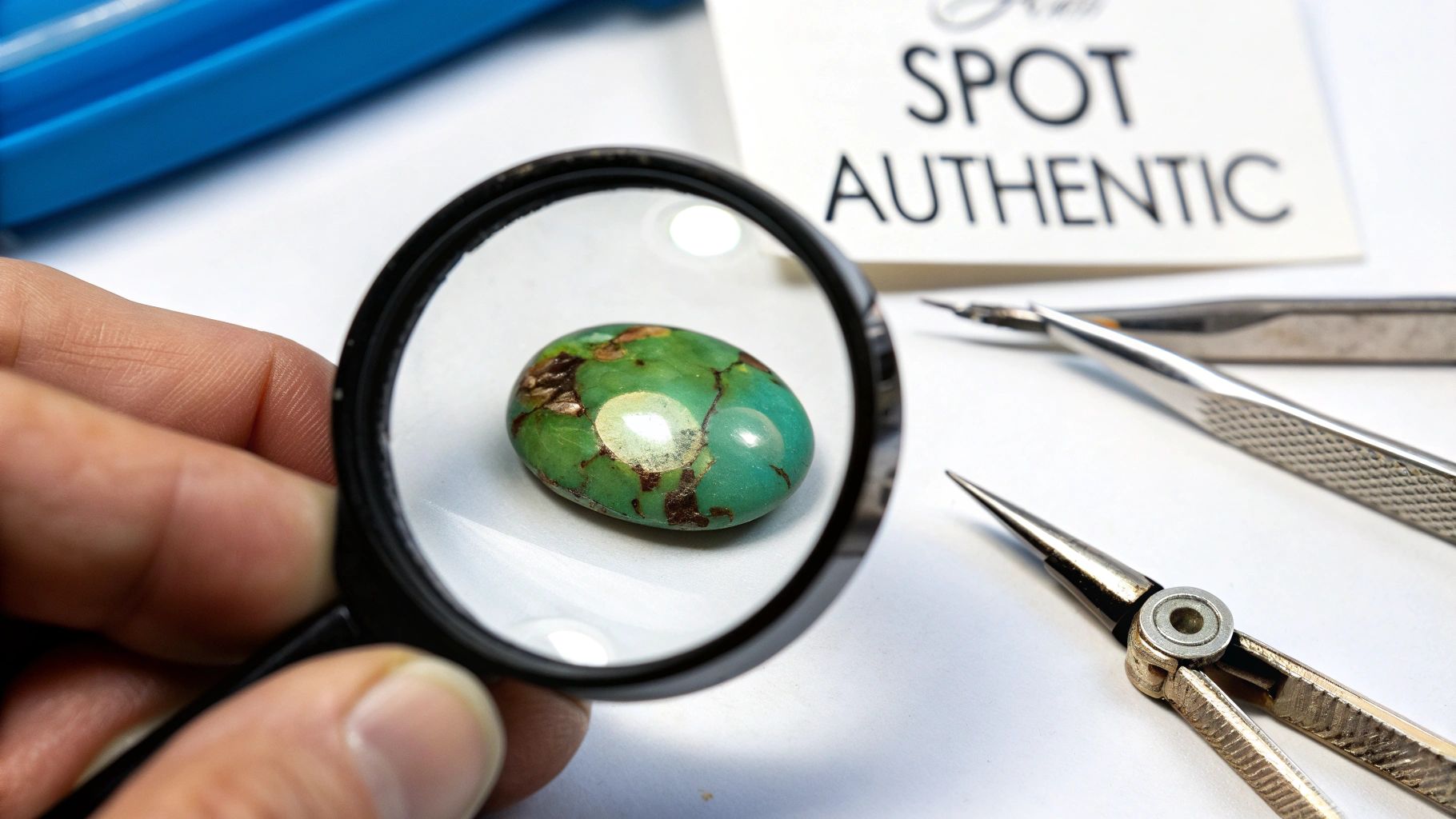
When you're trying to find the best places to buy turquoise jewelry, your sharpest tool is knowing how to spot the real thing. The market is flooded with everything from cheap plastic fakes to cleverly treated stones that fool even experienced eyes. Think of this as your field guide to telling the difference, with a focus on that iconic Southwestern style that makes this jewelry so special.
Learning to identify authentic turquoise isn't just about running through a checklist. It's about getting a feel for the stone's true nature. Genuine turquoise has character—flaws, unique shades, and a cool, solid feel that just can't be replicated. Once you start noticing these details, you'll feel so much more confident, whether you’re digging through treasures at a market or shopping online.
Decoding the Matrix and Color
The matrix is your first big clue. That's the web of host rock that snakes through the turquoise, and in Southwestern jewelry, it's often the star of the show.
Real matrix patterns are totally random and look like they're in the stone, not just sitting on top. You might find delicate, inky lines forming a spiderweb pattern or bigger chunks of brown or black rock. If you see a pattern that looks too perfect or repeats itself, that's a huge red flag for a fake.
Color is just as telling. Natural turquoise is almost never a single, flat color. It shifts from pale sky blue to deep greenish-blue, often with subtle mottling or different shades in the same stone. Watch out for an electric, perfectly uniform blue—it often means the stone has been dyed to look more appealing than it really is.
The Feel Test and Physical Clues
Sometimes, the simplest tests are the most effective. Real turquoise feels dense for its size and stays cool to the touch, even when it’s warm out. Plastic or resin imitations, on the other hand, feel light and warm up almost instantly in your palm.
You can also try a quick "tap test." Gently tap the stone against your tooth or with a fingernail. Real turquoise makes a dull, solid "clink," almost like a tiny ceramic tile. Plastic will sound hollow and flat. It's not a foolproof method, but it’s another piece of the puzzle.
It’s crucial to understand the difference between treated and fake turquoise. Many artists use a process called stabilization, where resin is used to harden softer turquoise so it's durable enough for jewelry. That's a legitimate practice, as long as it's disclosed. The deception comes from dyeing, pressing turquoise dust into a block (reconstitution), or passing off a completely different mineral like Howlite as turquoise.
To really get a handle on these details, our guide on how to know your turquoise origin, quality markers, and care is a must-read. It’ll give you a much deeper appreciation for what makes each stone one-of-a-kind.
Hallmarks of Quality Craftsmanship
In authentic Southwestern and estuarian cowgirl jewelry, the silversmithing is just as important as the stone. A genuine piece is a showcase of an artist's skill.
Here’s what to look for in the metalwork:
- Artist Hallmarks: True Native American artisans take pride in their work and will stamp their pieces with a personal hallmark—their initials, a special symbol, or their name. It’s their signature.
- Solid Silverwork: Take a close look at the bezel, which is the silver collar holding the stone. It should be smooth and fit snugly around the turquoise with no gaps. Messy solder blobs or flimsy-looking silver are signs of mass production, not artistry.
- Weight and Substance: Real sterling silver has a nice, satisfying heft. If a big cuff bracelet or a chunky ring feels surprisingly light, it might just be silver-plated instead of solid.
By training your eye to catch these visual and physical clues, you go from being just a shopper to a true collector. You'll be able to confidently explore all the places to buy turquoise jewelry, knowing you can spot the real deal and invest in a piece you’ll love forever.
Understanding Global and Regional Market Influences
To really find the best places to buy turquoise jewelry, you have to zoom out and see the big picture. The pieces you see in a Santa Fe gallery or an online boutique aren’t just pretty objects; they’re products of a dynamic global market. Getting a handle on these forces will make you a much smarter buyer.
The market for Southwestern turquoise is shaped by supply, demand, and cultural trends that reach far beyond the American West. When a legendary mine like Sleeping Beauty closes, the value of its stones skyrockets due to scarcity. Simple as that. In the same way, when trends like the “coastal cowgirl” aesthetic take off on social media, it directly influences what designs artists and shops decide to create.
The North American Market’s Powerful Role
North America has always been the heartland of turquoise jewelry. It's both the main source of high-quality stones and its biggest customer base. This has a huge impact on the styles you see everywhere. The deep cultural roots of turquoise here mean that many designs pull from a rich heritage, which you can dive into by reading about the history of Native American jewelry.
This built-in demand keeps a steady flow of classic Southwestern styles available. But it also makes the market competitive, especially for pieces from well-known artists or rare mines. What you’re able to find is directly tied to what this massive, discerning market values most at any given time.
A key takeaway for buyers is that North America's dominance shapes the very definition of "classic" turquoise jewelry. The styles prevalent here set the standard globally, influencing trends and availability for everyone.
The Rising Influence of the Asia-Pacific Market
While North America has long been the center of the turquoise world, a big shift is happening. The demand for colored gemstones is exploding in other parts of the world, creating new dynamics that will eventually affect every buyer.
Specifically, while North America still consumes the most turquoise jewelry, the Asia-Pacific region is the fastest-growing market, with a projected 9.2% CAGR. This boom is fueled by rising incomes and a new appreciation for colored gemstones, which will ripple across the globe, impacting availability and pricing for all of us. You can find more data on these global market trends on Data Insights Market.
So, what does this mean for you as you hunt for that perfect piece? Increased global demand can lead to two major outcomes:
- Higher Prices: It's basic economics. As more buyers compete for a limited supply of top-tier turquoise, prices are bound to climb.
- Shifting Availability: Certain types of stones or popular styles might become harder to get your hands on as they’re snapped up to meet new demand overseas.
Thinking about this global context turns your search from a simple shopping trip into a strategic move. By understanding these market forces, you can better anticipate price changes and appreciate the real value of the pieces you find. It makes you a more informed and confident collector.
Styling and Caring for Your Turquoise Jewelry
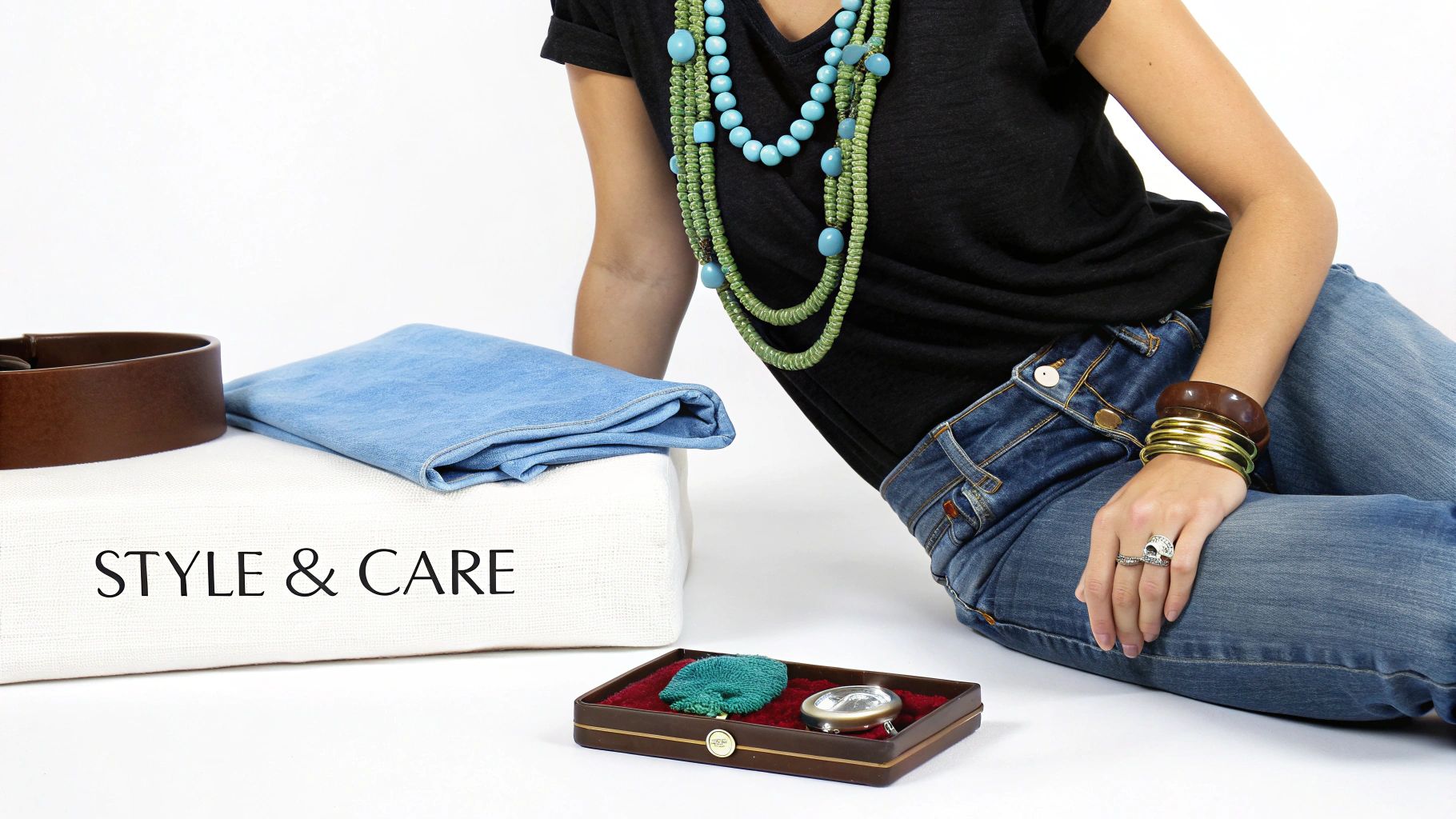
Once you've found that perfect piece, the real joy begins—making it a part of your story and ensuring it lasts a lifetime. Southwestern and estuarian cowgirl jewelry is incredibly versatile. It can elevate a simple t-shirt and jeans or be the finishing touch on a bold, layered look.
But owning turquoise means understanding its delicate nature. Proper care is everything. It's a soft, porous stone that needs a little mindfulness to keep its vibrant color and integrity. Let's get into the practical side of styling these beautiful pieces and protecting your investment, so your jewelry remains as stunning as the day you first laid eyes on it.
Styling for the Modern Cowgirl Aesthetic
Nailing that effortless Southwestern vibe is all about mastering balance and texture. It's a style that feels both rugged and refined, blending the raw beauty of turquoise with everyday fabrics and materials. You want your jewelry to make a statement, but in a way that feels completely natural.
Here are a few ways I love to style turquoise:
- Layering with Intention: Don't just throw on a bunch of necklaces. Be thoughtful. Try pairing a delicate silver chain with a bolder, multi-strand turquoise piece. This creates incredible depth and visual interest, especially against a simple neckline.
- Mixing Materials: The magic of the cowgirl aesthetic lies in contrast. Stack your turquoise bracelets next to a worn-in leather cuff. Wear a stunning turquoise necklace over a denim jacket or even with a delicate silk blouse. It's that mix of hard and soft, rugged and refined, that creates such a rich, tactile look.
- The Power of a Single Statement: Sometimes, one knockout piece is all you need. A large, intricate turquoise cuff or a breathtaking statement ring can carry an entire outfit, particularly when you keep the rest of your look neutral with colors like cream, tan, or black.
The most authentic styling comes from confidence. Wear your turquoise with a crisp white shirt and your favorite jeans for a timeless, classic look, or go bohemian by pairing it with a flowing floral dress. The goal is for the jewelry to feel like a true extension of you.
Preserving the Beauty of Your Turquoise
Because turquoise is a porous gemstone, it's sensitive to chemicals, oils, and even too much direct sun. Good care is essential to prevent it from discoloring or getting damaged. My best advice? Think of your jewelry as the last thing you put on in the morning and the first thing you take off at night.
This simple habit helps you avoid so many common problems. Cosmetics, hairspray, lotions, and perfumes all contain chemicals that can permanently alter the stone's color. By putting your jewelry on after these products have settled, you’re creating a much-needed protective barrier.
And it almost goes without saying, but always take off your turquoise before swimming, showering, or even just washing dishes. Chlorine and harsh soaps are particularly rough on both the stone and its silver setting.
A Practical Guide to Cleaning and Storage
When it comes to cleaning, a gentle touch is non-negotiable. Harsh chemicals or abrasive tools will scratch the stone and can damage the intricate silverwork. For most pieces, a simple wipe-down with a soft, dry, lint-free cloth is all it takes to remove body oils and dust after you wear it.
If the silver setting needs a bit more attention, you have to be extremely careful. We cover the best ways to do this in our guide on how to clean sterling silver jewelry at home. Whatever you do, never submerge your turquoise jewelry in commercial cleaning dips or solutions—they are far too harsh for this delicate stone.
Proper storage is your final line of defense against damage and tarnish.
- Separate Each Piece: Store your jewelry in individual soft cloth pouches or a lined jewelry box with different compartments. This stops harder gems and metals from scratching the relatively soft surface of the turquoise.
- Avoid Air and Humidity: Keep your pieces in a cool, dry place, away from direct sunlight. You can even place anti-tarnish strips inside your jewelry box to absorb sulfides from the air, which helps protect the silver.
- Keep It Untangled: Always fasten the clasps on your necklaces and bracelets before putting them away. It's a small step that prevents a big headache of tangled chains later.
By making these styling and care practices part of your routine, you’re doing more than just protecting a beautiful object. You’re deepening your connection to it, ensuring each piece remains a treasured part of your story for years to come.
Your Top Turquoise Buying Questions, Answered
Jumping into the world of turquoise can feel a little overwhelming, especially when you're trying to nail that perfect Southwestern or estuarian cowgirl vibe. You’ve probably got a few questions buzzing around. Making a smart, informed choice is the last step to finding a piece you’ll absolutely love for years.
To make sure you can buy with total confidence, I’ve put together some straight-up answers to the questions I hear the most. Think of this as your final checklist before you find the one.
How Can I Be Sure a Piece Is Genuinely Native American Made?
This is a big one, and it’s about more than just looks. The single most reliable sign is an artist's hallmark or initials stamped right into the silver. It’s their signature, a mark of pride in their craft.
Any seller worth their salt, whether online or in a Santa Fe gallery, should also be able to provide a Certificate of Authenticity. This isn't just a piece of paper; it should clearly state the artist's name, their tribal affiliation (like Diné, Zuni, or Hopi), and the materials they used. And if you're shopping in person, don't be shy! Ask the seller or artist about their work and heritage—their story adds so much value to the piece.
Quick tip: Watch out for vague descriptions like "Indian-style" or "Native-inspired." These are often red flags for mass-produced items and don’t mean the piece was made by an Indigenous artist. Authentic Native American jewelry is a direct reflection of specific tribal styles and time-honored techniques.
What's the Real Difference Between Natural and Stabilized Turquoise?
Knowing this distinction is key to understanding what you’re actually paying for. Natural turquoise is the real deal—pulled from the earth and set into jewelry with zero treatments. It's far rarer, more valuable, and can even subtly change color over the years as it absorbs your skin's natural oils. It’s a living stone, and many collectors find that incredibly special.
Stabilized turquoise, on the other hand, is still genuine turquoise, but it's been treated with a clear resin to make it more durable and lock in that gorgeous color. This makes the stone much stronger, less likely to crack, and honestly, better suited for a ring you plan to wear every day. Stabilization is a completely normal and accepted industry practice, but a good seller will always tell you. The stuff to avoid is "reconstituted" (basically turquoise dust and glue) or stones that have been dyed to fake a high-quality color.
Is It Better to Buy Turquoise Online or In Person?
Honestly, there’s no single right answer here—it really comes down to what you’re comfortable with. Buying in person at a market, trading post, or gallery has a certain magic to it. You get to hold the piece, feel its weight, and see how the light hits the stone. Plus, you can often chat with the seller or artist directly, which builds a ton of confidence.
But shopping online offers a world of options you’d never find in one place. The key to buying online without getting burned is to stick with sellers who provide:
- Detailed Descriptions: They should tell you everything—the stone, the silver, the artist.
- High-Resolution Photos: You need to see it from every angle, including a clear shot of the hallmark.
- A Solid Return Policy: This is your safety net. No questions asked.
- Real Customer Reviews: See what other buyers have to say. Their experience is gold.
Why Is There Such a Huge Range in Turquoise Prices?
The price tag on a piece of turquoise jewelry isn't random; it's a mix of a few key things. First and foremost is the rarity of the turquoise itself. Stones from legendary mines that are now closed, like Sleeping Beauty or Lander Blue, are incredibly valuable simply because there's a finite supply.
Next up is the quality of the stone. This covers its hardness, how vibrant the color is, and the pattern of the matrix—that spidery webbing running through it. A perfect, dark spiderweb matrix is the holy grail for many collectors. Finally, the artist's skill and reputation are huge, especially in Native American jewelry. The intricacy of the silverwork, the artist’s name, and the overall design all play a massive part in the final price. It’s why a natural, high-grade stone will always be a bigger investment than a stabilized or lower-grade one.
Ready to find your perfect piece of Southwestern-inspired jewelry? At Silver Elegant, we've curated a stunning collection of turquoise and sterling silver designs that capture the spirit of the modern cowgirl. Discover handcrafted quality and timeless style at https://silverelegant.com.