

If you're a fan of Southwestern style, you know the struggle. You find the perfect pair of turquoise drops or intricately stamped silver hoops, only to end up with red, itchy, and irritated ears. It’s a frustrating cycle that can make you want to give up on statement earrings altogether.
The good news? You don’t have to. The secret to wearing those stunning estuarian cowgirl designs in complete comfort lies in choosing the right materials from the start.
Your Guide to Irritation-Free Southwestern Jewelry
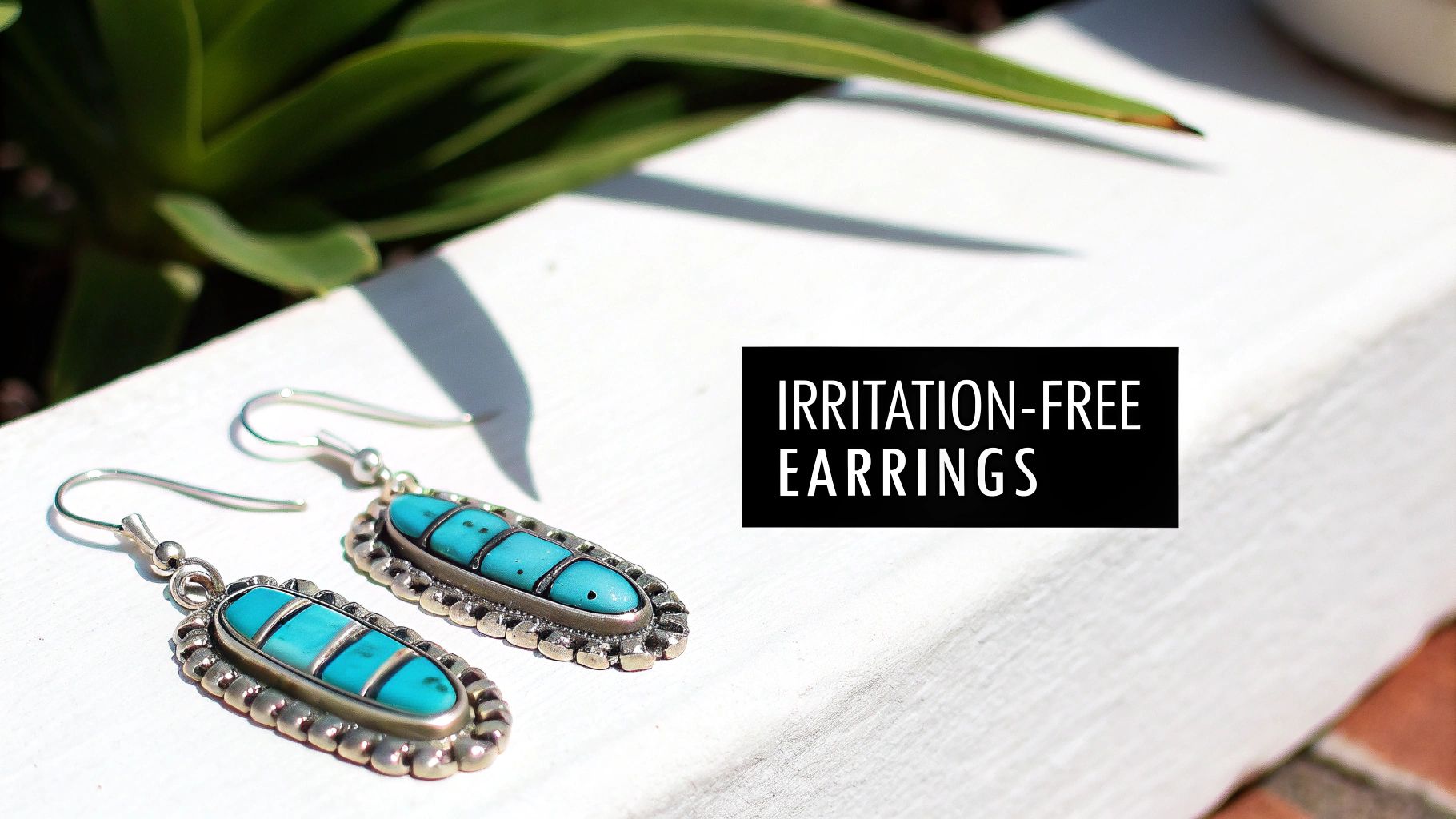
Let’s cut through the noise. Finding beautiful Southwestern jewelry that won’t betray your sensitive ears isn’t about luck—it’s about knowledge. That painful, itchy reaction is almost always a sign of a nickel allergy, and once you know how to avoid it, a whole world of artisan jewelry opens up.
This guide will walk you through exactly that. We’ll look at which metals are your allies and which are the culprits behind the discomfort. Think of this as your roadmap to building a collection of stunning, comfortable earrings that truly capture that authentic estuarian cowgirl vibe you love.
Finding Your Perfect Metal Match
The solution to irritation-free style almost always comes down to the metal. A huge amount of mass-produced fashion jewelry contains nickel, a common hardening agent that also happens to be the top trigger for skin allergies, affecting an estimated 17% of women. To sidestep the problem entirely, just focus on high-quality, body-safe metals.
- Sterling Silver (.925): As the true cornerstone of traditional Southwestern jewelry, sterling silver is a fantastic choice. It's made of 92.5% pure silver, so it’s naturally hypoallergenic. Its cool, bright shine is the perfect canvas for vibrant turquoise and detailed silverwork.
- Surgical-Grade Stainless Steel: There's a reason this metal is used for medical implants—it’s incredibly durable and non-reactive. It gives off a slightly more modern, rugged feel that works beautifully with bolder Western designs.
- Titanium: If your ears are extremely sensitive, titanium is your best friend. It’s completely biocompatible and unbelievably lightweight, which means even the largest, most dramatic statement earrings will feel comfortable all day long.
If you want to get into the nitty-gritty of what makes certain materials safe, you can learn more about what hypoallergenic jewelry is and why it's a game-changer for your collection.
Choosing the right metal isn't just about avoiding a reaction; it's about investing in craftsmanship and comfort. When you select a piece made from sterling silver or titanium, you're choosing jewelry designed to be worn and cherished for a lifetime.
To make things even simpler, here's a quick look at how these metals stack up.
Quick Guide to Safe Metals for Sensitive Ears
This table gives you a quick visual reference for the best hypoallergenic metals, helping you see at a glance what makes each one a great option for your next pair of earrings.
| Metal Type | Hypoallergenic Quality | Best For | Aesthetic & Style |
|---|---|---|---|
| Sterling Silver | Excellent (nickel-free) | Classic designs, daily wear, and turquoise settings | Bright, timeless, and central to the Southwestern look |
| Surgical Steel | Excellent (biocompatible) | Durability, modern styles, and budget-friendly pieces | Sleek, tough, and offers a contemporary Western vibe |
| Titanium | Superior (100% nickel-free) | Extremely sensitive ears and lightweight statement pieces | Modern, lightweight, with a slightly deeper gray tone |
Ultimately, knowing which metals are safe for you is the key to finally wearing the jewelry you love without hesitation. By sticking to these trusted options, you can confidently build a collection that feels as good as it looks.
Why Some Earrings Cause Painful Reactions
Ever slipped on a stunning pair of Southwestern earrings, only to feel that familiar, dreaded itch hours later? It’s a frustrating experience that can leave your earlobes red, swollen, and tender. The problem isn’t your ears—it’s the metal in the jewelry.
This painful reaction is a form of allergic contact dermatitis. Think of it like this: your immune system is a highly sensitive security system. When certain metals touch your skin, your body might mistakenly flag them as a threat and trigger an inflammatory response to fight them off. The result is that very irritation you feel.
This isn't a sign of poor hygiene or a new piercing gone wrong. It’s a specific sensitivity to an alloy mixed into the earring itself. Understanding this simple science is the first step toward choosing beautiful estuarian cowgirl pieces with absolute confidence.
The Main Culprit: Nickel
When it comes to metal allergies, one element is responsible for the vast majority of reactions: nickel. Jewelers often mix nickel into metal alloys to add strength, durability, and shine, especially in less expensive fashion jewelry. While it’s effective for that purpose, it’s also a notorious sensitizer.
For many people, the nickel ions slowly leach out of the earring post and into the skin, especially with moisture from sweat or humidity. Once that happens, the immune system springs into action. This is why a pair of earrings might feel fine at first but become unbearable by the end of the day.
This sensitivity is incredibly common. In fact, nickel allergy is the most frequent cause of allergic contact dermatitis from earrings, affecting roughly 17% of women and 3% of men globally. This high prevalence has pushed the jewelry industry toward safer, hypoallergenic alternatives, and you can read the full research about the earring market to see how consumer demand is changing manufacturing standards.
Recognizing the Signs of a Reaction
An allergic reaction can show up within hours or sometimes take a couple of days to develop. The symptoms are often localized right where the metal touched your skin, but a severe reaction can spread.
Common symptoms to watch for include:
- Intense Itching: This is often the very first sign that something is wrong.
- Redness and Rash: The skin around the piercing may look inflamed or develop a bumpy rash.
- Swelling: Your earlobe might feel puffy, warm, and tender to the touch.
- Blistering or Weeping: In more severe cases, tiny fluid-filled blisters can form.
If you consistently experience these issues, it’s a clear signal that your body is reacting to an allergen. To better understand how this applies to specific metals, you can explore our detailed guide on the symptoms of a sterling silver allergy and what they mean.
Think of a nickel allergy like a food sensitivity. Just as someone with a lactose intolerance avoids milk, someone with a nickel sensitivity needs to avoid nickel-based alloys. It's about knowing your triggers and choosing alternatives that work for your body.
Ultimately, identifying the cause is empowering. It means you don’t have to give up on wearing the bold, beautiful Southwestern styles you love. Instead, you can become a more discerning shopper, focusing on high-quality, body-safe metals that offer all the style without any of the painful side effects.
Choosing the Best Metals for Sensitive Ears
If you've ever dealt with red, itchy earlobes, you know that finding beautiful jewelry can feel like a minefield. But having sensitive skin shouldn't mean you have to give up on the artisan styles you love. It’s all about knowing which metals are your friends. For Southwestern enthusiasts, this means finding materials that are both body-safe and a perfect match for those earthy, intricate designs.
The secret is simple: start with high-purity metals. These are far less likely to contain nickel, the number one culprit behind most skin reactions. By choosing the right foundation, you can make sure those stunning turquoise drops or hand-stamped hoops bring you joy, not irritation.
Not sure if you're having a reaction? This little guide breaks down the most common signs that your new earrings might not be a good fit.
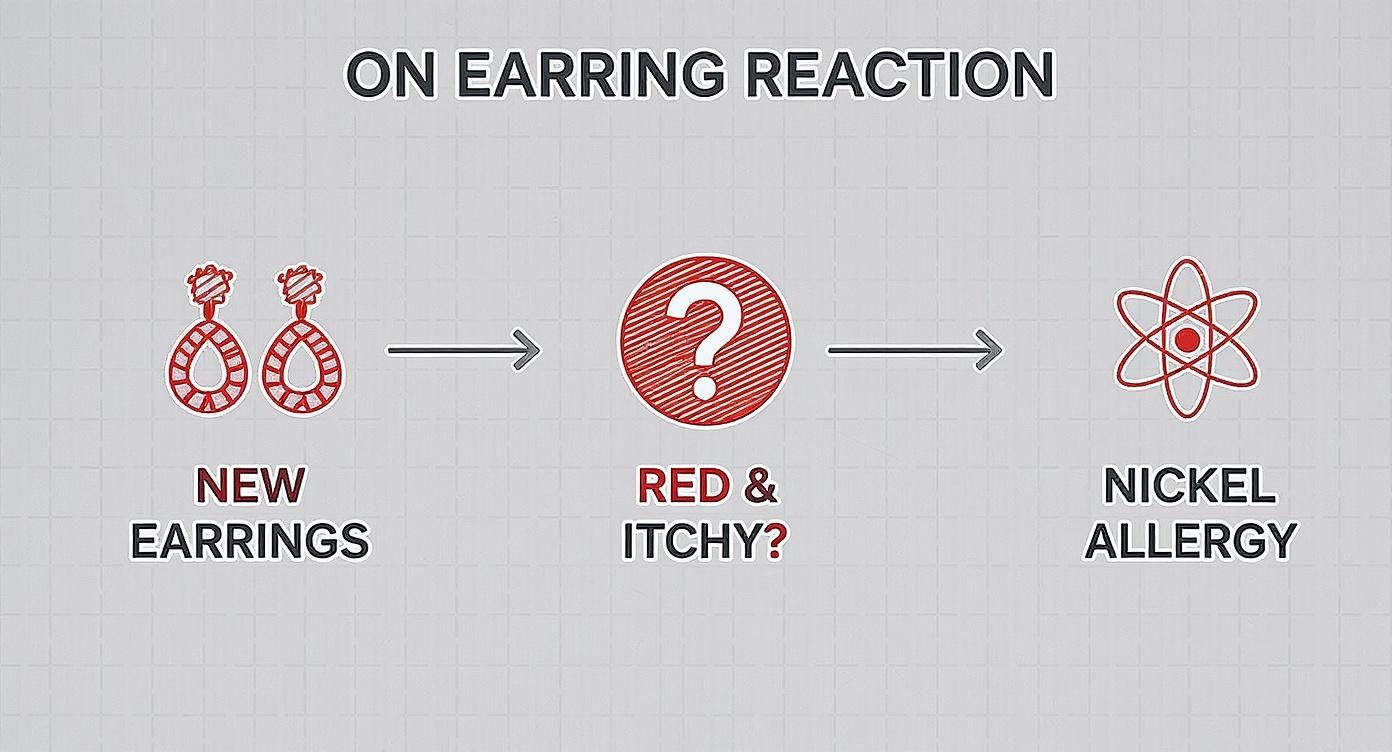
As you can see, that tell-tale redness and itching is your body’s way of waving a red flag, often pointing directly to a nickel sensitivity.
Sterling Silver: The Heart of Southwestern Style
When you picture classic Southwestern jewelry, you’re almost certainly imagining the bright, cool gleam of sterling silver. Look for a .925 stamp—that’s your guarantee it's made of 92.5% pure silver. The other 7.5% is usually copper, which adds strength without triggering allergies. This high purity makes it a fantastic, naturally nickel-free choice for sensitive ears.
But sterling silver isn't just a safe bet; it’s the soul of the estuarian cowgirl aesthetic. Its soft shine makes the vibrant blues and greens of turquoise pop and provides the perfect canvas for everything from delicate filigree to bold, stamped patterns. It's one of the best metals for hypoallergenic earrings that also honors true craftsmanship.
Surgical-Grade Stainless Steel: A Durable Alternative
While sterling silver is the traditional go-to, surgical-grade stainless steel offers a modern, rugged alternative. Now, not all stainless steel is created equal. You have to be picky and choose surgical-grade options like 316L, which are specifically designed to be biocompatible and have an incredibly low nickel release rate.
The big win here is durability. This stuff is tough, resisting scratches and tarnish like a champ. Its deeper, more industrial tone can also add a contemporary edge to Western-inspired jewelry, especially with minimalist concho or horseshoe motifs.
Titanium: The Ultimate Choice for Extreme Sensitivity
For those who react to just about everything, titanium is the undisputed champion. It’s a pure element that is completely biocompatible and 100% nickel-free. There's a reason it's trusted for medical implants—your body pretty much ignores it. If you’ve tried other metals and still had issues, titanium is your safest bet for comfortable, worry-free wear.
Its other superpower? It’s incredibly lightweight. This means you can rock those large, dramatic statement earrings—a staple of the cowgirl look—without them weighing you down or stretching your lobes. While its natural color is a deeper gray than silver, it can be anodized to create a whole rainbow of colors, opening up some really unique design possibilities.
Niobium: A Colorful and Safe Option
Think of Niobium as titanium’s colorful cousin. It’s another pure, inert element that’s completely biocompatible and contains zero nickel, making it perfect for highly sensitive skin.
What makes niobium so special is its ability to be anodized into a brilliant spectrum of iridescent colors without using any dyes or plating. Imagine a pair of feather-shaped earrings shimmering with the colors of a desert sunset—that's the magic of niobium, and it’s completely safe for your ears.
To help you weigh your options, we've put together a quick comparison of the top contenders.
Hypoallergenic Metal Comparison Chart
This chart breaks down the key differences between the safest metals, so you can find the perfect match for your needs, style, and budget.
| Metal | Nickel Content | Durability | Typical Price Range | Best for Southwestern Style |
|---|---|---|---|---|
| Sterling Silver | None (when alloyed with copper) | Good, but can tarnish/scratch | Moderate | Excellent. The traditional and most authentic choice for classic designs. |
| Surgical Steel | Very Low (biocompatible grades) | Excellent. Resists scratches & tarnish. | Low to Moderate | Good. Offers a modern, industrial feel for contemporary Western looks. |
| Titanium | 100% Nickel-Free | Excellent. Extremely strong & light. | Moderate to High | Good. Perfect for large, lightweight statement pieces. Deeper gray color. |
| Niobium | 100% Nickel-Free | Very Good. Scratch-resistant. | Moderate to High | Great. Adds vibrant, unique color possibilities beyond gemstones. |
Ultimately, picking the right material comes down to understanding what works for your body and your personal style. Each of these metals offers a safe, beautiful way to wear the jewelry you love.
The most important takeaway is this: your choice of metal is the foundation of a comfortable jewelry experience. By prioritizing high-purity, nickel-free materials, you empower yourself to embrace the bold artistry of Southwestern style without compromise.
Ready to learn more? For a deeper dive, check out our guide on the metals that make hypoallergenic earrings truly comfortable. Making an informed choice is the first step toward building a collection you can wear with confidence and pride.
Caring for Your Southwestern Sterling Silver
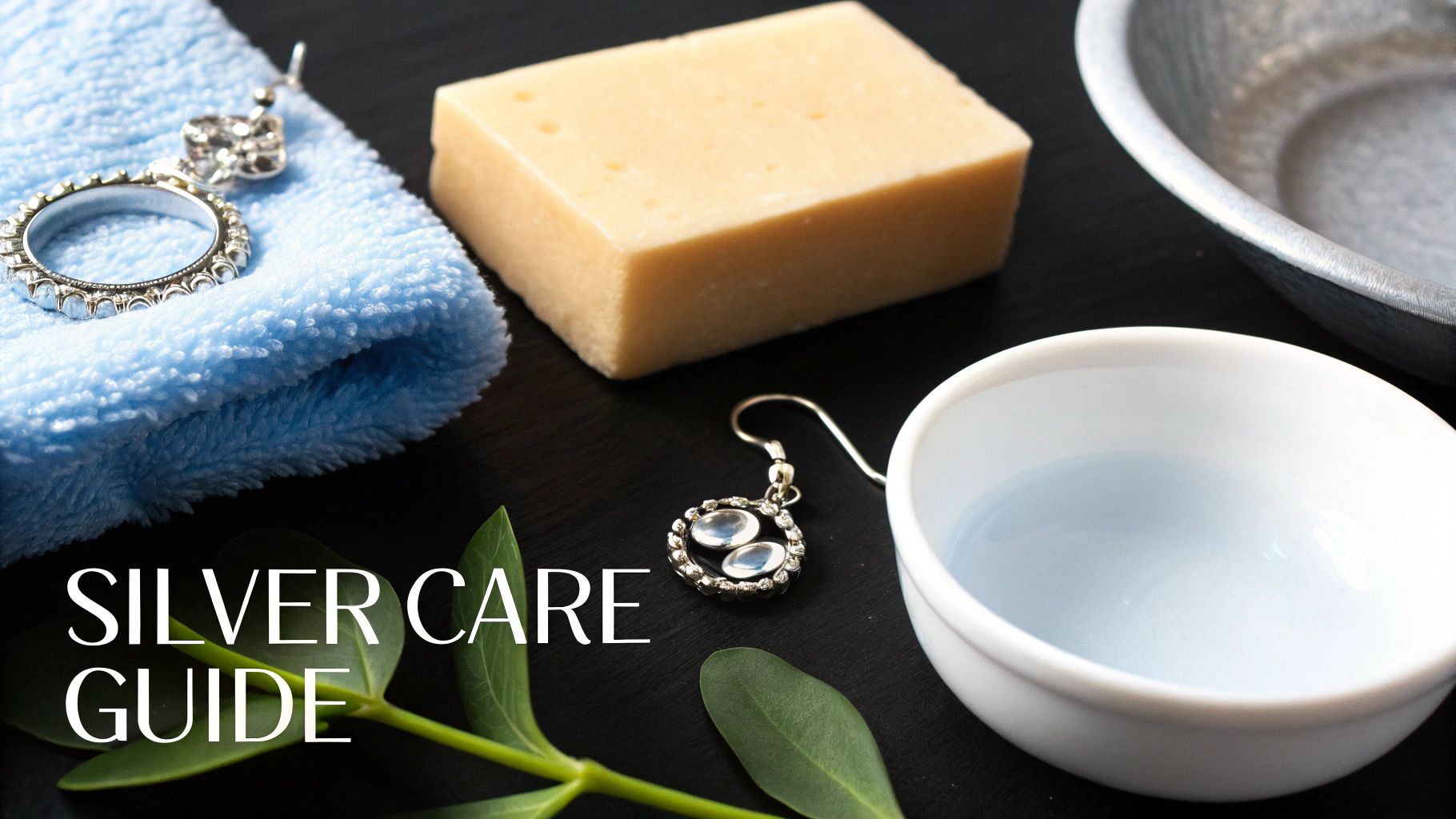
Choosing the right hypoallergenic metal is the first step, but keeping your beautiful Southwestern jewelry comfortable and brilliant doesn’t stop there. Over time, everyday residues from skin oils, lotions, and even dust can build up on the surface. Even with high-quality sterling silver, this accumulation can sometimes cause a bit of irritation for the most sensitive skin.
Think of your earrings like any other piece you wear daily—they need a little freshening up now and then. A simple, consistent care routine ensures your favorite pieces stay hygienic, sparkling, and just as comfortable as the day you got them. This is especially true for the wonderfully intricate designs you find in Southwestern and estuarian cowgirl jewelry, where tiny crevices are perfect hiding spots for debris.
A Simple Cleaning Routine for Your Earrings
You don't need harsh chemicals or abrasive tools to keep your silver looking its best. A gentle touch is always the right approach, especially to protect the metal's finish and any delicate turquoise or gemstone settings. This method is non-toxic, incredibly effective, and uses things you probably already have at home.
For a deeper dive into maintaining your whole collection, our complete guide on how to care for sterling silver jewelry offers even more detailed tips. The simple routine below is perfect for quick weekly maintenance.
Here’s a step-by-step process to get your earrings sparkling again:
- Prepare a Gentle Solution: In a small bowl, mix a few drops of mild, phosphate-free dish soap with warm water. Stay away from any detergents that have added moisturizers or aggressive degreasers.
- Soak Briefly: Let your earrings sit in the solution for just a few minutes. That’s all it takes to loosen any grime without overexposing delicate stones like turquoise to too much moisture.
- Use a Soft Touch: Gently clean the earrings with a super soft-bristled baby toothbrush or a microfiber cloth. Pay a little extra attention to the posts and any detailed silverwork where buildup likes to hide.
- Rinse and Dry Thoroughly: Rinse the earrings under cool, running water. Immediately pat them completely dry with a soft, lint-free cloth to prevent water spots and slow down the natural tarnishing process.
Proper cleaning isn't just about making your jewelry look good; it's a key part of skin health. By regularly removing potential irritants from the surface of your earrings, you're helping the hypoallergenic metal do its job and ensuring a comfortable, reaction-free wear every time.
Smart Storage to Prevent Tarnish and Damage
How you store your earrings is just as important as how you clean them. Sterling silver’s main adversary is the air around it—specifically, the sulfur in the air, which is what causes tarnish to appear. The right storage creates a protective barrier that keeps your pieces bright and always ready to wear.
When you're not showing off your Southwestern treasures, protecting them from the elements is the goal. A few simple habits can make a massive difference in their longevity and appearance.
Follow these storage best practices:
- Store in a Dry, Dark Place: Humidity is public enemy number one for tarnish. A jewelry box with a soft lining is the perfect home for your sterling silver.
- Use Anti-Tarnish Strips: Popping a small anti-tarnish strip or even a piece of chalk into your jewelry box can work wonders by absorbing excess moisture and sulfur gases.
- Keep Pieces Separate: To prevent scratching, store each pair of earrings in its own compartment or a small, soft pouch. This is especially crucial for pieces with delicate turquoise inlays that can be easily scratched.
- Put Earrings on Last: Make it a habit to put your earrings on after applying lotions, hairspray, and perfumes. The chemicals in these products can speed up tarnishing and create buildup.
By weaving these simple cleaning and storage habits into your routine, you're protecting your investment in the best hypoallergenic earrings for sensitive ears. Your Southwestern sterling silver will continue to be a source of effortless style and comfort for years to come.
Your Smart Shopping Checklist for Sensitive Ears
Armed with the right knowledge, you can walk into any artisan market or click through online boutiques with total confidence. Finding that perfect pair of Southwestern earrings doesn't have to be a painful gamble anymore.
We've boiled down everything in this guide into a simple checklist to take with you on your next jewelry hunt. Think of it as your roadmap to choosing authentic, handcrafted estuarian cowgirl pieces you can actually wear—comfortably and for years to come.
Before You Buy: Authenticity and Materials
The first move is always to verify what you're buying. For genuine Southwestern pieces, especially sterling silver, this step is everything. It's the difference between a treasured heirloom and a one-way ticket to itchy, irritated ears.
- Look for the ‘.925’ Stamp: For any piece sold as sterling silver, this little stamp is your guarantee. It confirms the item is made of 92.5% pure silver, putting it in the top tier of hypoallergenic materials. If you don't see one, it's fair to ask the seller or artist why.
- Ask About the Posts and Hooks: The part that actually goes through your ear is the most critical. Don't be shy—always ask, "What material are the earring posts made from?" Even if a decorative part is made of brass or copper, a good jeweler will almost always use sterling silver or surgical steel for the components that touch your skin.
- Question Vague Descriptions: Be on high alert for fuzzy terms like "silver-toned" or "metal alloy." These are often just code words for mystery metals that are almost guaranteed to contain nickel. Stick with sellers who are upfront and clearly list their materials, like pure titanium, surgical-grade steel, or .925 sterling silver.
During the Purchase: Reviews and Policies
Okay, so you've confirmed the materials. A little extra digging here can save you a world of trouble later. What other shoppers have experienced and how the seller handles returns can tell you a lot about what you're getting into.
A transparent return policy isn't just a safety net; it's a sign that a brand truly believes in their product's quality and hypoallergenic claims. Sellers who stand behind their craftsmanship are the ones you want to buy from.
- Read Reviews for Sensitivity Feedback: Don't just glance at the star rating. Dig into the comments and search for keywords like "sensitive," "allergy," or "irritation." Glowing reviews from fellow shoppers with sensitive ears are one of the most reliable endorsements you can find.
- Understand the Return Policy: Before you hit "buy," find the return policy. Can you send the earrings back if you have an allergic reaction? Knowing you have that option gives you essential peace of mind.
- Trust Your Gut and the Artisan: When you're buying directly from the artist, strike up a conversation! A passionate craftsperson will be more than happy to talk about the metals they source and why they chose them. That connection not only ensures you're getting a quality piece but also adds to the story behind your new jewelry.
This checklist turns you from a hopeful shopper into a savvy collector. By keeping these key points in mind, you can confidently choose stunning, handcrafted Southwestern jewelry that honors both the artisan’s skill and your body’s needs.
Common Questions About Hypoallergenic Earrings
Even with a solid guide, stepping into the world of jewelry for sensitive ears can leave you with a few lingering questions. Let's clear those up. Think of this as your final check-in, a place for straightforward answers to the most common concerns.
Getting these details right helps make sure every future jewelry purchase is a happy and pain-free one. We'll get into the specifics of popular materials, give you a practical way to test new pieces, and help you feel confident building your Southwestern jewelry collection.
Can Sterling Silver Ever Cause a Reaction?
This is easily one of the most common questions, and it’s a great one. For the vast majority of people, genuine .925 sterling silver is one of the safest bets for sensitive ears. The ".925" stamp means it's 92.5% pure silver, and the other 7.5% is usually copper—another metal that rarely causes a fuss. This makeup makes it naturally nickel-free and a reliable choice for hypoallergenic jewelry.
But what about those rare exceptions? In very uncommon cases, someone might have a sensitivity to copper. If you've tried certified .925 sterling silver from a trusted source and still feel a little irritation, that could be why. It's also critical to make sure what you're buying is the real deal. Sometimes, pieces are marketed as "silver" but are actually just a mystery metal plated with silver, with nickel hiding underneath. That .925 stamp is your best friend.
Takeaway: A true sterling silver reaction is highly unlikely, but not impossible. If you think you're one of the very few, your next best move is to try titanium or niobium. As pure elements, they're considered the ultimate fail-safe for extremely sensitive skin.
For a deeper dive, our article on if sterling silver is truly hypoallergenic breaks down its composition and why it’s such a trusted material.
What About Gold-Plated or Gold-Filled Earrings?
Gold-plated and gold-filled earrings can be tricky territory. While gold itself is hypoallergenic, the real issue is what lies beneath that golden layer.
- Gold-Plated: This is a super-thin layer of gold bonded to a base metal, which is very often a nickel alloy. With time and wear, that thin plating can rub off, exposing your skin to the nickel and kicking off an allergic reaction.
- Gold-Filled: This is a much tougher option. A thick layer of gold is heat-bonded to a high-quality brass core, which is usually nickel-free. While it's generally a safer bet than plated jewelry, there’s still a small chance of a reaction if the gold layer wears through after years of heavy use.
If you love the look of gold, your safest bet is solid 14k gold or higher. But for that authentic Southwestern vibe, sticking with sterling silver usually gives you the most beautiful and worry-free experience.
How Can I Safely Test New Earrings?
Bringing home a new pair of artisan earrings is always exciting, but it’s smart to give them a quick test run before wearing them all day. A simple patch test can save you a world of hurt and help you figure out what your ears love.
- Clean First: Always start by wiping the earring posts with a bit of rubbing alcohol or mild soap and water. This removes any dust or residue from the crafting and shipping process.
- Wear for a Short Period: Pop them in and wear them for just a few hours around the house. Pick a day when you won't be sweating too much.
- Check for Signs: After taking them out, take a close look at your earlobes. Are you seeing any redness, itching, or swelling starting?
- Wait and See: Sometimes a reaction is delayed. Pay attention to how your ears feel for the rest of the day. If you're irritation-free after a few hours, you can feel confident wearing them for longer.
This cautious approach is the best way to introduce new earrings to your collection, especially if you're trying a new artist or material.
Why Is There a Growing Demand for Hypoallergenic Jewelry?
The move toward safer jewelry isn't just a small trend—it's a major shift in the market. More and more people are becoming aware of metal sensitivities, and the global demand for hypoallergenic earrings is growing fast. Market research is forecasting a strong climb, with a projected Compound Annual Growth Rate (CAGR) of about 7.6% between 2025 and 2033.
This isn't surprising when you consider that nickel sensitivity alone affects an estimated 10-20% of the population. That makes safe, skin-friendly jewelry a necessity for millions. You can discover more insights about hypoallergenic market trends to see how shoppers are shaping the industry for the better.
By choosing jewelry made from high-quality, hypoallergenic materials, you're not just looking out for yourself. You're supporting a positive change toward better standards and more thoughtful craftsmanship across the entire jewelry world.
At Silver Elegant, we believe that beautiful Southwestern jewelry should feel as good as it looks. Our collections are crafted with care from high-quality sterling silver and other hypoallergenic materials, so you can wear our estuarian cowgirl designs with complete confidence and style.