

Before you start digging through grandma’s attic or hunting for treasures at a flea market, there’s one thing you absolutely need to know: 1847 Rogers Bros is the most famous brand of American silverplate, not sterling silver jewelry. That "1847" stamp can be a bit misleading. It isn't the year your specific piece was made; it’s a nod to a heritage of craftsmanship. Getting this distinction straight is the first step to truly appreciating the history and value of Southwestern-inspired silver pieces.
The Enduring Appeal of Vintage Silverplate Jewelry
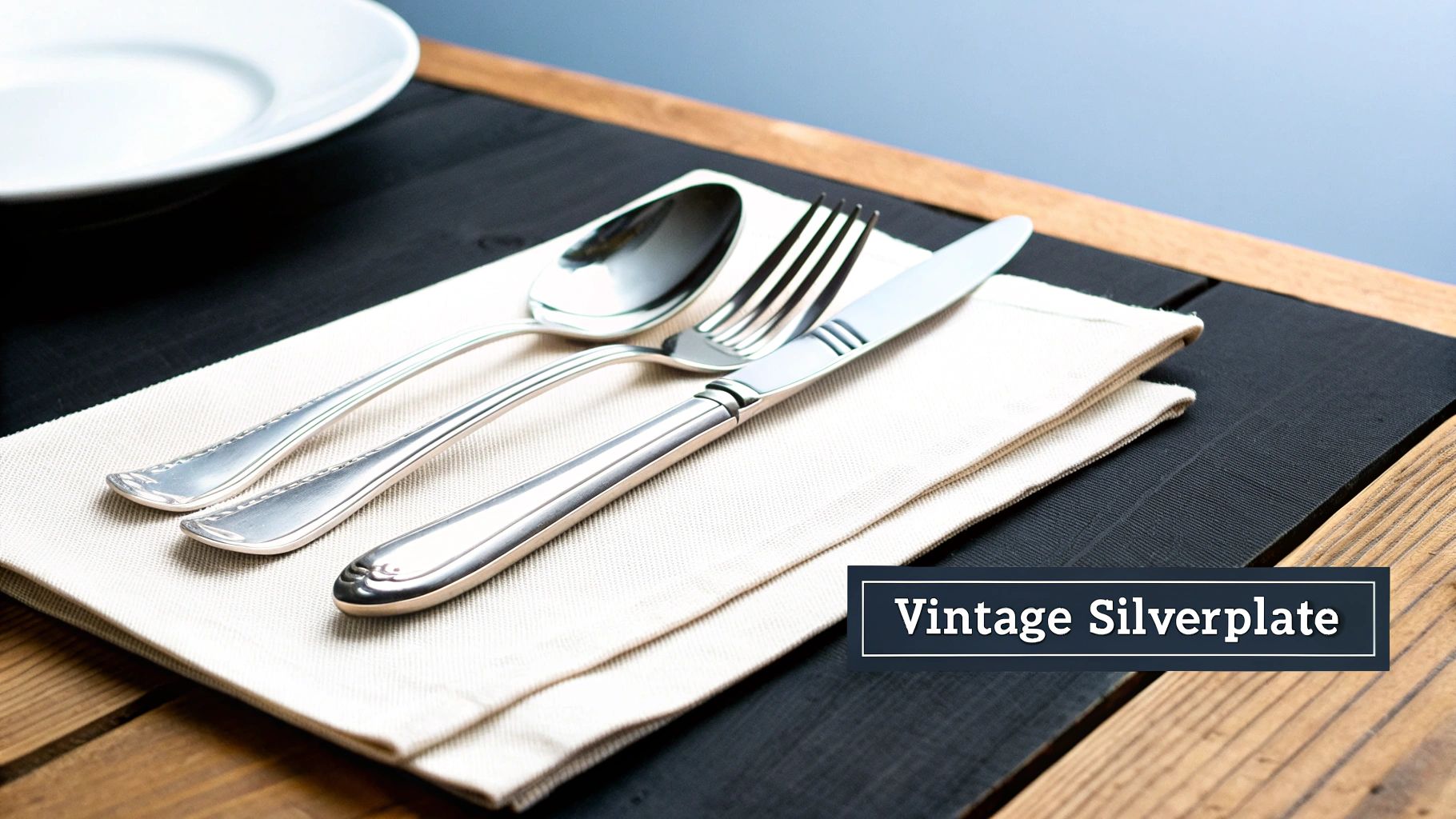
Holding a piece of Southwestern jewelry feels like holding a small piece of American history. For generations, this style was the key that unlocked an accessible kind of elegance, bringing the shimmering beauty of silver into the lives of those who couldn't quite stretch the budget for sterling. The real magic behind the estuarian cowgirl aesthetic is its blend of rustic charm and refined silverwork—a clever method that fuses a thin, tough layer of pure silver over a strong base metal.
This process meant artisans could craft gorgeous, ornate jewelry that looked and felt luxurious but cost just a fraction of solid silver. Suddenly, women could adorn themselves with stunning pieces for everyday wear and special occasions without a massive investment. It’s this perfect mix of affordability, durability, and beautiful design that cemented the style’s legacy. These weren’t just trinkets; they were made to be worn, loved, and passed down.
Why This Style Is Still Cherished
The pull of this vintage jewelry isn't just about nostalgia. Collectors, designers, and everyday style mavens are still drawn to these pieces for a few very good reasons:
- Exceptional Craftsmanship: Artisans became legendary for high-quality plating and intricate patterns that perfectly captured the styles of the times, from swooping Victorian florals to clean Southwestern geometric lines.
- A Story in Every Piece: Every necklace or cuff has a story to tell. You can almost feel the spirit of the estuarian cowgirl, blending coastal resilience with Western freedom, which makes each piece so much more than a simple accessory.
- Sustainable and Timeless Style: Choosing vintage is a wonderful, eco-friendly way to bring history and character to your look, offering a beautiful alternative to mass-produced modern jewelry.
Think of the 1847 Rogers Bros legacy as the art of making everyday luxury accessible. It transformed simple adornment into a treasured heirloom, creating a connection to the past that still resonates today in Southwestern styles.
The techniques used to create this beautiful jewelry come from the same tradition as other decorative metal arts, like the crafting of unique silver plated jewelry that also helps make silver’s beauty available to everyone. Each piece was designed not just to be an accessory, but to be beautiful, ensuring it would remain a beloved part of personal style for years to come.
Every piece of 1847 Rogers Bros inspired jewelry tells a story, and it doesn't start with just one person. It begins with artisans who had a vision to bring the elegance of silver into every American's collection in the mid-19th century.
Their big idea hinged on mastering silver electroplating. This was a game-changer at the time. The process bonds a genuine layer of pure silver over a sturdy base metal, creating jewelry that had all the shine and beauty of sterling but without the steep price tag. It was luxury made accessible, echoing the spirit of the resourceful cowgirl.
These artisans quickly earned a reputation for impeccable quality and craftsmanship, becoming well-respected names throughout the New England silver industry. Their early work set the stage for what would become one of the most beloved jewelry aesthetics in the country.
From Family Enterprise to Industry Giant
Going from a small workshop to a household name didn't happen overnight. As their success grew, so did the demand for affordable, high-quality silver jewelry. Their expertise was in high demand, and that attracted some attention.
This is where larger companies enter the picture. Their collaboration was a pivotal moment, paving the way for the style's formal launch and explosion in popularity.
The defining moment came in the late 19th century when larger manufacturers acquired the tools and dies from smaller, family-run businesses. They often adopted trademarks like 1847 Rogers Bros to honor the original innovators, cementing their origin story into the brand itself. The year 1847 was chosen to honor when the founding visionaries first joined forces.
The name '1847 Rogers Bros' isn't just a date; it's a tribute. It honors the year foundational skills were united to begin the work that would eventually place beautiful silver on women across America.
The International Silver Company Era
The final, massive piece of the puzzle fell into place in 1898. In a huge industry consolidation, the Meriden Britannia Company merged with dozens of other independent silversmiths to create the International Silver Company (IS). This new powerhouse became the largest silverware and silver goods manufacturer in the world.
Under this new corporate umbrella, the 1847 Rogers Bros name became a flagship brand. It received the lion's share of the marketing budget and became the public face of high-quality silverplate. The marketing was brilliant. They rolled out one desirable pattern after another, turning silver pieces into the ultimate gift and a treasured personal possession.
This blend of artistry and accessibility is a theme you see across many American decorative arts. The same silversmithing traditions that shaped flatware also influenced other beautiful objects, like Southwestern jewelry. To see how these skills translated into another iconic American art form, take a look at our guide on the history of Native American jewelry.
When you understand this rich history, each piece takes on a new meaning. Holding a piece of vintage silverplate jewelry isn't just holding an accessory. You're holding a piece of American industrial history, a symbol of innovation, and the beautiful result of an enduring vision.
How to Read the Hallmarks on Your Jewelry
Think of the small stamps on the back of your jewelry as a secret language. These marks, known as hallmarks, tell the story of each piece—who made it, when it was made, and with what level of quality. Learning to read them is like becoming a detective for your own collection, and it’s a lot simpler than you might think.
The absolute key to identifying vintage 1847 Rogers Bros inspired pieces is finding a specific trademark. This stamp is your most important clue, confirming the piece belongs to this famous heritage. But other marks often appear right alongside it, adding more layers to its history.
The Core Trademarks
To get started, turn over a pendant or the back of a brooch and look closely. You're looking for a few key identifiers that act as the maker's signature.
The primary mark is, of course, "1847 ROGERS BROS." This stamp can appear in different fonts and styles across the decades, but its presence is your first big win. It’s the brand’s seal of quality and heritage, connecting your piece directly to a legacy of craftsmanship.
But the story doesn't stop there. After the 1898 merger that formed the International Silver Company, a new mark began to appear.
- IS Stamp: The letters "IS" stand for International Silver. Seeing this next to the main trademark is a dead giveaway that the piece was made after 1898, under the umbrella of the massive silver conglomerate.
This infographic shows just how the company evolved from its original operation into a part of the International Silver Company.
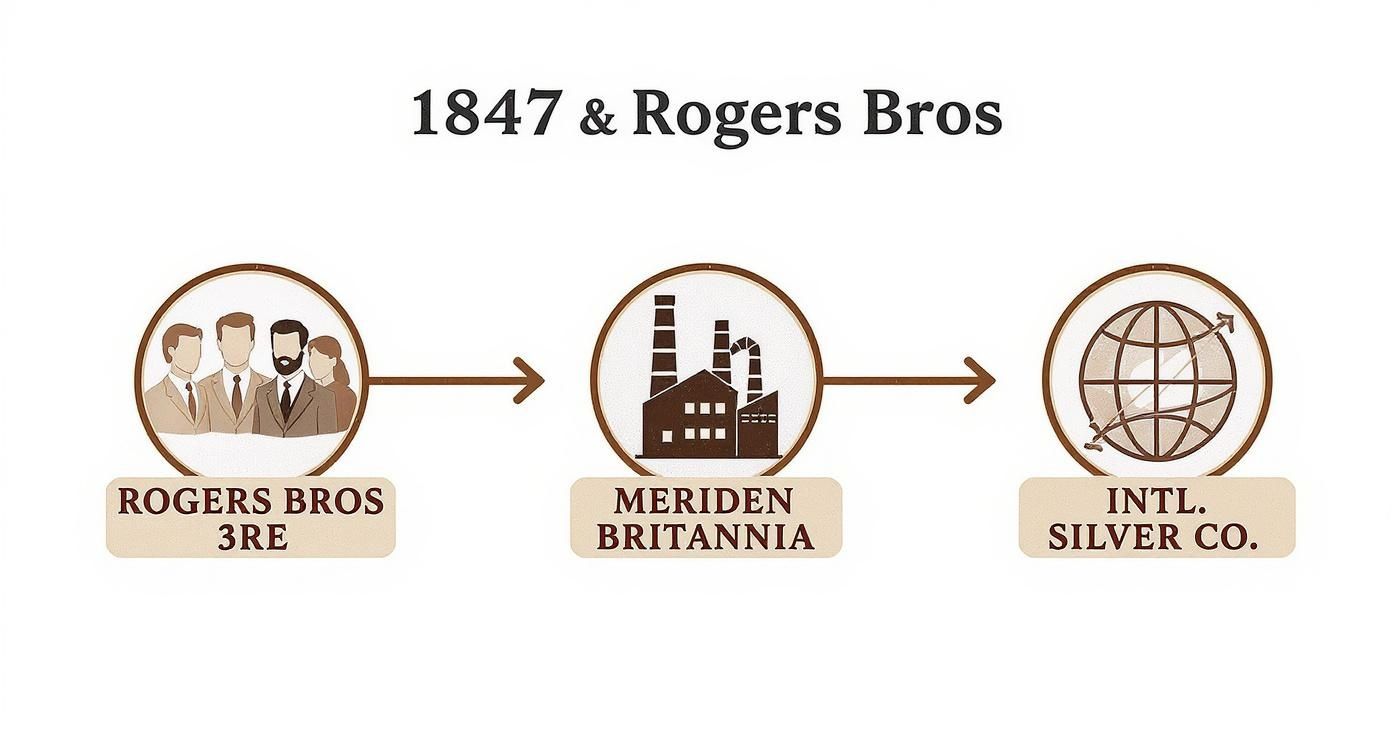
You can see how the family business grew, eventually becoming part of the larger entities that shaped the entire American silver industry.
Decoding Plating and Quality Marks
Beyond the main trademark, you'll often find other little stamps that signal the quality of the silverplate. In their day, these marks were a form of marketing, assuring customers they were buying a durable, high-quality product that would last.
Common quality marks include:
- A1 or AI
- AA
- Triple Plate or Quadruple Plate
These codes simply meant a thicker, more generous layer of silver plating was used. A piece marked "Quadruple Plate," for instance, had four times the standard amount of silver, making it exceptionally durable for everyday wear. Finding one of these marks is a fantastic sign that you're holding a premium-quality piece from its time.
Think of these hallmarks like the maker's marks on Southwestern jewelry. Just as a silversmith's stamp guarantees authenticity and craftsmanship on a turquoise cuff, the "1847 Rogers Bros" mark confirms the history and quality of your silver piece.
The tradition of stamping metalwork is shared across many different crafts, from fine jewelry to accessories. Understanding these marks adds so much depth and value to a collection, much like being able to identify the artist behind a piece of jewelry. You can dive deeper into how artisans use these techniques in our guide to Western jewelry and stamped silver.
By taking just a moment to examine these small but meaningful stamps, you transform a simple accessory into a historical artifact. You can now confidently identify genuine 1847 Rogers Bros inspired pieces, recognize their manufacturing era, and appreciate the craftsmanship that has made them treasured for generations. Each mark is a chapter in a much larger story.
Identifying the Most Popular Patterns
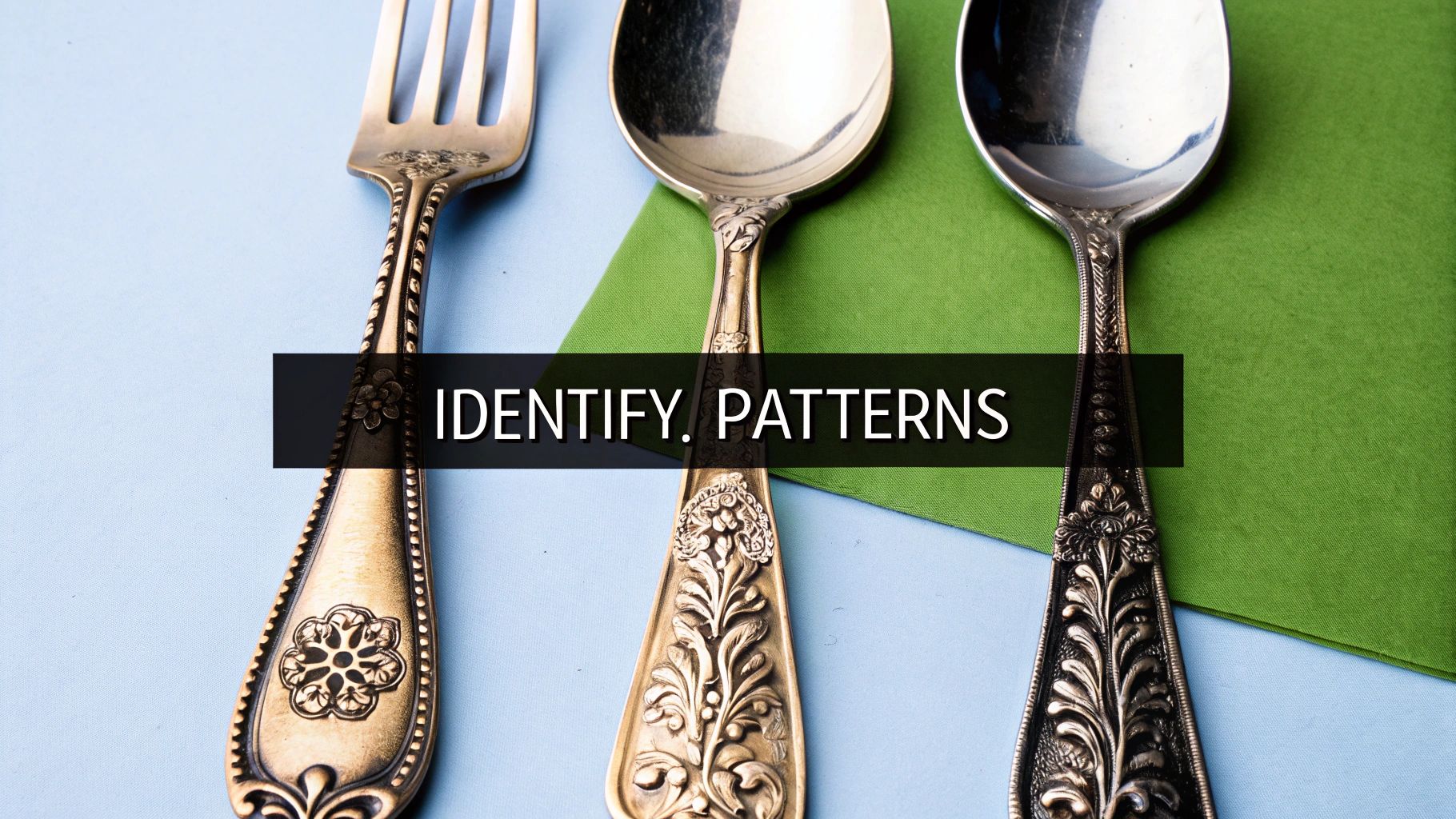
Figuring out your jewelry's pattern is like discovering its personality. Each 1847 Rogers Bros design tells a story about the era it came from, capturing the artistic spirit of its time right there in a brooch or pendant. The brand's real genius was creating patterns that people truly connected with, turning a simple piece of jewelry into a cherished heirloom for the American woman.
These designs were brilliantly marketed, quickly becoming household names and the automatic gift choice for birthdays and anniversaries. Because of this, certain patterns reached an iconic status that has kept them in high demand with collectors for decades. Learning to spot these popular designs is the next step in understanding where your own collection fits into this history.
The Timeless Floral Patterns
So many of the most-loved 1847 Rogers Bros patterns pulled their inspiration straight from nature, with intricate floral motifs that have simply never gone out of fashion. These designs often feel delicate, romantic, and full of the hopeful spirit of the early to mid-20th century. They're both classic and personal, which is exactly why they've stayed so popular.
Some of the standout florals you'll see again and again include:
- First Love (1937): This is one of the most famous patterns, hands down. It has a delicate piercing and a tiny flower blossom at its tip. Its elegant, understated design was an instant hit and a jewelry box staple for years.
- Daffodil (1950): Perfectly capturing the fresh, cheerful vibe of the post-war era, this design features a pair of embossed daffodils. It's a simple, beautiful pattern that just feels bright and welcoming.
- Eternally Yours (1941): A more ornate and flowing design, this pattern has two open flowers connected by graceful scrolls. It has a romantic, almost Art Nouveau feel that collectors who appreciate detailed work absolutely adore.
These floral patterns are often the easiest for new collectors to identify, making them a fantastic starting point for anyone dipping their toes into the world of vintage 1847 Rogers Bros inspired jewelry.
Think of each pattern as a snapshot of a particular time. A floral design from the 1940s reflects a different sensibility than a geometric one from the 1960s, giving you a tangible connection to the past.
The sheer variety of designs speaks to the company's incredible artistic range. When the International Silver Company was formed, its catalogs already listed dozens of unique patterns. By the early 20th century, the company was exporting to over 50 countries, and '1847 Rogers Bros' patterns made up nearly 40% of all silverware exports from the United States. You can explore more about the vast catalog of historical patterns, which is a testament to the brand's creativity and market power.
Art Deco and Mid-Century Modern Designs
As tastes changed through the middle of the 20th century, so did the patterns. The ornate florals started to give way to the cleaner lines and geometric shapes of the Art Deco and Mid-Century Modern movements. These designs reflected a more streamlined, forward-looking aesthetic, perfect for the modern cowgirl.
The company proved it could adapt beautifully, producing patterns that felt contemporary and fresh.
Below are a few of the most well-known patterns from this period. Each one captures a different facet of modern design, from the stately elegance of the early '50s to the sleek minimalism of the decade's end.
Popular 1847 Rogers Bros Patterns and Their Characteristics
| Pattern Name | Year Introduced | Design Style & Key Features |
|---|---|---|
| Heritage | 1953 | A sophisticated, stately design with a prominent plume-like scroll at the tip. |
| Flair | 1956 | Quintessentially Mid-Century Modern with a sleek, asymmetrical curve that was very modern. |
| Adoration | 1930 | An elegant Art Deco pattern featuring simple lines and a subtle geometric fan motif. |
| Reflection | 1959 | A minimalist design with a clean, smooth surface and a slightly flared, unadorned look. |
These later patterns are highly valued by collectors who are drawn to Mid-Century Modern style. Finding a piece with a pattern like Flair or Reflection can be a fantastic score, as their sleek look fits perfectly with today's estuarian cowgirl trends.
Think about how Southwestern jewelry uses motifs like the concho or squash blossom to tell a story; these silver patterns use flowers, scrolls, and lines to capture the essence of an era. The details in your jewelry are a direct link to the art and culture of the time it was made.
How to Determine the Value of Your Collection
So, you've got a collection of vintage jewelry. What's it actually worth? Figuring out the value of your 1847 Rogers Bros inspired pieces isn't about its weight in silver; it's about digging into its story, its condition, and how much collectors want it today. Unlike sterling silver, the value of silverplate isn’t tied to the precious metal market.
Instead, a better way to think about it is like assessing handcrafted Southwestern jewelry. The real value is found in the artistry of the pattern, the rarity of the pieces, and how well they've been preserved. Three key factors will help you pin down the true market worth of your collection.
Pattern Rarity and Desirability
The first thing to look at—and arguably the most important—is the pattern itself. Just as certain turquoise jewelry designs are more sought-after by collectors, some 1847 Rogers Bros patterns have a dedicated following that drives their prices up.
Patterns that perfectly captured a specific design era, like the sleek, Mid-Century Modern lines of "Flair" or the timeless romance of "First Love," are consistently in demand. On the other hand, less popular or extremely common patterns might not fetch as much, even if they're in fantastic shape. It all comes down to demand. The best way to get a real-time pulse on what people are willing to pay is to research completed online sales for your specific pattern.
Just as a silversmith's unique concho stamp adds value to a western belt, the specific pattern of your jewelry is its signature of worth. The more beloved the design, the more desirable the piece becomes.
The Critical Role of Condition
Condition is a make-or-break factor when you’re valuing silverplate jewelry. Because the layer of actual silver is incredibly thin, any damage can slash its worth. You need to inspect each piece with a critical eye, almost like checking a gemstone for flaws before setting it into a piece of cowgirl jewelry.
Keep an eye out for these deal-breakers:
- Plate Loss: This is the big one. It shows up as dark or yellowish spots where the silver has completely worn away, exposing the base metal (usually brass or nickel) underneath.
- Deep Scratches or Nicks: Minor surface scratches from everyday wear are totally normal. But deep gouges, dings, and dents are much harder for a buyer to overlook and detract from the piece's beauty.
- Pitting: These are tiny, permanent corrosion spots that you can't polish away. They leave a rough, damaged texture on the surface.
- Bent Clasps or Dents: Check pendants and brooches for any bent parts or dents that ruin their elegant shape.
A piece in pristine, almost-new condition will always bring in the highest price. On the flip side, significant plate loss can make an item nearly worthless to a serious collector, no matter how rare the pattern is. The value is in its visual appeal and its ability to be worn and enjoyed.
Completeness of the Set
Finally, the completeness of your collection can play a role in its total value. A full, matching set of earrings, a necklace, and a bracelet, especially if it's in its original box, is far more valuable than a random jumble of mismatched pieces.
Collectors are often looking to either complete their own sets or buy one that’s ready to wear. A complete parure with all the essentials is what most buyers are after. Even better are sets that include harder-to-find matching pieces, like a brooch or ring. These special items can seriously boost the value of the entire set.
While individual pieces have some value, selling a complete set is almost always more profitable than parting it out piece by piece. When it comes to vintage jewelry, the whole is truly greater than the sum of its parts.
Proper Care for Your Vintage Silverplate Jewelry
Your 1847 Rogers Bros inspired jewelry was built to last, but keeping its mirror-like shine takes a bit of know-how. The secret to protecting that delicate silver plating from damage really comes down to proper cleaning and smart storage.
Think of the silver layer like the fine finish on a piece of antique furniture—it’s gorgeous but thin. Harsh chemicals or aggressive scrubbing will wear it away over time, exposing the less-attractive base metal underneath. That's why you have to be really careful about the cleaners you use.
Safe Polishing Techniques
The goal here is simple: gently remove tarnish without scratching or stripping the silver. Tarnish is just a natural chemical reaction, so you don't need brute force. Always reach for a polish specifically made for silver jewelry.
- Apply Gently: Use a soft, clean cloth, like microfiber or an old piece of flannel, to apply just a small amount of silver polish.
- Polish with Care: Rub each piece using straight, back-and-forth motions. Avoid swirling in circles, as this can create noticeable micro-scratches.
- Rinse and Dry: Once the tarnish is gone, wash the jewelry in warm, soapy water to get rid of any polish residue. Immediately dry every single piece with a soft towel to prevent water spots from forming.
If you're dealing with stubborn tarnish and want to explore other safe methods, the same principles apply to different kinds of silver. You can see more techniques in our guide on how to clean tarnished silver jewelry.
A gentle hand is your most important tool. Aggressive polishing might look like a quick fix, but it accelerates wear on the silverplate, permanently dulling its finish over time.
Smart Storage to Prevent Tarnish
Believe it or not, how you store your jewelry is just as important as how you clean it. Tarnish is caused by exposure to sulfur in the air, so your best defense is simply limiting that contact.
The absolute best storage solution is a felt-lined jewelry box or a special drawer insert. The felt not only prevents scratches but is often treated with anti-tarnish chemicals. If you don't have a box, wrapping your pieces in flannel cloth or slipping them into anti-tarnish bags works wonders. And one big "don't": never store your jewelry with rubber bands. The sulfur in rubber will cause severe, dark tarnishing—fast.
By following these simple care tips, you'll ensure your vintage 1847 Rogers Bros inspired jewelry remains a stunning and wearable part of your style for generations.
A Few Common Questions
When you're dealing with vintage 1847 Rogers Bros inspired jewelry, a few questions always seem to pop up. Whether you're just getting into collecting or you've inherited a family set you're curious about, these quick answers should clear things up.
Think of it like learning the story behind a piece of handcrafted Southwestern jewelry—it’s the small, key details that tell you everything you need to know about its history and value.
Is 1847 Rogers Bros Sterling Silver?
This is the big one, and the most important thing to know: no, it is not. 1847 Rogers Bros is the most famous brand of American silverplate.
Silverplate isn't solid silver. Instead, it's a thin layer of real silver electroplated over a strong base metal, usually nickel or brass. This brilliant process made beautiful, elegant jewelry affordable for millions of American women. If a piece is true sterling silver, it will always be stamped with "Sterling" or "925."
What Does the "IS" Hallmark Mean?
If you spot an "IS" stamp on your jewelry, it stands for the International Silver Company. When you see this hallmark next to the "1847 Rogers Bros" trademark, it tells you the piece was made sometime after 1898.
That was the year a bunch of smaller silver companies, including the original makers of Rogers Bros. goods, merged into one huge corporation. The "IS" mark is a great clue for dating your pieces to the 20th century. It’s a lot like a silversmith’s signature on a turquoise cuff, telling you exactly who was behind its creation.
Can I Wear This Jewelry Every Day?
Absolutely! In fact, it was made for it. The silverplating on 1847 Rogers Bros inspired pieces is surprisingly durable, and honestly, the best way to enjoy your jewelry is to actually wear it.
Just stick to two simple rules to keep it looking great:
- Avoid harsh chemicals. Remove your jewelry before swimming, cleaning, or applying lotions and perfumes.
- Clean gently. After wearing, wipe it down with a soft cloth. This prevents buildup and keeps that beautiful shine alive.
Follow those two steps, and your vintage jewelry will remain a stunning part of your daily style for years to come.
Owning a piece of this vintage silver is a lot like owning a classic piece of estuarian cowgirl jewelry. It's not meant to be tucked away in a drawer—it’s a beautiful, functional piece of history designed to be used and loved.
These pieces bring a bit of timeless style to any outfit, blending heritage with everyday function beautifully.
At Silver Elegant, we believe in celebrating artistry that lasts, whether it’s for your dining table or your personal style. We invite you to explore our collection of Southwestern and estuarian cowgirl jewelry to find pieces with a story as rich as your favorite heirlooms. Discover your next treasure at Silver Elegant today.